UOB Q3 profit up 57%; watching digital asset space but 'not 100% convinced' about cryptocurrencies


Kelly Ng
Vivienne Tay
Published Tue, Nov 2, 2021 · 11:30 PM

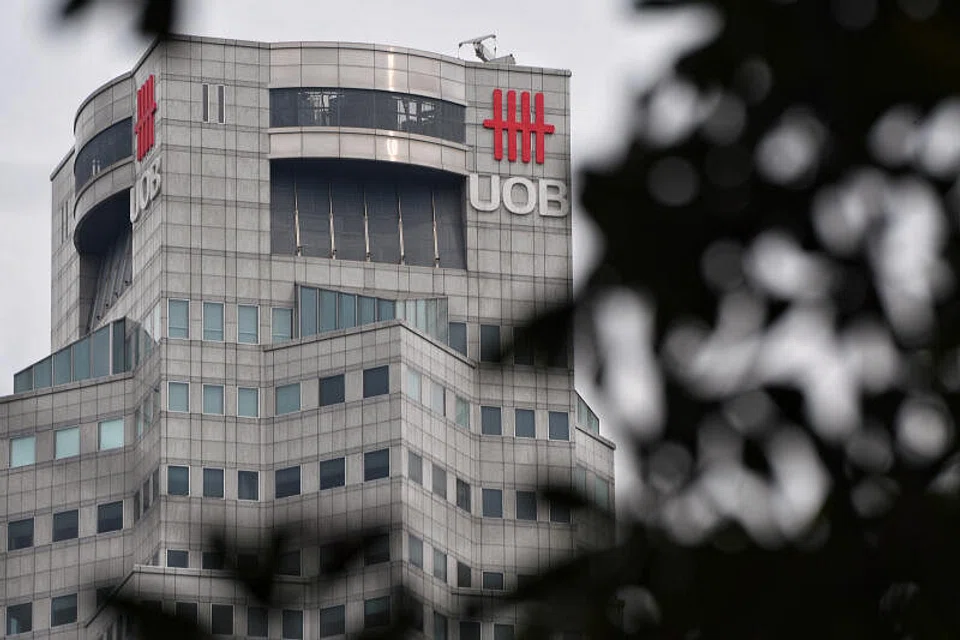
    UOB U11 is "not 100 per cent convinced yet" about the prospect of cryptocurrencies and will continue observing this space, even as it recognises that clients want exposure to digital assets.

    Speaking at its quarterly results briefing on Wednesday, the bank's chief exective Wee Ee Cheong said the bank is instead eyeing opportunities in central bank digital currencies (CBDCs) and digital asset tokenisation, noting that his bank's partnerships with Singapore-based digital asset platforms Marketnode and ADDX.

    UOB logged a 57 per cent rise in net profit for its third quarter, on the back of healthy loan growth and sustained fee income, as well as lower credit allowance. Net profit for the three months ended Sep 30, 2021 stood at S$1.05 billion, compared with S$668 million from the year before.


    The earnings beat the S$982.4 million average estimate of 4 analysts compiled by Refinitiv.

    Annualised earnings per share stood at S$2.46 for the quarter, up 58.7 per cent from S$1.55 a year ago.

    At the virtual briefing, Wee and the bank's chief financial officer Lee Wai Fai fielded a series of questions on how the bank views the prospects of digital currencies and blockchain technlogy, with reporters pointing out that peer bank DBS has a crypto exchange up and running, and its Thai counterpart Siam Commerical Bank announcing on Tuesday a 51 per cent stake purchase in crypto exchange Bitkub.

    "Cryptocurrency, this is something we are observing. We are not 100 per cent convinced yet. This is a new area. But what we recognise (as) the potential benefits of digital currencies are CBDCs, which I think will benefit overall consumers, and we are working closely with the central bank (on this). As well as asset tokenisation, in which we have already built strategic alliances with two companies," Wee said.

    Lee said the bank prefers to work with established third parties rather than to set up its own crypto exchange, in responding to customers' growing demand for exposure to digital assets.

    He also highlighted the potentials of CBDCs, particularly in China, which is widely recognised to be at the forefront of this innovation. "We believe that the best opportunity is out of China because China is probably a bit more advanced in that stage, and we will have better traction because of the cross-border flows (with Asean)," he said.

    Wee noted that across the board, foreign direct investment from China into Asean has gone up in the midst of the pandemic, and he believes the bank has a competitive advantage to capture these growing flows.

    Wee and Lee also affirmed his bank's interest in Citi's assets in markets it already has a presence in, but declined to share further details are they are "under confidentiality clauses". Earlier this year, Citi announced it was exiting 13 consumer markets, with many of them in Asia, citing the lack of scale needed to compete in those markets as well as broader plans scale up on wealth management.

    UOB's net interest income for the third quarter increased 9 per cent year on year to S$1.60 billion from S$1.47 billion, led by healthy loan growth. Meanwhile, net interest margin was up 2-basis points to 1.55 per cent, from 1.53 per cent in the year-ago period.

    Net fee income was up 15 per cent to S$589 million. Other non-interest income was down 5 per cent to S$259 million from S$272 million the year before on lower investment gains.

    The bank's non-performing loans ratio was 1.5 per cent, unchanged from the same period a year ago.

    Total allowances was 66 per cent lower on year at S$163 million from S$477 million, due to pre-emptive general allowance taken last year.

    Although Asean's recovery from Covid-19 has lagged, Lee sounded an optimistic note that 2022 will bring a stronger economic environment as vaccination rates continue to improve while death rates come under control. However, the path to recovery is expected to differ for countries in the region.

    For example, the bank expects to see an increase in non-performing loans in Malaysia, with the local government extending relief programmes. Thailand, which saw some weakness in the consumer sector, is expected to present a more hopeful picture next year with travel resuming and vaccination rates picking up.

    "We think that (overall) credit costs will stabilise and as a result, we will then be looking at growth opportunities. So you have seen the trend that today, Asean is a little bit lagging behind. We expect that to improve more next year. And for the rest, I think we are just looking at opportunities with cross-border (travel) opening up," he said.

    Domestic borrowing rates and the bank's margins are also expected to rise, with market signals that the Federal Reserve is due to start tapering bond purchases. But with rate hikes in the US expected around mid to end next year and with the transmission to Singapore lagging by about four to five months, margins should not increase significantly next year. "It will be a positive upwards for us, but I think the bigger impact is in 2023," Lee said.

    Shares of UOB closed on Wednesday at S$27.20, down 19 cents.