UOB to ride on Citi acquisition to drive growth in 2023; posts S$1.2b Q4 profit


Tan Nai Lun &
Yong Hui Ting
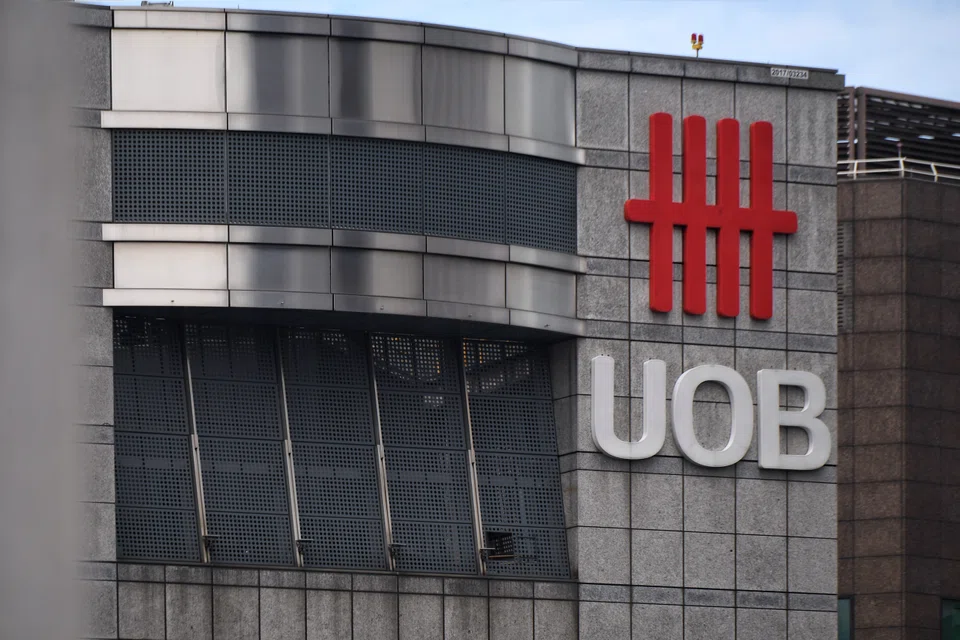
UOB expects its Citi portfolio acquisition will be a main growth driver in 2023, given that its performance has already surpassed expectations, said UOB chief executive Wee Ee Cheong.
UOB completed its acquisition of Citi’s consumer businesses in Thailand and Malaysia in November 2022. The lender aims to complete its acquisition in Vietnam and Indonesia by 2023, which should bring its customer base to more than eight million in the South-east Asia region and add around S$1 billion in additional revenue in 2023.
In a results briefing on Thursday (Feb 23), Wee said the Citi acquisition will “give (the lender) tremendous opportunities to grow its customer base” as it already has a strong credit card business and also provides significant untapped potential for UOB’s wealth management business.
UOB on Thursday posted a 13 per cent rise in its Q4 net profit to S$1.2 billion, from S$1 billion a year earlier. This is inclusive of one-off expenses for the quarter, comprising integration costs for the Citi business as well as stamp duties paid.
Net interest income rose 53 per cent on the year to reach S$2.6 billion for Q4, from S$1.7 billion for the year-ago period. Meanwhile, net interest margin rose to 2.22 per cent in Q4 2022, from 1.56 per cent in 2021, on the back of rising interest rates.
The lender declared a dividend of S$0.75 per share for the half-year period, up from S$0.60 per share for H2 2021. It will be paid out in cash on May 12, after books closure on May 3.
Shares of UOB fell after the results were announced, however, losing as much as 4.8 per cent to S$29.51. The counter closed 4.4 per cent lower at S$29.62.
The results had met analyst estimates. According to a Refinitiv survey of two analysts, UOB’s fourth quarter net profit was estimated to be S$1.2 billion. Meanwhile, Bloomberg’s survey of two analysts estimated Q4 net interest income to be S$2.4 billion.
UOB chief financial officer Lee Wai Fai said the market may have been disappointed as the fourth quarter results were slightly weaker. Quarter on quarter, net profit was down 18 per cent.
Net fee income fell 16 per cent on the year to S$485 million for Q4, as lower wealth and fund management fees fell amid subdued investor sentiments and a seasonally softer quarter.
This was, however, partially offset by a double-digit growth in credit card fees, boosted by the Citi consolidation and due to strong customer spending as economies reopened.
Furthermore, while customers have been more cautious in the quarter due to rising interest rates, they will likely resume projects and take up loans once they register that the high interest rates environment is here to stay, Lee said.
He also noted that the South-east Asia region will likely continue to see growth, which should boost the lender’s regional activities.
As at December 2022, gross loans gained 3 per cent on the year to S$319.7 billion, while its customer deposits rose 5 per cent on the year to S$368.6 billion. Meanwhile, the bank’s current and savings account (Casa) ratio stood at 47.5 per cent, down from 56.2 per cent in December 2021.
Lee said the rise in customer deposits came mainly from fixed deposits given the rising interest rates, while Casa was hit by high inflation.
Noting that the bank has since shifted its strategic initiative to grow its Casa through more attractive rates on its One account, he said: “I think we are quite hopeful that with (the One account), we can stabilise the sharp drop in Casa, and cross-sell it when the fixed deposits are due for refinancing.”
Total allowance increased to S$184 million for Q4, mainly due to higher specific allowance on a few non-systemic accounts, although this was cushioned by some write-back in its general allowance.
UOB’s non-performing loans ratio was unchanged at 1.6 per cent in Q4. Its Common Equity Tier 1 (CET1) ratio stood at 13.3 per cent, which Wee noted is “healthy” despite earlier concerns of the Citi acquisition affecting its liquidity.
Wee expects the lender will continue to post a mid single-digit loan growth in 2023, and maintain its net interest margin at around 2.2 per cent. Meanwhile, fees are expected to see double-digit growth on the back of a low base.
Wee also expects UOB’s regional connectivity will be another growth engine for the bank, as it continues to expand its foreign direct investments, transactional banking business and cash management platform in the region.
For the full year, net interest income stood at S$8.3 billion, up 31 per cent from S$6.4 billion for FY2021, while the net interest margin ratio improved to 1.86 from 1.56 in 2021.
Net fee income for FY2022 slipped 9 per cent to S$2.1 billion, as total allowances for the full year recorded an 8 per cent fall to S$603 million.