

UOB ‘very flush’ with liquidity; CRO notes importance of prudent business model for long-term survival

Tan Nai Lun
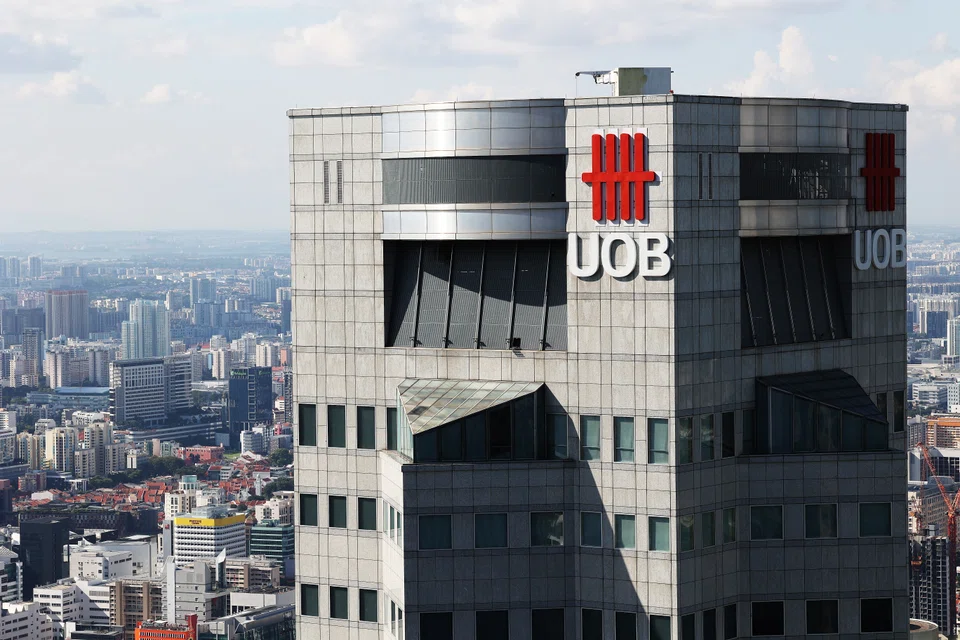
UOB ’S liquidity position is “very flush”, putting it in a comfortable position amid recent turmoil in the global banking industry, said the bank’s chief risk officer (CRO) Chan Kok Seong at its annual general meeting on Friday (Apr 21).
In response to shareholder queries on the lender’s ability to weather bank runs, Chan said he would not disclose the amount of UOB’s liquidity buffer, but assured that it had “a lot of excess liquidity” and that its capital ratios were well above regulatory minimums.
Chief executive and deputy chairman Wee Ee Cheong also noted that UOB has a lot of liquidity residing with central banks.
In its annual report for the financial year ended 2022, UOB indicated that it had S$42.3 billion in non-restricted balances with central banks.
But Chan noted that ultimately, it is the level of trust and confidence in the bank that will ensure its long-term survival.
He said: “Financial ratios only illustrate part of how a bank is managed. Liquidity, for example, can be maintained at a very high level, even though there are fundamental problems.”
A shareholder had pointed out that Credit Suisse, which collapsed in March, had a Common Equity Tier 1 (CET1) ratio and liquidity coverage ratio (LCR) that were “just as good” as Singapore banks.
Credit Suisse’s CET1 ratio was 14.1 per cent and its average LCR was 144 per cent, as at the end of 2022.
UOB’s CET1 ratio stood at 13.3 per cent, while its LCR was 140 per cent for FY2022.
Chan assured that UOB has, over many business cycles, proven that it has a prudent business model that kept the bank profitable despite ups and downs.
He said: “It’s about the risk culture and the business model that we adopt, that have proven time and again, that we’re able to ride through business cycles and emerge stronger.”
He also noted that Singapore as a country is prudently managed and triple-A rated, and that prudence should filter through to the banking sector.
Speaking on his outlook for the year, Wee expects the environment to remain uncertain, but he envisages UOB to seize opportunities in Asean – within its risk appetite – given the bank’s strong balance sheet.
In FY2022, UOB posted a record net profit of S$4.6 billion, boosted by a surge in net interest income amid the rising interest rates environment.
The bank expects its acquisition of several Citi consumer businesses across the Asean region to be a main growth driver in 2023, adding around S$1 billion in additional revenue for the year.
Shares of UOB closed 0.1 per cent lower at S$29.69 on Friday.
TRENDING NOW

Higher rates, weaker spending: Is the Philippines entering stagflation?

Ex-Nvidia CEO misled top lawyer on affair with Chinese businesswoman, sources say

‘I’ll be buying more’: Singapore investors pour into Nvidia shares on Jensen Huang’s exit

Nvidia approaches Arm CEO Haas as employees seek Huang's return, reports say

