

UOB’s loan to a coal-miner’s subsidiary spotlights complexities of defining the just transition

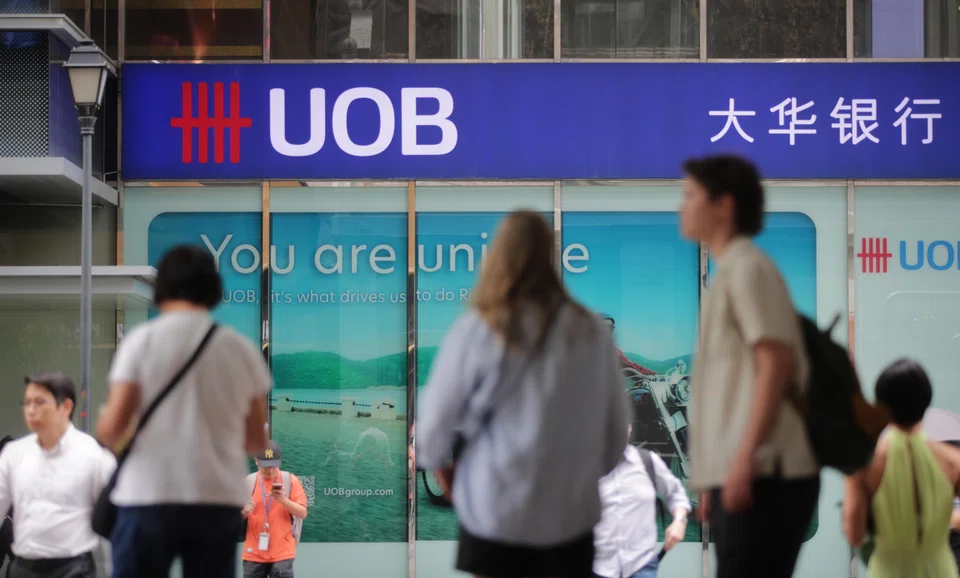
UNITED Overseas Bank (UOB) has got itself in a bit of a pickle after reports emerged that it is part of a consortium of banks that refinanced a US$350 million loan to a subsidiary of coal miner Adaro Energy Indonesia.
The Straits Times recently reported that the capital raised would be used to construct a green-labelled aluminium smelter for an industrial park in the Indonesian province of North Kalimantan.
Even though the smelter would be relying on coal power in its initial phase, the green credentials come from Adaro’s aim to eventually power the smelter and the park via solar and hydropower.
The deal has sent some green groups up in arms. Tata Mustaya, Greenpeace’s regional climate campaigner based in Indonesia, told The Business Times the refinancing is “clearly greenwashing” and will undermine the acceleration of energy transition in South-east Asia and globally. The concern is that the financing can be used to indirectly support a thermal coal business.
Non-profit organisations focused on promoting sustainable finance have raised questions about whether UOB is going against its 2019 policy to exit the financing of new coal power plants and thermal coal mines, as well as the expansion of existing coal mines.
Cedric Rimaud from the Anthropocene Fixed Income Institute told BT that even though UOB’s commitment to exit coal financing was set with a target of 2039, this deal still sends a wrong signal to the market and will hurt the bank’s environmental, social and governance credentials and deter investors from providing it capital.
South-east Asia’s third-largest lender has always maintained it prefers to continue working with clients transitioning from highly emissive business models, instead of cutting off their financing totally.
Specific to this deal, UOB’s chief executive Wee Ee Cheong said during its latest earnings briefing that the bank doesn’t finance coal as a general rule, but Adaro is an existing customer and “we are helping some good customers to transition”.
But interpreting what qualifies as acceptable financing for transition activities is “complex and nuanced,” the Asia Investor Group on Climate Change (AIGCC), a voluntary bloc of fund managers and institutional investors, told BT.
Clearly, there is a disagreement on whether this deal could be considered transition financing.
Part of the problem lies in the difficulties coming up with definitions of what economic activities are in need of transition.
This has resulted in the lack of widely accepted taxonomies on transition financing, unlike green and other types of sustainable financing, noted Singapore Management University associate professor of finance Liang Hao, who is also co-director of Singapore Green Finance Centre.
“Central to the challenge surrounding transition definitions is how to accurately assess transition activities and report the impact of those activities… Due to such lack of principles and guidelines, essentially most loans to carbon-intensive companies can be tweaked as transition financing,” said Liang, who was speaking about the challenges of this particular form of financing and not about this deal specifically.
What this means for investors is that they should consider, at the point of issuance, whether the use of proceeds is aligned with some transition eligibility criteria, the process of selecting and evaluating projects, the management of proceeds, and the measurement and reporting of impact.
Things to take note of include the issuer’s climate transition strategy and governance, the environmental materiality of its business model, as well as its implementation transparency, Liang added.
AIGCC referred to recommendations in a United Nations report on net-zero commitments by non-state entities, which highlighted how these entities can prevent their climate targets from being undermined by false claims, ambiguity and greenwashing allegations – by demonstrating how their transition plans contribute to the economic development of the regions where they are operating.
The report also stated that financial institutions with coal investments in their portfolios must adopt phase-out plans with facility-by-facility closure dates that include just transition plans for workers.
So, did the UOB-Adaro deal pass that bar?
Not if you go by publicly available information, according to Kurt Metzger, energy transition director at Asia Research and Engagement.
“The most basic tenet of the policies to extend new financing is the customer providing a detailed transition plan to achieve a business model using sustainable energy. The plan must include metrics and targets for the bank to monitor progress in the transformation process.
“Based on public disclosure, Adaro would not meet the criteria for new financing as the company has not disclosed any transition plans and, to the contrary, continues to see coal as a sustainable energy source for the long term,” he said.
On the other hand, Wee said at UOB’s latest results briefing that the loan’s terms are “very ringfenced” and that it is not for coal. There were no further details, however, and no way for the market to accept the validity of the claim.
Perhaps it is time for banks and borrowers to be more transparent about the terms and transition plans for financing provided to hard-to-abate sectors, given the materiality of climate-related risk to the banks.
Climate targets and policies are more than just virtue signalling for lending institutions, which are exposed to the well-being of the overall economy. Climate change is a risk that affects a bank across the board, and stakeholders deserve better accountability in known trouble spots.
It is also important that banks can continue to support transition activities, especially in South-east Asia where coal remains the largest source of power in many countries. Operating in that space without recognising and doing something about the need to manage stakeholders’ and watchdogs’ concerns is not a wise game plan.
TRENDING NOW

Malaysian king buys stake in Singapore-listed mining firm expanding into rare earths

Grab CEO’s wife Chloe Tong on life with Anthony Tan and finding her purpose

Once staunchly pro-China, Malaysian Chinese businesses are now distancing themselves from Beijing

Longer wait times expected as S’pore healthcare institutions report system disruptions

