US dollar eases versus euro as investors ponder Fed, ECB rate paths
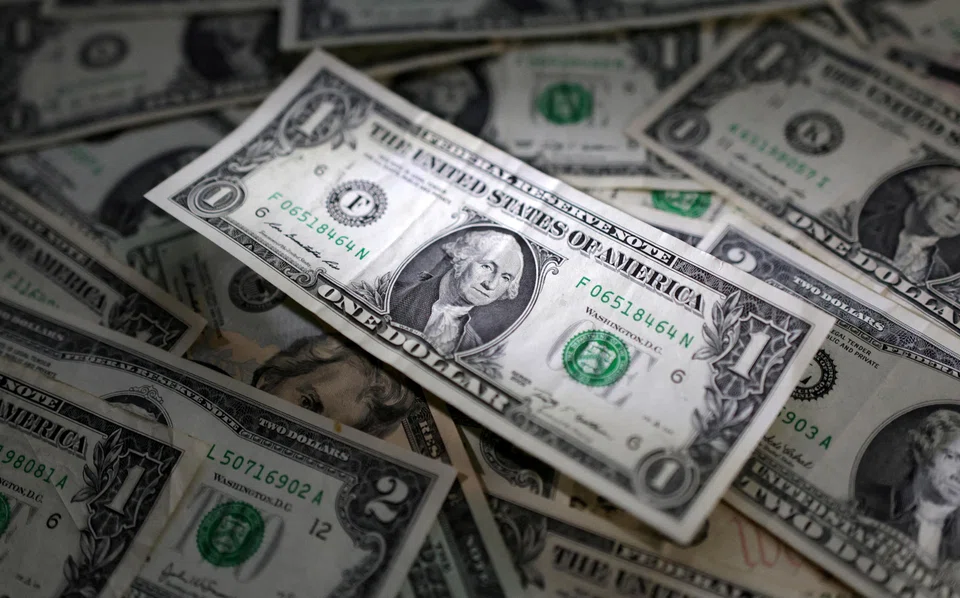
THE US dollar slid from a 12-week peak on Monday (Aug 28), as traders weighed US and European central bankers’ monetary options after last week’s Jackson Hole meeting, while Beijing’s decision to halve stamp duty on stock trading helped to lift the euro.
The US dollar index, which measures the greenback against six peers, edged 0.08 lower to 104.08 after hitting its highest since early June on Friday. The index is up more than 2 per cent in August and set to snap a two-month losing streak.
US Federal Reserve chair Jerome Powell told the annual Jackson Hole Economic Policy Symposium that the central bank may need to lift interest rates further, to finish the job of lowering inflation on a sustained basis.
Markets anticipate an 80 per cent chance of the Fed standing pat next month, the CME FedWatch tool showed, but the probability of a 25-basis-point hike in November is at 51 per cent, versus 33 per cent a week earlier.
“It remains unlikely we get a hike from the Fed in September,” said Chris Weston, head of research at Pepperstone. “But November is shaping up to be a ‘live’ event, where data points have the potential to throw interest-rate expectations around.”
He added: “When many other G10 central banks are already priced for an extended pause, the Fed potentially going again in November is supporting the dollar.
A series of strong US economic data releases has helped to ease worries of a recession, but with inflation still above the Fed’s target, some investors worry the US central bank will keep interest rates high for longer.
With the Fed highlighting the importance of the upcoming US economic data, investors’ focus this week will be on reports on payrolls, core inflation and consumer spending.
“If the data doesn’t play ball, then further tightening should be expected,” said Rodrigo Catril, senior currency strategist at National Australia Bank.

Elsewhere, the euro, which has fallen 1.7 per cent so far in August, rose 0.13 per cent to US$1.0808 after China halved the stamp duty on stock trading in its latest attempt to boost the struggling market in the world’s second-biggest economy.
But the single currency traded near an almost 11-week low hit on Friday after European Central Bank president Christine Lagarde said policy needed to be restrictive.
According to Refinitiv data, the market is evenly split on whether there will be another rise to the 3.75 per cent rate in September.
China’s yuan steadied against the US dollar, buoyed by the Chinese central bank repeatedly setting stronger-than-expected daily mid-points. The spot yuan edged 0.1 per cent lower at 7.2937 per US dollar.
The China-sensitive Australian dollar rose 0.26 per cent to US$0.6419, having taken a beating this month as worries over China’s sputtering post-pandemic recovery weighed on sentiment.
“Market confidence will unlikely improve much until there are signs of China’s weakening economic momentum turning around,” said Tommy Wu, senior economist at Commerzbank.
The yen edged 0.04 lower to 146.51 per US dollar, just shy of the more than nine-month low of 146.64 it touched on Friday, as traders continue to watch out for any signs of intervention in the currency market from Japanese authorities.
The Bank of Japan will maintain its current ultra-easy policy as underlying inflation in Japan remains “a bit below” its target, the central bank’s governor said on Saturday.
Sterling edged 0.08 higher to US$1.2587 with London closed for a holiday on Monday, after touching on Friday its lowest level against the greenback since mid-June.
Decoding Asia newsletter: your guide to navigating Asia in a new global order. Sign up here to get Decoding Asia newsletter. Delivered to your inbox. Free.
Share with us your feedback on BT's products and services