

US dollar gains, investors ponder outlooks for rates and economy
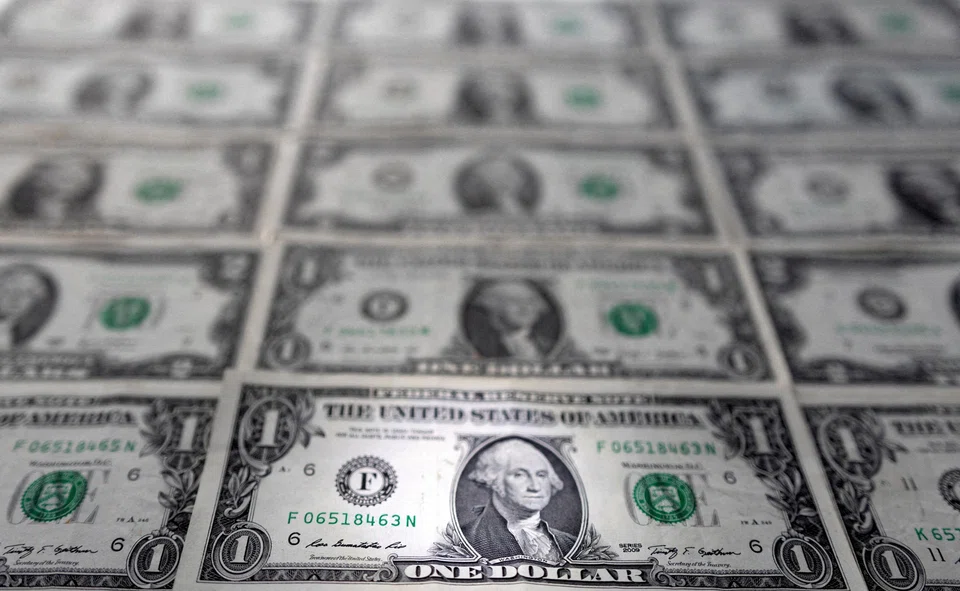
THE US dollar edged up on Thursday (Dec 8), supported by a rise in US Treasury yields, as investors weighed the outlook for Federal Reserve (Fed) policy against the chances that high interest rates could lead to a recession.
Next week brings a raft of major central bank decisions, including from the Federal Reserve, the European Central Bank and the Bank of England.
The key question for traders and investors is whether inflation has reached a peak, giving policymakers more scope to deliver smaller interest-rate rises over the coming months.
US monthly consumer inflation is also due next week, one day before the Fed’s policy meeting on Dec 14, and could be pivotal in setting longer-term expectations for monetary policy.
“US CPI is the one data release that seems to really matter for broader US dollar direction at the moment and, until we got those central bank meetings and one key monthly US data release, not a great deal is happening,” RBC currency strategist Adam Cole said.
The US dollar was broadly steady against a range of major currencies. The euro was last flat against the greenback at US$1.0503, while the pound eased 0.45 per cent to US$1.2165.
The yen, which is highly sensitive to shifts in US Treasury yields, fell 0.2 per cent to 136.82, surrendering some of Wednesday’s 0.4 per cent gain.
The yield on the 10-year Treasury note has fallen almost continuously since hitting a 15-year high in late October, having shed almost a full percentage point. In fact, it’s unwound around half the rise that took place between August’s four-month lows and October’s peak around 4.34 per cent.
Meanwhile, oil prices have fallen below US$80 a barrel for the first time since Russia invaded Ukraine in late February, as concern has mounted about how much a slowing economy will impact global energy demand.
Brent crude futures have dropped to around US$78, almost halving from early March’s 14-year high of US$139.13. Petrol prices at the pump in the United States, which in June hit a record US$5.016, according to the American Automobile Association, are now at US$3.329, down 0.4 per cent on where they were at this point last year.
With energy prices having receded, market-based expectations for inflation have relaxed as well. The 10-year breakeven inflation spread, which subtracts the yield on an inflation-linked Treasury from that on a nominal 10-year note, is at just 2.27 per cent, having peaked above 3 per cent in April.
These two forces, together with diminishing expectations for the Fed to keep raising interest rates at the same aggressive pace, have knocked 6.2 per cent off the value of the US dollar so far this quarter.
This has put the greenback on course for its worst quarterly performance since the third quarter of 2010, when it dropped 8.5 per cent, but for its worst fourth-quarter performance since 2004, according to Refinitiv data.
“The price action continues to highlight that market participants are becoming less concerned over upside inflation risks and more concerned over downside risks to global growth,” Lee Hardman, currency strategist at MUFG, said in a note.
The 10-year yield was last up 4 bps at 3.44 per cent, having neared is lowest in almost three months overnight.
Money markets show there is a 91 per cent chance that the policy-setting Federal Open Market Committee will raise rates by half a point next week, and just a 9 per cent chance there will be another 75 basis point increase. Rates are now seen peaking at just below 5 per cent in May.
Meanwhile, the yuan hovered close to an almost three-month high after China announced another loosening in some of its highly restrictive Covid restrictions.
The US dollar rose 0.2 per cent to 6.974 yuan in offshore trading, clawing back some of Wednesday’s 0.34 per cent loss, when the Chinese government announced a relaxation of some Covid-19 measures that have badly hampered the economy. REUTERS
Decoding Asia newsletter: your guide to navigating Asia in a new global order. Sign up here to get Decoding Asia newsletter. Delivered to your inbox. Free.
Share with us your feedback on BT's products and services
TRENDING NOW

Grab CEO’s wife Chloe Tong on life with Anthony Tan and finding her purpose

He built the Vingroup empire. Now South-east Asia’s richest man is handing some key roles to his sons

HDB reviewing ‘jumbo’ flat scheme after Telok Blangah unit listed for sale at S$2.18m

What role can Japan play in Asean’s future?

