US dollar gains on yen as American yields rise
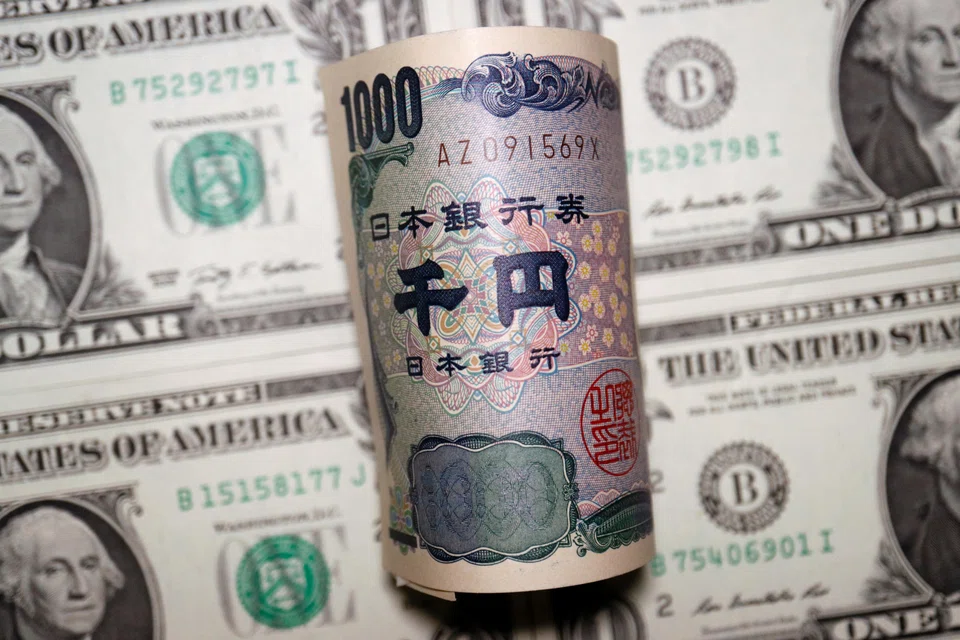
THE US dollar tested a five-week high against major peers on Monday (Feb 13), particularly gaining against the rate-sensitive Japanese yen. This came as US yields were sent higher by investors’ bets that the Federal Reserve would keep monetary policy tight for longer.
Those expectations will be challenged or underscored by the week’s main event – the release of US consumer price data on Tuesday.
The US dollar rose as much as 1 per cent to 132.76 yen, nearing last week’s 132.9, the highest rate since Jan 6.
The euro hit a one-month low of US$1.0656 in Asia trading, but was last at US$1.0693, up 0.15 per cent. The British pound rose 0.3 per cent to US$1.2096, staying not far from a one-month low of US$1.1961 hit last week.
That left the US dollar index, which tracks the greenback against six major peers, at 103.55, steady on the day having earlier neared last week’s one-month peak of 103.9.
Higher US yields were a major driver of the softer yen. The benchmark 10-year US Treasury yield hit a fresh six-week high of 3.755 per cent and the two-year yield hit its highest since late November 2022, at 4.543 per cent.
John Hardy, head of forex strategy at Saxo Bank, said: “That rising US yield pressure is likely behind the faltering yen rolling back lower... after significant volatility last week, when it emerged that the dovish (Masayoshi) Amamiya would not be the nominee to replace (Haruhiko) Kuroda at the helm of the Bank of Japan (BOJ) on his exit in April.”
The Japanese currency dropped sharply last year, reaching a 32-year low of 151.94 per US dollar as American rates rose while Japanese rates stayed pinned near zero. The yen regained ground this year as US rates looked like they were near their peak, and on expectations the BOJ will move away from its ultra-loose stance. But both now look like they will come later than had been expected.
Sources said last Friday that former BOJ board member Kazuo Ueda is set to become the central bank’s next governor. In an interview the same day, Ueda said it was appropriate for the BOJ to maintain its ultra-easy policy.

Naka Matsuzawa, chief strategist at Nomura in Tokyo, said: “Markets are starting to understand that the new governor won’t be as hawkish as (investors) initially thought.”
Meanwhile, in the US, much stronger jobs data released at the start of February suggests the economy is performing strongly, meaning there is less danger for the Fed in keeping rates elevated. Barclays analysts said that “this week’s US CPI is one of the most pivotal prints in recent memory”.
“The US dollar has rallied on the back of… US labour market strength, but the evolving narrative is set to be updated yet again on Tuesday.”
Money markets are positioned for a peak in US interest rates of just below 5.2 per cent around July, compared with the current target rate of 4.5 per cent to 4.75 per cent. But most have walked back expectations of major rate cuts later in the year.
Elsewhere, the Swiss franc strengthened after Swiss inflation data came in higher than expected. The US dollar slid to as low as 0.9213 Swiss francs. REUTERS
Decoding Asia newsletter: your guide to navigating Asia in a new global order. Sign up here to get Decoding Asia newsletter. Delivered to your inbox. Free.
Share with us your feedback on BT's products and services