

US dollar hits four-week peak on resilient US jobs market
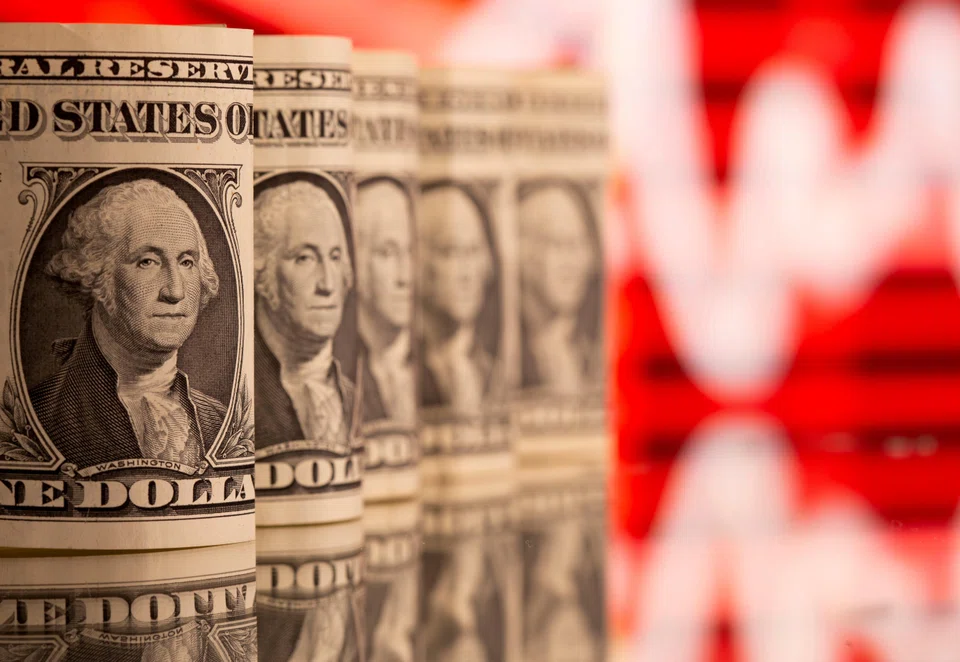
THE US dollar rose to an almost one-month high on Friday (Jan 6), after US economic data highlighted a still-tight labour market that could mean the Federal Reserve keeps hiking interest rates aggressively.
The number of Americans filing new claims for jobless benefits dropped to a three-month low last week while layoffs fell 43 per cent in December, data on Thursday showed.
A separate report also showed that private employment increased by 235,000 jobs last month, far exceeding expectations for a 150,000 increase.
Against a basket of currencies, the US dollar index rose 0.3 per cent to 105.45, having briefly touched a four-week peak of 105.52.
The index was on track for a weekly gain of almost 1.9 per cent, its largest since September.
“Strong labour market data means the narrative that the Fed can keep hiking interest rates is alive,” said Giles Coghlan, chief market analyst at HYCM.
“That’s why we saw the reaction in the US dollar to the positive labour data yesterday,” Coghlan added.
Most major currencies were nursing losses on Friday, after the surging greenback knocked them to multi-week lows in the previous session.
Against the Japanese yen, the US dollar climbed 0.7 per cent to as high as 134.58 yen, its highest since the Bank of Japan tweaked its yield curve control policy on Dec 20 last year.
Markets now await the nonfarm payrolls report due later on Friday, with economists polled by Reuters forecasting the US economy to have added 200,000 jobs in December.
“Today, it’s exactly the same narrative as yesterday. If the labour market is doing well, then we’re likely to see more US dollar strength,” HYCM’s Coghlan said, adding that a payrolls number towards the lower end of expectations could see the US dollar weaken and give comfort to the Fed that their hiking cycle is working.
Meanwhile, eurozone inflation tumbled last month but underlying price pressures rose, making it likely the European Central Bank (ECB) will continue tightening policy.
“The drop does not really tell the whole story,” said Stuart Cole, head macro economist, Equiti Capital, who highlighted the rise in core CPI to a record 5.2 per cent.
“Today’s release does not really change the underlying narrative and will do little to boost hopes that the tightening cycle we are seeing is close to coming to an end,” Cole said.
The euro inched down 0.1 per cent to a one-month low of US$1.0497, having dropped 0.8 per cent in the previous session.
Elsewhere, sterling was 0.5 per cent lower at US$1.1853, its lowest level in over six weeks.
The Aussie was last down 0.2 per cent at US$0.6742, after sliding 1.3 per cent in the previous session, reversing most of the gains it made earlier in the week on news that China has eased its restrictions on coal imports from Australia.
The New Zealand dollar was down 0.2 per cent at US$0.6210, following a 1 per cent slump on Thursday, and was on track for a weekly loss of over 2 per cent, its biggest weekly fall since September. REUTERS
Decoding Asia newsletter: your guide to navigating Asia in a new global order. Sign up here to get Decoding Asia newsletter. Delivered to your inbox. Free.
Share with us your feedback on BT's products and services
TRENDING NOW

Grab CEO’s wife Chloe Tong on life with Anthony Tan and finding her purpose

He built the Vingroup empire. Now South-east Asia’s richest man is handing some key roles to his sons

HDB reviewing ‘jumbo’ flat scheme after Telok Blangah unit listed for sale at S$2.18m

What role can Japan play in Asean’s future?

