

US dollar hovers shy of 5-week high; pound swings after jobs data
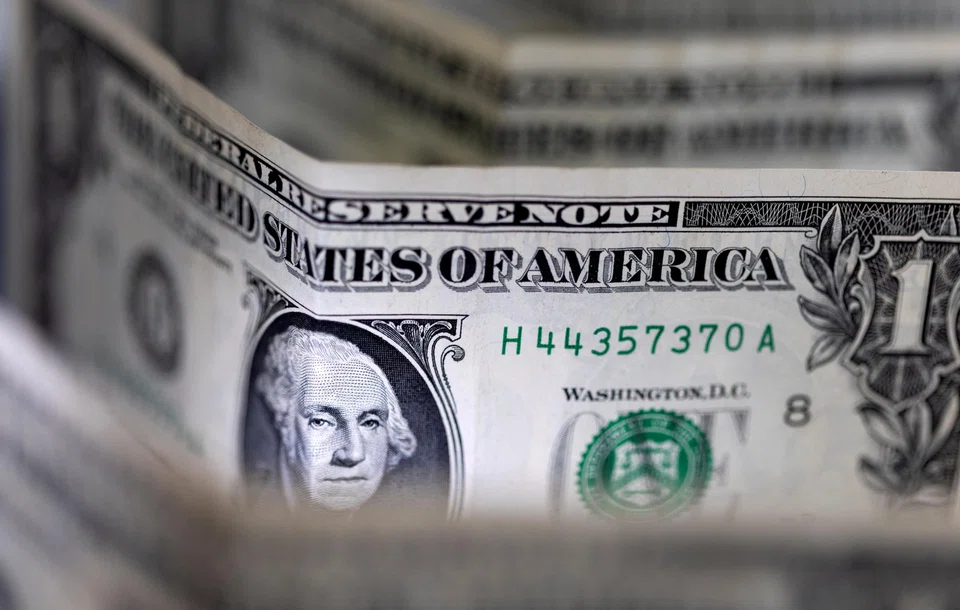
THE US dollar on Tuesday (May 16) sat just below the previous day’s five-week high, while the pound dropped sharply – then recovered – after a rise in Britain’s jobless numbers suggested that fewer Bank of England (BOE) rate increases could be needed in coming months to bring down inflation.
The US dollar index, which tracks the greenback against six main peers, was down 0.14 per cent at 102.29, having reached 102.75 in early trading on Monday, its highest since Apr 10. The currency’s Tuesday losses were largely against other safe havens, with the US dollar down 0.3 per cent against the Swiss franc to 0.8928, and 0.2 per cent lower against the yen to 135.8. The rate-sensitive Japanese currency also reacted to a move lower in US yields.
There was plenty to keep investors on edge, including an important meeting between US President Joe Biden and Republican House of Representatives Speaker Kevin McCarthy, with a little more than two weeks to go before the US government could run short of money to pay its bills.
Analysts say worries about the debt ceiling are part of the reason for the recent strength in the US dollar, which also typically benefits from a “flight to safety”, as well as changing expectations about central bank policy.
“Market expectations were for a Fed rate cut this year, but the data just isn’t playing ball, and adding to that, there is a bit of safe-haven demand,” said Jane Foley, head of FX strategy at Rabobank, pointing to slowing US and eurozone growth, and Tuesday’s weak Chinese economic data, as well as the debt-ceiling worries.
“With all of that, do you really want to buy a lot of risky assets this year?” she asked.
Elsewhere, sterling dropped as much as 0.5 per cent against the US dollar to US$1.2460, and also softened to 87.17 pence per euro after Britain’s unemployment rate unexpectedly rose to 3.9 per cent in the three months to March. This came as more people sought to get back into the jobs market. It later recovered to trade flat against the US dollar.
Current market pricing indicates at least one more 25 basis point rate increase from the Bank of England (BOE), with a good chance of a further hike, but this data could cause the BOE to be more cautious.
“We think the BOE will hike once more in June, as we see a further tick up in regular pay growth next month, but this release reaffirms our view that it will then be done with hiking,” said Morgan Stanley analysts.
They added the data “bolsters the case for a June hold”.
The weak Chinese data was also weighing on the Australian dollar, which dropped as much as 0.5 per cent to US$0.6665.
“The Aussie’s upside looks to have been capped for some time by investor concerns over China’s outlook,” said Sean Callow, a senior FX strategist at Westpac. “Today’s data will set the Aussie back on its heels,” he added, predicting that the currency could ease to around 0.6645, the lower limit of its recent trading range.
The euro was at US$1.0893, up a touch, largely looking through a plunge in German investor sentiment, and the European Union’s statistics agency confirming eurozone first quarter growth was 0.1 per cent quarter on quarter.
The US dollar also gained on China’s offshore yuan, rising to as much as 6.981, its highest since Mar 10.
Decoding Asia newsletter: your guide to navigating Asia in a new global order. Sign up here to get Decoding Asia newsletter. Delivered to your inbox. Free.
Share with us your feedback on BT's products and services
TRENDING NOW

32 companies, 6 individuals bag accolades at Singapore Corporate Awards 2026

He built the Vingroup empire. Now South-east Asia’s richest man is handing some key roles to his sons

URA to review guidelines on floor space to give developers more design flexibility: Chee Hong Tat

Chagee, Mixue and Luckin won the market. Sustaining their edge is the harder part

