US dollar retreats as markets re-assess Fed rate path
 Add BT as a preferred source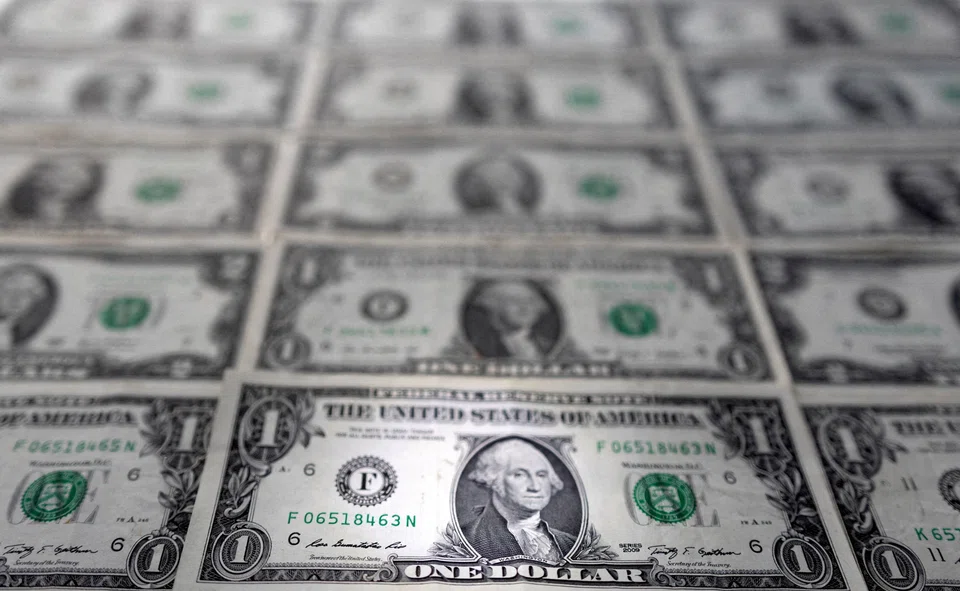
DeeperDive is a beta AI feature. Refer to full articles for the facts.
THE US dollar slipped on Friday (Jun 24) and posted its first weekly decline this month, as traders pared back bets on where interest rates may peak and brought forward their outlook on the timing of rate cuts to counter a possible recession.
A significant factor during the week has been the fall in oil and commodity prices, which has eased inflation fears and allowed equity markets to rebound. This has eroded the safe-haven bid that has been boosting the dollar against major currencies.
“Falling commodity prices could help pull headline inflation prints downward - particularly into the autumn months - reducing the need for aggressive monetary tightening,” said Karl Schamotta, chief market strategist at payments company Corpay in Toronto.
US fed funds futures on Friday priced in a 73 per cent probability of a 75 basis-point increase at the July meeting. But for September the market has fully factored in just a 50-bps rise. The market has also priced in a fed funds rate of 3.31 per cent on Friday, from 3.51 per cent a week earlier.
In afternoon New York trading, the dollar index, which measures the US unit against 6 major currencies, fell 0.2 per cent to 104.013. The safe-haven greenback slipped further after data showed new home sales jumped 10.7 per cent to a seasonally adjusted annual rate of 696,000 units last month. May’s sales pace was revised higher to 629,000 units from the previously reported 591,000 units.
The University of Michigan consumer sentiment survey showed mixed results, with sentiment worsening in June to 50, from a final reading in May of 58. But the reading on 5-year inflation expectations eased to 3.1 from the preliminary 3.3 per cent estimate in mid-June.
Navigate Asia in
a new global order
Get the insights delivered to your inbox.
The dollar, up around 9 per cent this year, has lost some of its shine since investors started betting the Fed could slow the rate-tightening pace following another 75 basis-point increase in July. They now see rates peaking next March around 3.5 per cent and falling nearly 20 bps by July 2023.
This rate hike repricing sent 10-year Treasury yields to 2-week lows, while the dollar index has lost 0.5 per cent last week.
For now though, Fed chair Jerome Powell stressed the central bank’s “unconditional” commitment to taming inflation. Fed governor Michelle Bowman also supported 50 bps hikes for “the next few” meetings after July.
Analysts noted terminal rate repricing across the developed world as recession fears grow. “The Fed has said it will do its best to bring down inflation without dealing a significant blow to the economy,” said Joe Manimbo, senior market analyst, at Western Union Business Solutions in Washington. “But if a soft landing should ultimately prove elusive, then the Fed would likely have to change course and start to slash rates. So while the rate debate remains fluid, for now inflation fears have given way to hopes of looser policy if things really deteriorate.”
The Japanese yen, sensitive to changes in US yields, was down 0.2 per cent at 135.20 per dollar. The euro rose 0.3 per cent to US$1.0553. The greenback’s slide boosted even commodity-focused currencies such as the Australian dollar and Norwegian kroner. The Aussie rose 0.8 per cent to US$0.6946, and posted its weekly gain after 2 straight weeks of losses. The Norwegian kroner, fresh off Thursday’s 50 basis-point rate hike, was up 1.2 per cent at 9.8495 per dollar. The euro fell to its lowest since early March against the Swiss unit at 1.0052 francs. It was last flat at 1.0118 francs.
Decoding Asia newsletter: your guide to navigating Asia in a new global order. Sign up here to get Decoding Asia newsletter. Delivered to your inbox. Free.
Share with us your feedback on BT's products and services