

US dollar rises on robust US economy, yuan sinks to 16-year low
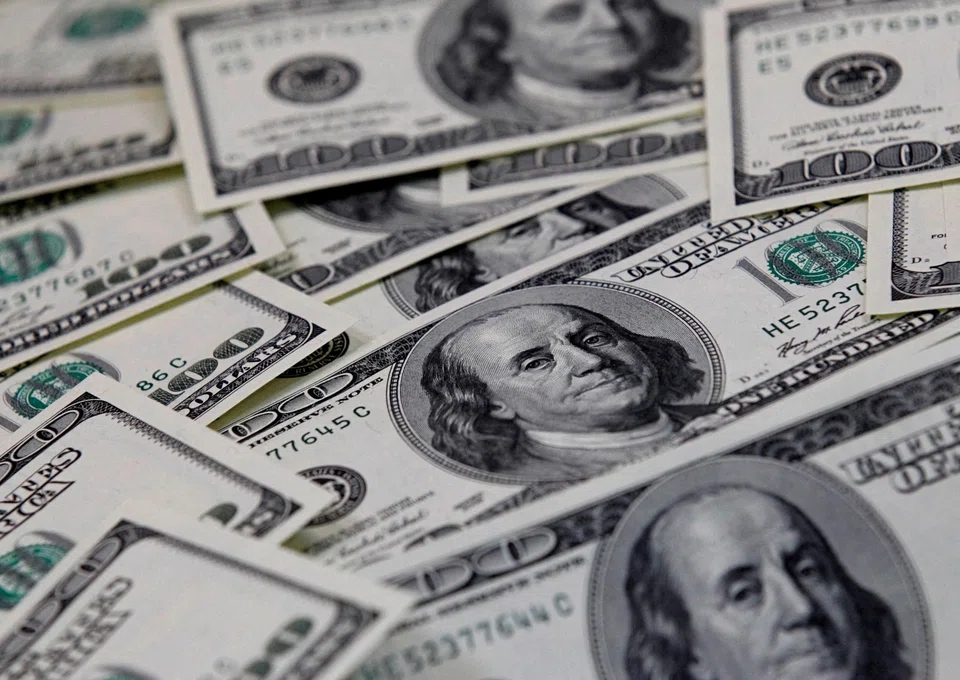
THE US dollar edged up after pushing the yen to a 10-month trough on Thursday (Sep 7) and kept the euro and sterling pinned near three-month lows, as investors placed their hopes on a still-resilient US economy.
China’s onshore yuan slid to a 16-year low, under pressure from a property slump, weak consumer spending and shrinking credit growth in the world’s second-largest economy.
Against a basket of currencies including the euro and sterling, the US dollar rose 0.1 per cent to 104.98, holding on to some of its gains from the previous session after scaling a six-month peak as the US services sector unexpectedly gained steam in August.
“Stronger-than-expected ISM services reaffirmed the US outperformance narrative, adding broad support to the US dollar,” said Kirstine Kundby-Nielsen, analyst at Danske Bank.
The Federal Reserve report known as the Beige Book, published on Wednesday, showed that US economic growth was modest in recent weeks, job growth was subdued, and inflation slowed in most parts of the country.
Market pricing shows a more than 40 per cent chance that the Fed will deliver another rate hike in November, according to the CME FedWatch tool, though expectations are for policymakers to keep rates on hold later this month.
The onshore yuan sank to 7.3296 per US dollar, its weakest since December 2007.
China has rolled out a series of policy measures in recent months to revive a stumbling economy after its post-pandemic recovery fell away quickly. Investors remain on the lookout for further support measures from Beijing to revive market confidence.
Data on Thursday showing a lower-than-expected fall in China’s exports and imports numbers in August did little to lift investors’ spirits.
“I think that what’s really driving the US dollar is not so much that the US economy is doing great, but it’s doing better than elsewhere,” said Joseph Capurso, head of international and sustainable economics at Commonwealth Bank of Australia.
The Australian dollar was about flat at US$0.6384, while the New Zealand dollar rose 0.3 per cent at US$0.5885, with both languishing near their recent 10-month lows.
The two antipodean currencies are often used as liquid proxies for the Chinese yuan.
“We see yuan staying under pressure (against the US dollar) in the near term,” said Becky Liu, head of China macro strategy at Standard Chartered Bank.
“The pair could stay range-bound in the foreseeable future without breaking materially higher, as (The People’s Bank of China)‘s stance to defend the currency around current level remains very strong.”
The China-sensitive euro was last 0.2 per cent lower at US$1.0715, after having fallen to its lowest since June on Wednesday.
European Central Bank policymakers warned investors that the decision for a rate increase next week was still up in the air, but a rise in borrowing costs was among the options on the table.
In Japan, traders continued to be on intervention watch as a fragile yen struggled to make headway against a resilient US dollar, even as officials stepped up their warnings against a sell-off in the currency.
The greenback scaled a fresh top of 147.875 yen in early Asia trade, its highest since last November. The yen last edged 0.2 per cent higher to 147.295 per US dollar.
Elsewhere, sterling slipped 0.3 per cent to US$1.2465, touching a three-month trough.
Bank of England governor Andrew Bailey said on Wednesday that the central bank was “much nearer” to the end of its rate-hike cycle, though borrowing costs might still have further to rise because of stubborn inflation pressures.
Markets currently see a 71 per cent chance of BOE rate hike on Sep 21. REUTERS
Decoding Asia newsletter: your guide to navigating Asia in a new global order. Sign up here to get Decoding Asia newsletter. Delivered to your inbox. Free.
Share with us your feedback on BT's products and services






