US dollar slips but remains near seven-week high
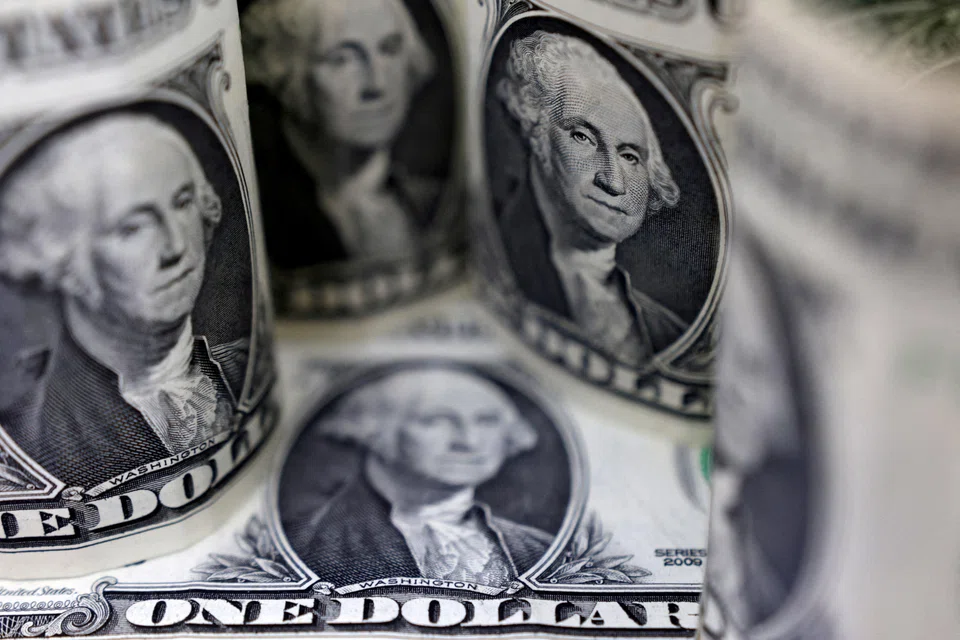
THE US dollar slipped from a seven-week high on Monday (Feb 27), as investors took stock of last week’s strong US economic data and the outlook for global interest rates.
Data on Friday showed that US consumer spending rebounded sharply in January, while inflation accelerated.
Pricing in futures markers showed that traders now expect the Federal Reserve to raise interest rates to around 5.4 per cent by the middle of the year. At the beginning of February, they envisaged rates rising to a peak of just 4.9 per cent.
The US dollar index, which measures the greenback against six major peers, has risen almost 3 per cent in February and is on track to snapping a four-month losing streak. It was last down 0.1 per cent at 105.05, after earlier climbing to a seven-week high of 105.36.
The euro fell to its lowest against the US dollar since Jan 6 on Monday, slipping to US$1.053 as the greenback gained. It then rebounded somewhat, however, and was last up 0.16 per cent to US$1.056.
Simon Harvey, head of FX strategy at Monex Europe, said a slight improvement in investor sentiment on Monday, with global stocks rising, may be weighing on the US dollar.
“There may also be a factor of month-end flows out of the US dollar after a strong February for the greenback,” he said, although he highlighted that the moves were limited.
The US dollar was last down 0.22 per cent against the Japanese yen at 136.21 yen, reversing some of its gains after rising to a more than two-month high of 136.58 earlier in the session.
Incoming Bank of Japan governor Kazuo Ueda said on Monday that the merits of the bank’s current monetary policy outweighed the costs, stressing the need to maintain support for the Japanese economy with ultra-low interest rates.
The pound was up 0.31 per cent at US$1.198, after falling for three straight sessions. Analysts said a potential deal resolving post-Brexit tensions with the European Union was supporting the pound.
Ulrich Leuchtmann, head of FX research at Commerzbank, said core inflation was a key concern for central bankers.
“Whereas headline rates are falling, the trend of rising core inflation rates has been unbroken,” he said. “Only once we notice a reversal in this data, the fear of inflation currently affecting the market is going to ease.”
Friday’s data showed that the core measure of US personal consumption expenditures inflation, which strips out volatile food and energy costs, came in at 4.7 per cent year on year in January, up from 4.6 per cent in December.
Core consumer price inflation in the eurozone rose to a record high of 5.3 per cent year on year in January.
Investors will get more information on the state of the global economy this week. February survey data from US ISM on manufacturing and services are due on Wednesday and Friday respectively. Meanwhile, preliminary eurozone CPI inflation figures for February are due on Thursday.
The Aussie was 0.15 per cent lower at US$0.672, after falling below US$0.67 to its lowest since the start of January earlier in the session.
The US dollar was down 0.17 per cent against the offshore Chinese yuan, to 6.97 per US dollar. It earlier tested the 7 barrier, rising to 6.99, its highest since late December. REUTERS
Decoding Asia newsletter: your guide to navigating Asia in a new global order. Sign up here to get Decoding Asia newsletter. Delivered to your inbox. Free.
Share with us your feedback on BT's products and services