
US dollar slips, still set for biggest annual gain since 2015
 Add BT as a preferred source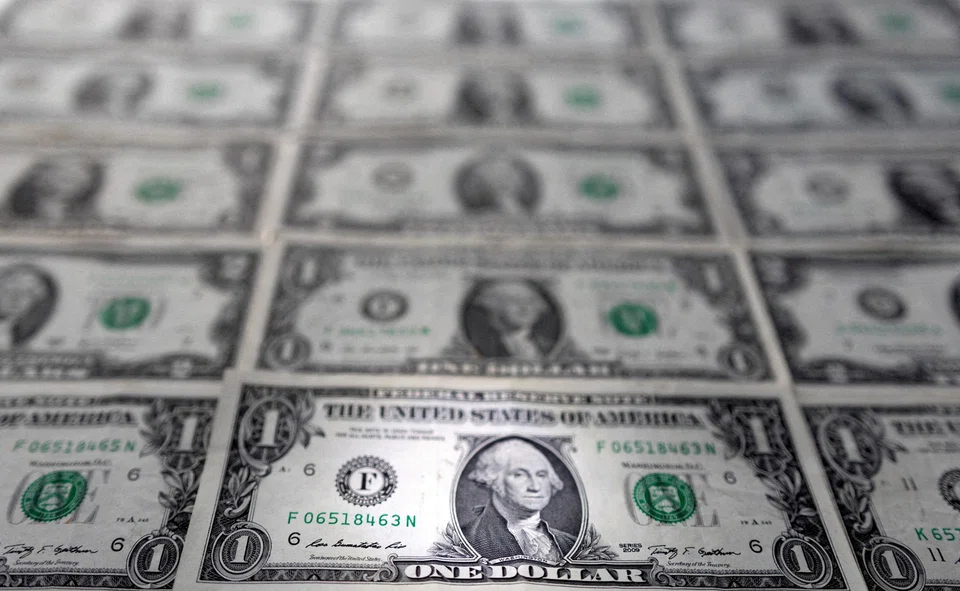
THE US dollar fell on Friday (Dec 30) but was still on track for its biggest annual gain since 2015, in the last trading day of a year dominated by Federal Reserve (Fed) rate hikes and fears of a sharp slowdown in global growth.
Asian equities had risen earlier in the session after market sentiment on Wall Street got a boost on Thursday from data showing rising US jobless claims, which suggested the Fed’s interest rate hikes were lowering demand for labour.
With liquidity lower due to holidays, the US dollar index was down around 0.3 per cent on the day at 103.720.
The Fed has raised rates by a total of 425 basis points since March in an attempt to curb surging inflation.
Against a basket of currencies, the US dollar has gained around 8.4 per cent so far in 2022 – its biggest annual jump in seven years – but it has pared some gains in recent weeks as investors expect the Fed’s rate-hiking cycle to end next year.
“We’re not yet convinced that the Fed is turning dovish or that the US inflation will come to target for good, so there’s room for the US dollar to rebound,” said Jan Von Gerich, chief analyst at Nordea.
Navigate Asia in
a new global order
Get the insights delivered to your inbox.
“But for the near-term outlook we’re looking for some more performance in the euro versus the US dollar.”
The euro was up 0.2 per cent on the day at US$1.0681, on track for a 6.2 per cent annual loss versus the US dollar, compared to last year’s 7 per cent drop. A combination of weak eurozone growth, the war in Ukraine, and the Fed’s hawkishness has put the euro under pressure this year.
European Central Bank policymaker Isabel Schnabel said last week that the central bank must be prepared to raise interest rates further, including by more than the market expects, if that is needed to bring down inflation.
The British pound was down 0.1 per cent, set for a 11 per cent annual drop .
The Australian dollar, seen as a liquid proxy for risk appetite, was up 0.3 per cent on the day at US$0.6796, but on track for a 6.5 per cent drop on the year overall.
China’s offshore yuan was up around 0.9 per cent against the US dollar, with the pair at 6.9085. Still, it was set for an 8.6 per cent annual drop, hurt by US dollar strength and a domestic economic slowdown.
Optimism about China’s reopening after three years of strict Covid-19 curbs has been tempered by surging infections which threaten more economic disruptions.
The United States, South Korea, India, Italy, Japan and Taiwan have all imposed Covid tests for travellers from China. The World Health Organization said it needs more information to assess the latest surge in infections.
Nordea’s Von Gerich said China’s reopening “will be a source of volatility.”
“But when we get past that, when we really get to the really positive economic impact, I think it should boost risk appetite globally,” he added.
The US dollar was down around 0.9 per cent against the Japanese yen, at 131.85.
The Bank of Japan’s ultra-dovish stance has seen the US dollar gain 14.5 per cent versus the yen so far this year, in the yen’s worst performance since 2013. But the BOJ’s surprise decision to tweak its bond yield control programme saw the yen jump to a four-month high against the US dollar earlier in December.
The Swiss franc was steady versus the US dollar, at 0.92275 .
The Swiss National Bank increased the amount of the Swiss currency it sold in the third quarter of 2022, the central bank said on Friday, indicating that its focus has switched from stemming the franc’s strength to fighting inflation. REUTERS
Decoding Asia newsletter: your guide to navigating Asia in a new global order. Sign up here to get Decoding Asia newsletter. Delivered to your inbox. Free.
Share with us your feedback on BT's products and services

