
US dollar soothed by uneasy market calm
 Add BT as a preferred source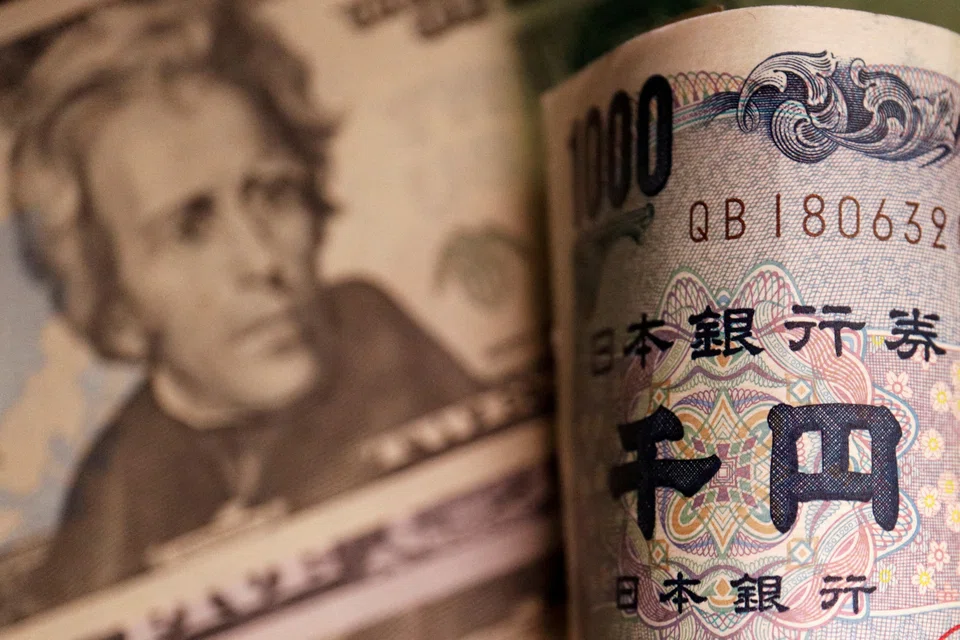
THE dollar steadied against most major peers on Wednesday (Mar 29), pausing its recent declines, and gaining sharply against the yen which was volatile as the end of the Japanese fiscal year approaches.
The dollar index, which tracks the currency against six peers, was flat at 102.42, giving up small gains of up to 0.3 per cent in the morning in Europe. It has fallen for the past two sessions, and is set for a 2.1 per cent monthly fall, a victim of the market ructions induced by problems in the banking industry.
The euro was up a whisker on the day at US$1.0855 and sterling was steady at US$1.2343, having touched a near two-month intraday high of US$1.236.
“We have returned to a sense of calm right now, but I don’t think it’s all over. In the way that water will find cracks, the market is testing for weak points, and it’s how and who will cope best in the high rate environment,” said Jane Foley, head FX strategy at Rabobank.
She said that currency markets had been struggling to fix onto a particular trend in the recent volatility.
Foley added that even if one has a negative view of the US dollar, one may not want to park it in emerging markets’ (EMs) currencies because a recession in the US is not going to benefit the EMs.
Navigate Asia in
a new global order
Get the insights delivered to your inbox.
The yen remained volatile in the run-up to the end of the Japanese fiscal year on Friday. The dollar touched a one-week high on the yen and was last up 0.7 per cent to 131.85 yen, while the euro gained 0.7 per cent against the yen to 143.
The yen hit its strongest in roughly two months against both the dollar and the euro last week, benefiting from a flight to safety, but Foley said the market could be seeing less need for a safe haven this week.
The dollar had dropped 0.5 per cent against the yen the previous day, when it uncharacteristically moved in the opposite direction to long-term US Treasury yields, which have been rising as calm returns to markets.
The 10-year benchmark US yield squeezed up to a one-week peak of 3.583 per cent in Tokyo trading, but was last little changed at 3.556 per cent. Last Friday, the yield had dropped to a six-month low of 3.285 per cent.
“US bond volatility has driven most of the volatility in dollar-yen, so it makes sense that we’re closer to 130 than 140 because US yields are that much lower,” said Ray Attrill, head of foreign-exchange strategy at National Australia Bank.
Regarding Tuesday yen’s rally, “it’s not following the rules as one might expect, which maybe says that coming into fiscal year-end, must-do flows are having a disproportionate effect,” Attrill added.
Elsewhere, the Australian dollar slipped 0.45 per cent to US$0.6677 after a reading of Australian consumer inflation slowed to an eight-month low, adding to the case for the Reserve Bank to pause its rate hiking campaign next week.
Bitcoin rose 4 per cent to US$28,360, finding its feet having slid following the problems at the world’s biggest cryptocurrency exchange, Binance, which has been sued by the US Commodity Futures Trading Commission (CFTC). REUTERS
Decoding Asia newsletter: your guide to navigating Asia in a new global order. Sign up here to get Decoding Asia newsletter. Delivered to your inbox. Free.
Share with us your feedback on BT's products and services

