
US dollar still reigns, but businesses and investors ramp up currency diversification: StanChart

Amid the USD uncertainty, discussions are resurfacing over the prospects of RMB internationalisation

Summarise
Jude Chan
Published Tue, Jan 27, 2026 · 09:55 AM
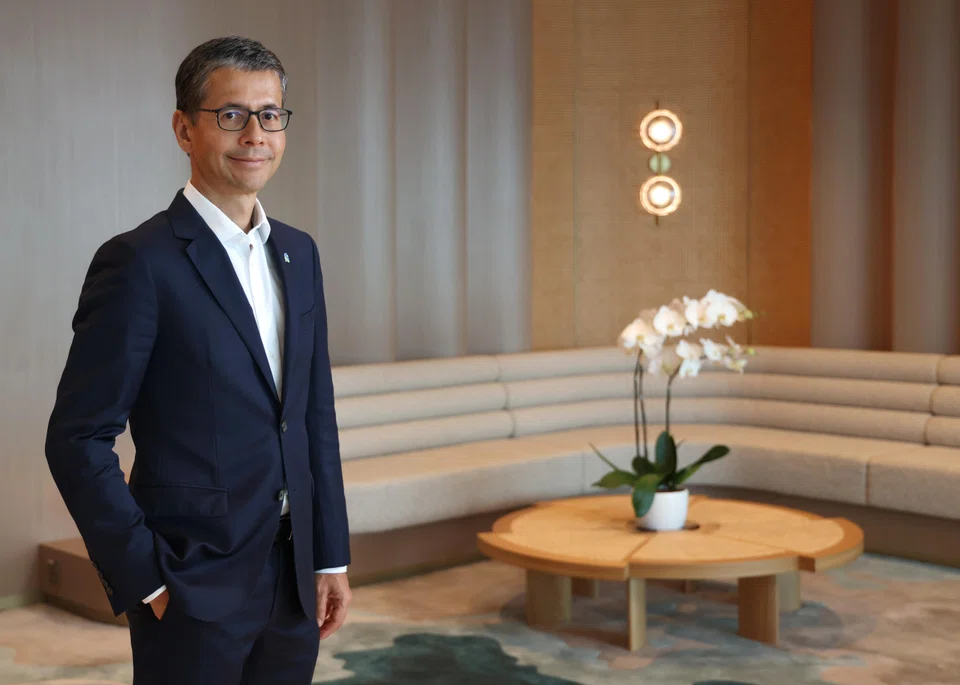
    • Standard Chartered's Singapore CEO Patrick Lee says the renminbi is  increasingly seen as a "pragmatic currency" for trade settlement.
    • Standard Chartered's Singapore CEO Patrick Lee says the renminbi is increasingly seen as a "pragmatic currency" for trade settlement. PHOTO: YEN MENG JIIN, BT

    [SINGAPORE] The US dollar still dominates global trade, but the use of the Chinese renminbi (RMB) has gained strong momentum across Asean, with the trend expected to continue. 

    “We do not see other currencies challenging the USD’s (US dollar) dominant role in the near term,” said Jean Lu, chief executive officer of Standard Chartered Bank in China in an interview with The Business Times.

    “That said, the increasing demand from international investors and trade businesses for currency diversification and portfolio de-risking or re-balancing is a genuine and notable trend,” she added.

    The USD fell against most of its major peers on Monday (Jan 26), as potential US involvement in foreign-exchange intervention in Japan hurt sentiment towards the world’s reserve currency. 

    This came after a rate check by the Federal Reserve Bank of New York spurred speculation that the US was preparing to assist Japanese officials in intervening directly in the currency market to prop up the yen.

    Gold rose above US$5,000 for the first time as investors flocked to the “safe haven”.

    Amid the USD uncertainty, discussions are resurfacing over the prospects of RMB internationalisation.

    The way Lu sees it, international usage of RMB is “a natural and inevitable commercial process”. 

    “In recent years, the share of the renminbi as global payment, investment and financing currency has been steadily rising,” said Lu, who is also executive vice-chairperson of the board of Standard Chartered Bank (China).

    “The current international usage of RMB is still quite low compared to China’s share of global trade – we see a natural position for the future increase,” she said.

    Jean Lu, CEO of Standard Chartered Bank in China, sees increasing demand from international investors and trade businesses for currency diversification and portfolio de-risking or rebalancing. PHOTO: STANDARD CHARTERED BANK

    Patrick Lee, Standard Chartered Bank’s CEO for Singapore and CEO for Asean and South Asia, believes that the growth of the RMB could be especially pronounced in the region.

    “Several structural drivers are at play, including growing trade and investment flows between China and Asean, regional infrastructure and trade initiatives, as well as deeper financial integration,” he said.

    For example, he pointed out that cross-border RMB settlement between China and Asean rose by 35 per cent year on year in 2024.

    In Singapore, RMB deposits have doubled from 134 billion yuan (S$24.4 billion) in 2020 to 276 billion yuan in 2024. It is now more than a quarter of Hong Kong’s deposit pool of approximately one trillion yuan, Lee said.

    “RMB is increasingly seen as a pragmatic currency for trade settlement, especially for firms operating within China-linked supply chains,” he said.

    Lee noted an increasing number of Chinese enterprises, such as those in the renewables and electric vehicles industries, that are building plants in the Asean region as well as setting up regional sourcing and treasury centres in Singapore. 

    “This naturally drives demand for RMB-denominated transactions, helping reduce foreign exchange risk and reliance on the US dollar when dealing with Chinese counterparties,” Lee said.



