
US dollar on track for ninth weekly gain
 Add BT as a preferred source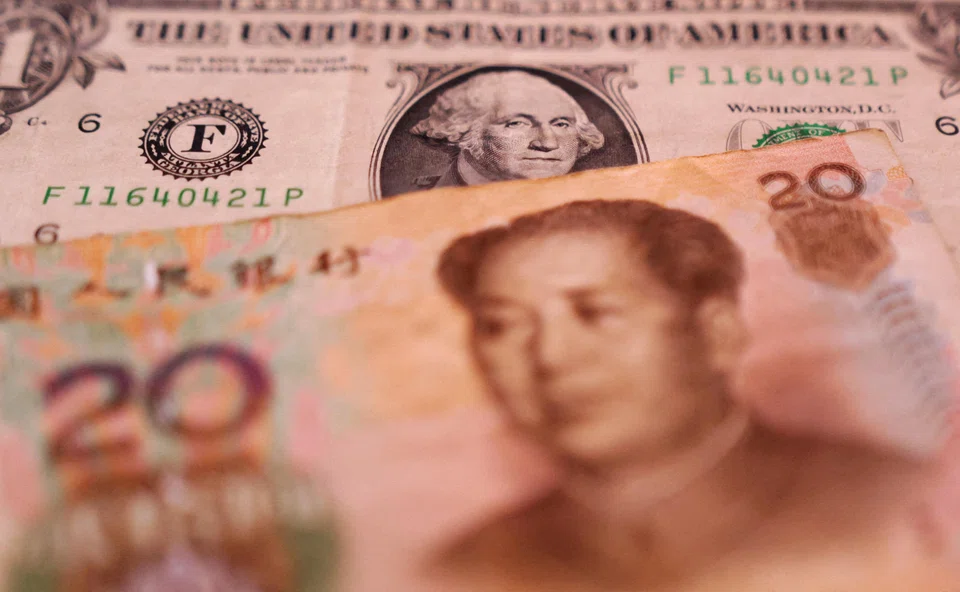
THE US dollar was just below a six-month high on Friday (Sep 15), having strengthened overnight following US economic data, while the yen fell to 10-month lows.
Markets were adjusting to a new outlook for central bank rate hikes after the European Central Bank on Thursday raised rates to a record high of 4 per cent but signalled the hike was likely to be its last. Eurozone bond yields and the euro fell as investors bet the central bank would start cutting rates next year.
For currency markets, the focus is on the divergence between the ECB and US Federal Reserve’s monetary policy plans, said Joel Kruger, a currency strategist at LMAX Group.
“If we’re heading to a place where there’s going to be continued pressure on the Fed to be needing to be thinking about higher interest rates while the other central banks are pricing in peak rates, then that would suggest that there is potential for more upside to the US dollar,” he said.
At 1048 GMT, the US dollar index was down 0.1 per cent on the day at 105.27, having eased from Thursday’s six-month peak of 105.43. Still, it was on track for its ninth weekly gain in a row.
US retail sales increased by more than expected in August, as a surge in petrol prices boosted receipts at service stations.
Navigate Asia in
a new global order
Get the insights delivered to your inbox.
The euro was up 0.2 per cent at US$1.06615, having recovered slightly from Thursday’s multi-month low of US$1.0632.
“We think that at this stage EUR/USD will revert to being even more driven by the US dollar leg,” ING FX strategist Francesco Pesole said in a client note.
“Markets have taken on board the notion that the ECB has likely peaked, meaning that data releases in the eurozone should lose some degree of market relevance.”
The Japanese yen fell to a new 10-month low, with the US dollar hitting 147.94 per yen. The yen has weakened in recent months because the Bank of Japan remains a dovish outlier among global central banks.
China’s yuan got a boost from economic data in early Asian trading, which showed industrial output and retail sales grew at a faster-than-expected rate in August.
The US dollar was down around 0.1 per cent against the offshore yuan, with the pair at 7.2801.
The yuan weakened on Thursday after the People’s Bank of China (PBOC) announced it would make its second 25-basis point cut to banks’ reserve requirement ratio this year, a move aimed at supporting a shaky economic recovery.
Analysts said downward pressure on the yuan remained, as China’s economic recovery is far from certain.
“I don’t think there are any structural changes that have happened that are significant enough to suggest that we’re going to see a major reversal. I feel it’s more a bit of a pause,” said LMAX’s Kruger.
The risk-sensitive Australian and New Zealand dollars also gained in early trading, with the Aussie up 0.2 per cent at US$0.6453 and the Kiwi steady at US$0.59135.
Commodity currencies have benefited from a rise in energy prices, with oil on track to gain for the third week in a row.
Britain’s pound was up 0.1 per cent at US$1.2417. REUTERS
Decoding Asia newsletter: your guide to navigating Asia in a new global order. Sign up here to get Decoding Asia newsletter. Delivered to your inbox. Free.
Copyright SPH Media. All rights reserved.

