

US election spells uncertainty for China-exposed listcos but semicon, green sectors could gain
With the race narrowing between both candidates, market observers warn of volatility in the Singapore market

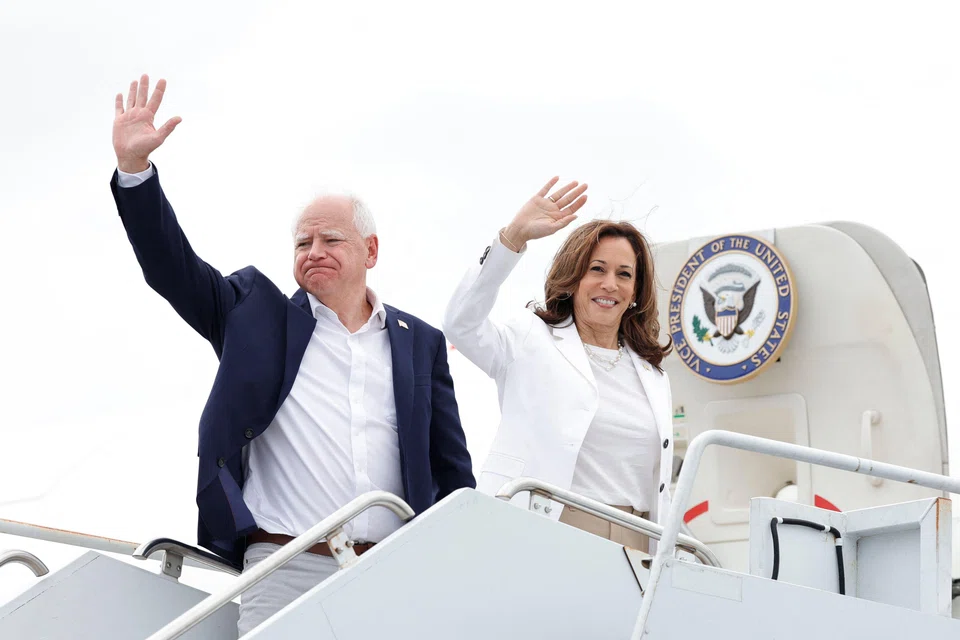
REGARDLESS of who wins the upcoming US presidential election, Singapore companies with a significant exposure to China’s markets are expected to be negatively affected in light of a potential escalation in trade tensions between the US and China.
However, Singapore-listed stocks in the semiconductor and manufacturing sectors could end up benefiting from the diversification of supply chains away from China.
Stocks with exposure to the clean energy and electric-vehicle sectors could also gain from a win by Democratic presidential candidate Kamala Harris, said market watchers.
Apart from the elections, factors such as changes to interest rates and global economic conditions will have a longer term bearing on the market, they added.
Narrower competition, higher market volatility
The US presidential race was blown wide open after US Vice-President Kamala Harris replaced Joe Biden as the presidential candidate for the Democratic party on Jul 23.
While Biden had been trailing former president Donald Trump in the opinion polls, a recent Reuters/Ipsos poll published on Aug 29 showed Harris leading Trump 45 per cent to 41 per cent.
With the race narrowing between both candidates, market observers warn of volatility in the Singapore market in the lead up to the elections.
Analysts from DBS Group Research noted that the period between August and October tends to be volatile for Singapore equity markets, as investors typically sell off index stocks to lock in gains they have made after dividend payouts. With the impending US election, there is scope for added volatility over the same period this year, they added.
Nevertheless, the volatility brought about in the lead up to elections presents an opportunity to accumulate Singapore stocks, said the analysts.
They pointed out that the benchmark Straits Times Index (STI) tends to perform well after the US presidential elections.
Over the past six election cycles, the STI’s average price return in the three months after elections is higher (2.3 per cent) than in non-election years (1.7 per cent).
However, Shekhar Jaiswal, head of equity research at RHB Bank (Singapore), feels that it is too early to determine how to invest based on the US election results.
“While Trump’s policy ideas are well known, investors are only now learning about Harris’ perspective on the economy, its issues, and her policy remedies,” said Jaiswal.
US-China tensions
Nevertheless, analysts agreed that trade tensions between US and China is likely to affect the Singapore equity market.
Both presidential candidates are expected to address trade relations with China if they take office, although their approaches will differ.
Trump has proposed blanket tariffs of at least 60 per cent on Chinese goods, while Harris is expected to follow the Biden administration’s position.
RHB’s Jaiswal said this would involve imposing more targeted trade penalties on industries such as renewables, crucial commodities, and semiconductors.
Lorraine Tan, the director of equity research for Asia at investment research company Morningstar, said that a Harris administration will probably adopt a gradual escalation of policies to rebalance US’ trade against China over time. These policies could involve the imposition of tariffs or trade restrictions on Chinese goods.
The most likely scenario from a Trump win is increased tensions with China, which will have negative spillover effects on Asean markets, said Jaiswal.
Higher tariffs against China will likely lead to elevated supply chain constraints and higher global consumer prices. The tariffs could also limit the country’s economic growth, leading to a deterioration of investor sentiment against the world’s second-largest economy.
In this scenario, Singaporean companies with significant exposure to China’s economy will be negatively impacted. So will manufacturing companies that have a high dependence on trade with China.
On the other hand, banks and industrial companies that have higher exposure to the US and other developed markets will benefit from speeding up the supply chain relocation within Asean from China, said Jaiswal.
“We would also favour a switch to defensive companies with strong domestic exposure in such a scenario,” he added.
RHB’s preferred picks in this scenario are Raffles Medical, Sheng Siong, ST Engineering and UOB.
Regardless of who wins, the one common theme that will continue is companies’ efforts to diversify their supply chain and manufacturing activities away from China to mitigate the risk of trade tensions between the US and China, said DBS Research Group.
DBS said that stocks such as tech company Venture Corp and semiconductor player Frencken would benefit from such a strategy.
Energy sector
Another area where both administrations would differ is the energy sector.
Trump is overwhelmingly reliant on the traditional energy industry while Harris’ government will assist renewable energy companies, such as electric-vehicle makers and utilities, noted Jaiswal.
If Harris were to win, he said that RHB would be positive on Singapore stocks that have exposure to the clean energy and electric-vehicle sectors, as well as themes related to increased consumer spending.
Some analysts were of the view that the outcome of the US elections will have a lower bearing on Singapore’s equity market compared to other factors.
Morningstar’s Tan said that interest rate cuts by the US Federal Reserve will have a greater impact as it points the way for rates to also come down in Singapore.
However, Paul Chew, the head of research at Phillip Securities Research, said that worries of a worsening fiscal deficit under either US presidential candidate could cause bond yields to climb despite interest rate cuts.
Gerald Wong, founder and CEO, Beansprout, also said that investors should base their decisions on longer term fundamentals, such as companies’ corporate earnings and the overall health of the global economy.
Regardless of who becomes the next president of the US, good investment will still depend on careful research, said analysts.
Jaiswal said: “While the investing community is busy determining which party is better for the stock market, I think investors who research well and invest carefully for the longer term do not need to be overly concerned about who the next US president will be.”






