

US sanctions on China oil giant Hengli turn up heat for teapot refiners
Hundreds of chemical, synthetic fibre and textile producers across East Asia face near-immediate disruption to supplies
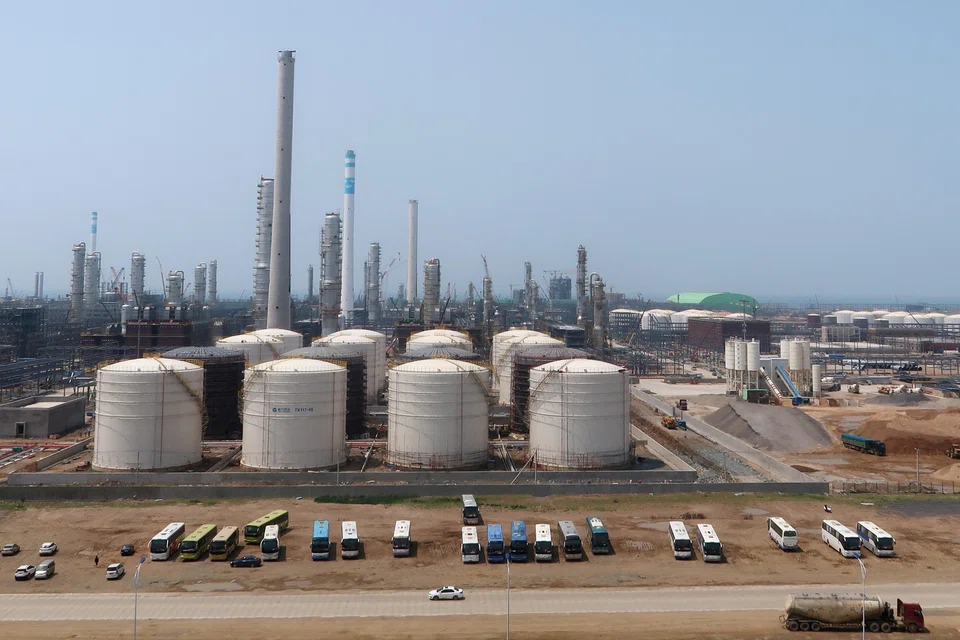
[WASHINGTON, DC] A US move to sanction one of China’s largest private refiners over ties to Iran will hurt a vast and already embattled petrochemicals sector – but the collateral damage will extend far beyond oil.
The Treasury Department announced on Friday (Apr 24) that it had blacklisted Hengli Petrochemical (Dalian) Refinery.
The target is the most ambitious to date in China’s refining sector, and underscores the US’ eagerness to push Iran to the negotiating table at all costs, even just weeks before a long-awaited meeting between US President Donald Trump and his counterpart Xi Jinping.
Liao Na, founder of GL Consulting, which analyses China’s energy and industrial sectors, said: “With Trump set to visit Beijing in May, this move is like a bargaining chip deployed by Washington, given the lack of progress on the Iran war and the Strait of Hormuz.”
Until now, wary of the economic and diplomatic fallout, Washington’s efforts to cut off Teheran’s oil revenue have targeted smaller Chinese companies and facilities.
Hengli, by contrast, is a representative of the most modern of China’s private refiners, with a sprawling oil-processing and chemicals complex in the north-eastern province of Liaoning.
While the country does still have an army of small independent players – the original so-called teapots – larger entities such as this are now giant operations.
Altogether, the private sector accounts for as much as a third of refining capacity, in a country where energy security is an unchallenged priority.
“The sanctions on Hengli are an escalation,” said Erica Downs, senior research scholar at Columbia University’s Center on Global Energy Policy, who has spent years studying the sector.

She added that Hengli “is also the very type of integrated refining-petrochemical facility that Beijing wants to concentrate on – and is an Aramco customer”.
China has long been the single largest buyer of Teheran’s oil shipments, many of them arriving indirectly and through private refiners, and then turned into petrol, diesel and other oil products.
Chinese customs data do not reflect that trade, with the last official shipment recorded several years ago.
Hengli said in an exchange filing on Sunday that US’ accusations were “baseless”, as it had never engaged in any trade with Iran and that all crude suppliers have committed to ensuring their cargoes are not sourced from jurisdictions under US sanctions.
It holds sufficient crude inventories to cover more than three months of processing needs and procurement operations have not been affected, it said. Though in the future, it will settle purchases in Chinese renminbi.
The company has not immediately responded to further queries.
The US has vacillated on its stance on Iranian oil since the start of the war in the Persian Gulf, initially offering waivers on Teheran’s seaborne crude to cool prices. That has since expired and has not been renewed.
Widening sanctions on trader partners is a tactic that will now ripple Asian and global supply chains. At least two of Hengli’s petrochemical clients in Asia have already rushed to cancel their orders, said sources. They asked not to be named as the deals are not public.
Hengli is among China’s top producers of purified terephthalic acid and one of world’s biggest petrochemical suppliers.
Beijing’s growing consumption of plastics products from textiles to toys has attracted investment interest worth billions of dollars from conglomerates, from Saudi Aramco to Germany’s BASF.
Aramco, which has a term crude deal with Hengli, has sought to take a minority stake, though talks have stalled.
With Hengli out of the US dollar-based payment system, hundreds of chemical, synthetic fibre and textile producers across East Asia face near-immediate disruption to vital supplies.
This is potentially good news for competitors in China, Japan and South Korea, but a change that will lead to further inflationary pressures from an eight-week war in the Middle East.
Hengli has a nameplate crude refining capacity of 400,000 barrels a day and ranks second in the private sector alongside Shandong’s Yulong Petrochemical, which was sanctioned by the European Union in 2025 for the Russian oil trade.
Together with Zhejiang Petrochemical and Shenghong Group, the four are known as Chinese “mega” private refiners and account for about 10 per cent of capacity. BLOOMBERG
Decoding Asia newsletter: your guide to navigating Asia in a new global order. Sign up here to get Decoding Asia newsletter. Delivered to your inbox. Free.
Share with us your feedback on BT's products and services
TRENDING NOW

DBS, OCBC, UOB rout lops billions off STI as inflation, rate concerns spook investors

Grab CEO’s wife Chloe Tong on life with Anthony Tan and finding her purpose

OCBC sheds S$8 billion in value as shares close nearly 6% down; analysts cautious on banks

Deal between tycoon friends sparks scrutiny of Philippine power sector

