
US: Wall Street turns negative ahead of long holiday weekend
 Add BT as a preferred source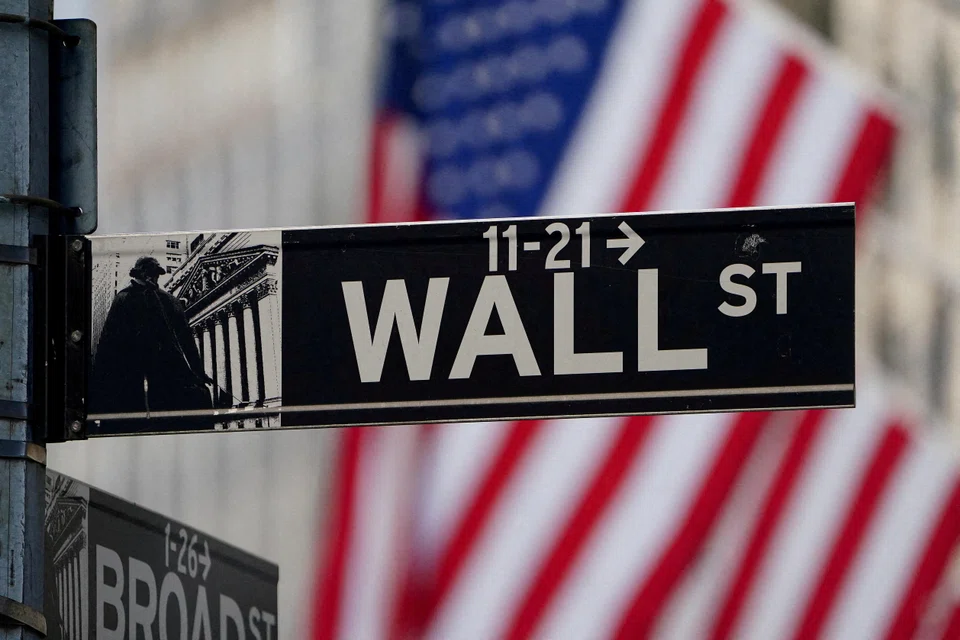
US STOCKS reversed earlier gains on Friday (Dec 22) as investors took a breather ahead of the long Christmas holiday weekend, having digested cooler-than-expected inflation data which firmed bets for Federal Reserve interest rate cuts in the new year.
All three indices turned lower as the afternoon progressed, after an initial rally on data showing that inflation is inching closer to the US central bank’s target.
Small caps handily outperformed the broader market, with the Russell 2000 last up 0.6 per cent.
All three indices are on track for their eighth consecutive weekly gains, the longest weekly winning streak for the S&P 500 since late 2017.
For the Nasdaq and the Dow, it will mark the longest streak of consecutive weekly gains since the beginning of 2019.
The S&P 500 is now within 1 per cent of its record close reached in January 2022. Should it close above that level, that will confirm the benchmark index has been in a bull market since bottoming in October 2022.
Navigate Asia in
a new global order
Get the insights delivered to your inbox.
“In the context of what we’ve seen on a year-to-date basis, it’s actually pretty extraordinary what we’ve seen in the fourth quarter,” said Michael Green, chief strategist at Simplify Asset Management in New York. “Small caps continue their absolute tear.”
“The Russell 2000 has gone from being down on the year as of August to now being up 15.6 per cent for the year,” Green said. “This truly has become an ‘everything’ rally.”
A swath of data was released on the last trading day before the long weekend, notably the Commerce Department’s Personal Consumption Expenditures report, which showed inflation continues to meander down towards the Fed’s average annual 2 per cent target.
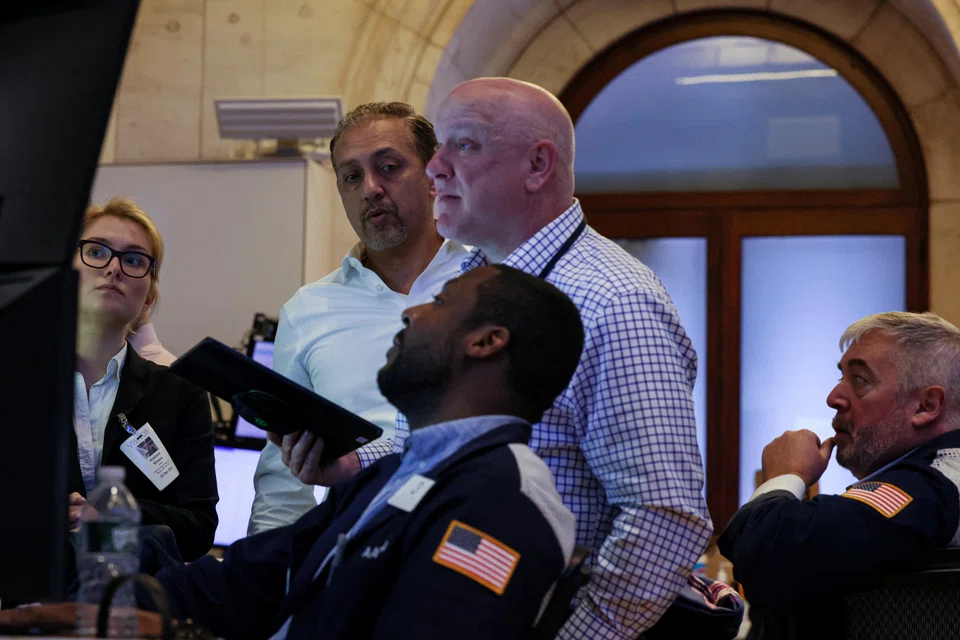
A separate report showed new orders for core capital goods landed well above analysts’ expectations, an upside surprise that bodes well for US corporate spending plans.
Together, they reinforce the conviction that not only will the central bank begin cutting interest rates as early as March 2024, but it might pull off reining in inflation without tipping the economy into recession, a “soft landing”.
“The key question becomes whether there will be lingering (economic) damage from the rate of interest rate hikes that we’ve already done,” Green said. Conversely, if the Fed cuts rates too soon it “risks reigniting inflationary forces in the economy”, he added.
Financial markets are pricing in a 74.1 per cent likelihood that the Fed will implement a 25 basis point rate cut in March, according to CME’s FedWatch tool.
At 2.28 pm New York time, the Dow Jones Industrial Average fell 103.91 points or 0.28 per cent to 37,300.44, the S&P 500 lost five points or 0.11 per cent at 4,741.75 and the Nasdaq Composite dropped 17.31 points or 0.12 per cent to 14,946.56.
Nike tumbled 11.9 per cent after the sportswear maker trimmed its annual sales forecast due to cautious consumer spending.
Nike peers Lululemon Athletica, Foot Locker and Dick’s Sporting Goods dipped between 1.3 and 3 per cent.
Occidental Petroleum rose 0.8 per cent after Warren Buffett-led Berkshire Hathaway raised its stake in the oil company, bringing it closer to 28 per cent.
Karuna Therapeutics soared 47.1 per cent in the wake of Bristol Myers Squib’s agreement to acquire the drugmaker for US$14 billion in cash.
Advancing issues outnumbered decliners on the New York Stock Exchange by a 2.99-to-1 ratio; on Nasdaq, a 2.18-to-1 ratio favoured advancers.
The S&P 500 posted 39 new 52-week highs and no new lows; the Nasdaq Composite recorded 166 new highs and 52 new lows. REUTERS
Decoding Asia newsletter: your guide to navigating Asia in a new global order. Sign up here to get Decoding Asia newsletter. Delivered to your inbox. Free.
Share with us your feedback on BT's products and services

