A S$13.8 billion data centre prize: Why KKR, Singtel and GIC want Temasek-backed STT GDC
The deal could potentially transform Singtel into a data centre powerhouse.


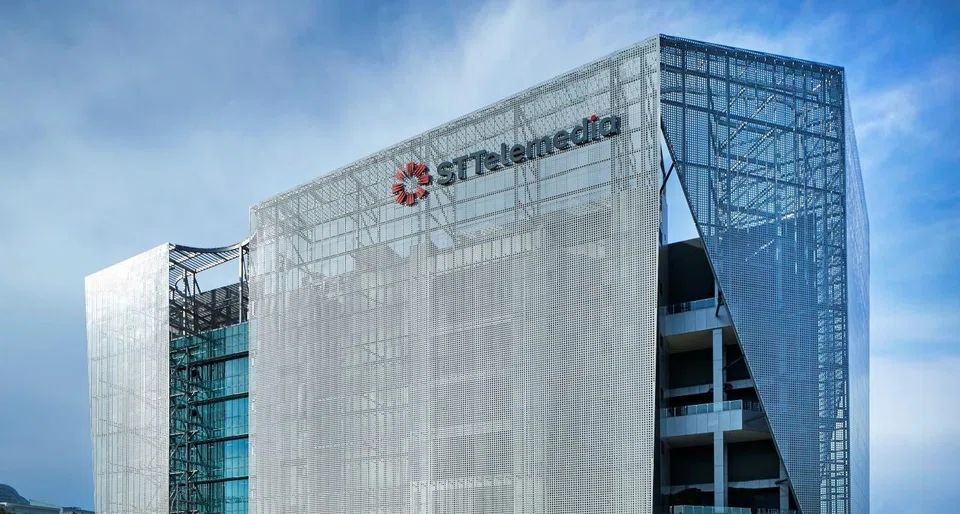
[SINGAPORE] Temasek-backed data centre operator ST Telemedia Global Data Centres (STT GDC) is being acquired by private equity firm KKR and local telco Singtel for S$6.6 billion.
The deal, which was announced on Wednesday (Feb 4), also counts Singapore’s GIC and Abu Dhabi’s Mubadala as minority investors.
The deal, which implies an enterprise value of S$13.8 billion for STT GDC, is one of Asia’s largest data centre transactions – and could potentially transform Singtel into a data centre powerhouse.
The Business Times examines what STT GDC is, what the deal means and why such big names have become involved.
Over 100 data centres
STT GDC was established in 2014 by ST Telemedia, which is wholly owned by Temasek, to build Singapore’s flagship data centres.
Over the years, STT GDC has acquired stakes in data centre businesses overseas. It invested in UK data centre provider Virtus Data Centres in 2015 and acquired control of the company in 2017.
It also bought majority stakes in Tata Communications’ data centre businesses in India and Singapore in 2016 and 2017, respectively.
STT GDC, which describes itself as one of the largest data centre operators in Asia, manages 100 such facilities in 20 markets, including Singapore, Malaysia and India in Asia, as well as the UK, Germany and Italy through its Virtus brand in Europe.
Its total IT load capacity is over 2.3 gigawatts, according to its website. In Singapore, it operates six facilities with a capacity of over 110 megawatts.
SEE ALSO

ST Telemedia owns about 82 per cent of STT GDC. KKR holds roughly 14.1 per cent and Singtel, which is majority-owned by Temasek, holds about 4.2 per cent.
Through this deal, the consortium will be acquiring the remaining 82 per cent stake from STT GDC’s parent company ST Telemedia.
Upon completion, private equity giant KKR and Singtel will own stakes of 75 per cent and 25 per cent, respectively, in the company, taking into account the conversion of existing redeemable preference shares that both companies hold in STT GDC.
In June 2024, STT GDC, which offers colocation, connectivity and support services, raised S$1.75 billion from a KKR-led consortium with Singtel. The telco had invested about S$400 million then.
Earlier that year, the data centre operator issued S$500 million in sustainability-linked perpetual securities with a coupon of 5.7 per cent.
The deal is set to be the biggest leveraged data centre buyout deal since Blackstone’s A$24 billion (S$21 billion) acquisition of Australia’s AirTrunk in 2024.
Impact of the deal
The deal could strengthen Singtel’s regional data centre business and transform the telco into a data centre powerhouse with a global footprint, RHB said in a note on Feb 2.
Investing in STT GDC could unlock benefits from growth in markets that Singtel does not have a data centre presence in, including the UK, Germany, India and parts of Asia, said DBS in a June 2024 report.
The investment could enable Singtel’s data centre brand, Nxera, and STT GDC to “operate synergistically and present the option to merge in the longer term to create a global player with large scale”, DBS said.
In September 2023, Singtel announced that KKR had agreed to buy a 20 per cent stake in Nxera for S$1.1 billion, giving the data centre business an enterprise value of S$5.5 billion.
At that time, the telco spoke of plans to scale Nxera “into one of the region’s leading green and sustainable data centre platforms”.
In a separate November 2025 report, DBS said the acquisition could combine STT GDC’s “huge scale” and Singtel’s expertise in the AI space. It noted that STT GDC’s data centre capacity is “much larger” than Singtel’s, which has a leg up in AI data centres.
“We speculate that KKR...is trying to bring together renewable electricity power players and key data centre players, as power is a key constraint for data centre growth,” it added.
KKR’s investments in the data centre infrastructure sector include US-headquartered data centre firm CyrusOne, European data centre firm Global Technical Realty, Middle East data centre platform Global Data Hub and CoolIT Systems, a provider of liquid cooling solutions in Canada.
For Singtel, the transaction “resonates well with management’s focus on growing the RDC (regional data centre) business under the digital infrastructure company pillar – a key growth engine”, said RHB.
Currently, Singtel’s data centre arm – Nxera – has data centres operating in Singapore and Thailand, with upcoming ones in Indonesia and Malaysia.
Its IT load is expected to increase from 200 megawatt (MW) in 2026, to over 400 MW in the mid term.
For STT GDC, the deal is about unlocking capital.
As the data centre operator’s head of investments, Michael Tanujaya, noted in late 2024, large private equity firms are ideal partners as they have been “sitting on dry powder for the longest time” and are now ready to deploy it into digital infrastructure.
The term “dry powder” refers to money that investors have pledged but not yet used. KKR reported a record US$126 billion in unspent capital in its third-quarter earnings in November 2025.
With KKR stepping up as a major shareholder, STT GDC will gain access to deeper private equity pockets, which are particularly useful in energy procurement, a critical bottleneck for data centres everywhere.
Decoding Asia newsletter: your guide to navigating Asia in a new global order. Sign up here to get Decoding Asia newsletter. Delivered to your inbox. Free.
Copyright SPH Media. All rights reserved.