As vaccine demand wanes, Singapore Paincare seeks growth from new TCM arm, acquisitions
The "next big thing" in pain care is regenerative medicine, says CEO Bernard Lee

Paige Lim
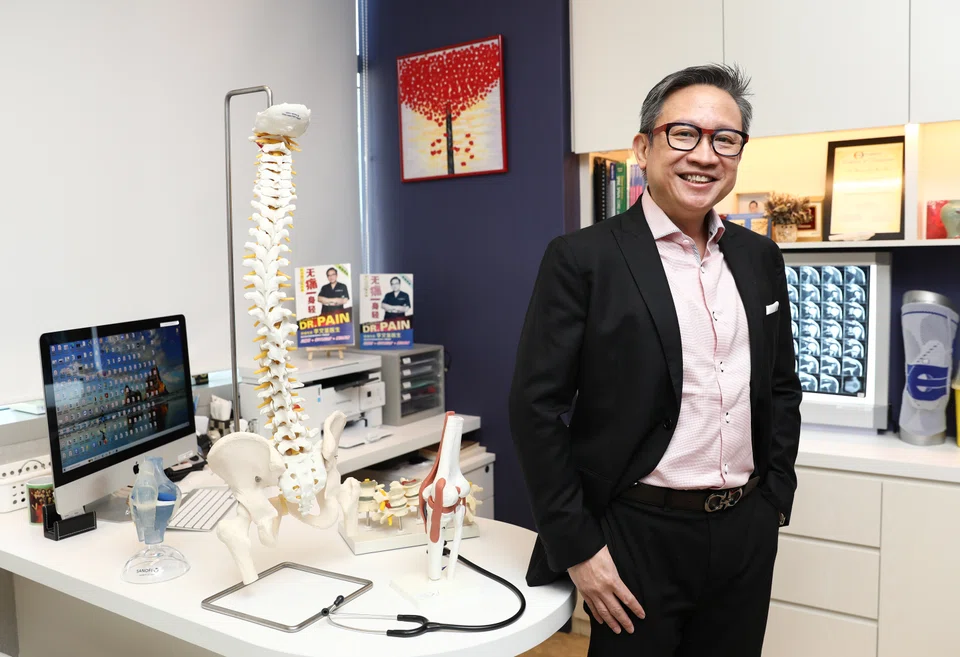
WITH its newly launched traditional Chinese medicine (TCM) brand, Singapore Paincare Holdings (SPCH) has taken another step towards its goal of building a holistic suite of end-to-end pain care treatment offerings. And Dr Bernard Lee, the company’s chief executive, also hopes the move will help it capture a bigger slice of the niche healthcare pie.
The Catalist-listed medical services group opened an integrated pain care and wellness centre in Singapore in March this year. Dr Lee said in an interview that Singapore Paincare TCM Wellness aims to both integrate TCM with Western treatment interventions and capture a more pro-TCM patient profile.
“We recognise that some patients may only have 70 per cent of their pain alleviated after visiting our other pain treatment clinics,” he said. “They are still looking for that final 30 per cent, and TCM can tweak that outcome.”
An integrated ecosystem would facilitate 2-way referrals of patients across the group’s existing network of 3 specialist clinics and 7 general practitioner (GP) clinics, he added.
The hope is that the new TCM revenue stream will help make up for the revenue that SPCH stands to lose as Singapore’s national vaccination programme tapers off.
During the Covid-19 circuit breaker in 2020, healthcare providers were instructed to defer all non-essential medical care. As patients with chronic diseases accounted for around 40 per cent of the patient load at SPCH's GP clinics, Dr Lee had signed the group's clinics up to administer Covid-19 vaccines.
It was a move that paid off handsomely. Revenue for the first half ended Dec 31, 2021 soared to a record S$8.3 million, up from S$4.9 million in the year-ago period. About 45 per cent of revenue came from Covid-19 vaccinations, Dr Lee said.
Profit rose from S$674,887 to S$2.3 million, as the group benefited significantly from economies of scale.
The strong financial performance may be partly responsible for improved investor confidence. Shares of SPCH hit a 12-month high of S$0.290 on Mar 18. The counter closed last Friday (Jun 17) at S$0.195, giving it a market capitalisation of just over S$35 million.
Acquisitions to contribute to future revenue growth
Maintaining SPCH’s top line growth seems a tall order. The group’s pre-pandemic revenue for H1 FY2020 was S$5.1 million. For the full year, the group recorded revenue of S$9.6 million. This rose to S$11 million in FY2021.
Vaccinations have not been the only contributor to growth. The return of medical tourists has helped too, with over 60 per cent of SPCH’s overseas patients coming from Indonesia, and the rest from Malaysia, Vietnam and the Philippines, Dr Lee said.
There is also growth from acquisitions to consider. In February 2022, SPCH acquired a 51 per cent stake in the Centre for Screening & Surgery for S$3.26 million. The deal expands its portfolio to include detection and surgical treatment for cancer.
And last year, the group bought a 60 per cent stake in 2 GP clinics – Medihealth Bishan Clinic & Surgery and Kovan Medical and Paincare Clinic – as well as a 100 per cent stake in CS Yoong Anaesthesiology and Pain Services.
Growing the number of medical clinics in the heartlands is, according to Dr Lee, part of the group’s long-term strategy to make pain care treatment more accessible to the masses.
As at Dec 31, 2021, SPCH had cash and cash equivalents of S$15.6 million versus S$3.3 million in short- and long-term borrowings – a sizeable war chest with which it could pursue future growth opportunities. As at end-December, it had spent 67.8 per cent – or S$2.4 million – of the S$3.5 million raised during its IPO for expansion of its business operations locally and regionally.
Venturing into new places and spaces
The group expects to complete by year's end the rebranding of 7 GP clinics to raise awareness of its pain care treatment specialty. It also aims to open 2 more TCM clinics by the end of FY 2023, Dr Lee said.
Meanwhile, the gradual reopening of borders means that the group’s overseas expansion plans are now back on track, Dr Lee said. SPCH is currently in preliminary discussions with potential partners in Indonesia, Malaysia, Vietnam, the Philippines and China.
The group is also looking at the assistive devices market as an additional revenue stream. In April, it launched its first product – a rehabilitative walking stick – for sale in its specialist clinics and GP clinics.
Dr Lee believes the "next big thing" in pain care is regenerative medicine.
“(Treating) pain is no longer a bar I want to reach, as we’re already there," he said, adding that his team has been researching this nascent discipline. "What we want to know is how to slow down degeneration, reverse wear and tear, and increase longevity."