

VibroPower shareholder wants to oust board
Alex Chng believes his expertise in the real estate sector will be an advantage for the company
Singapore
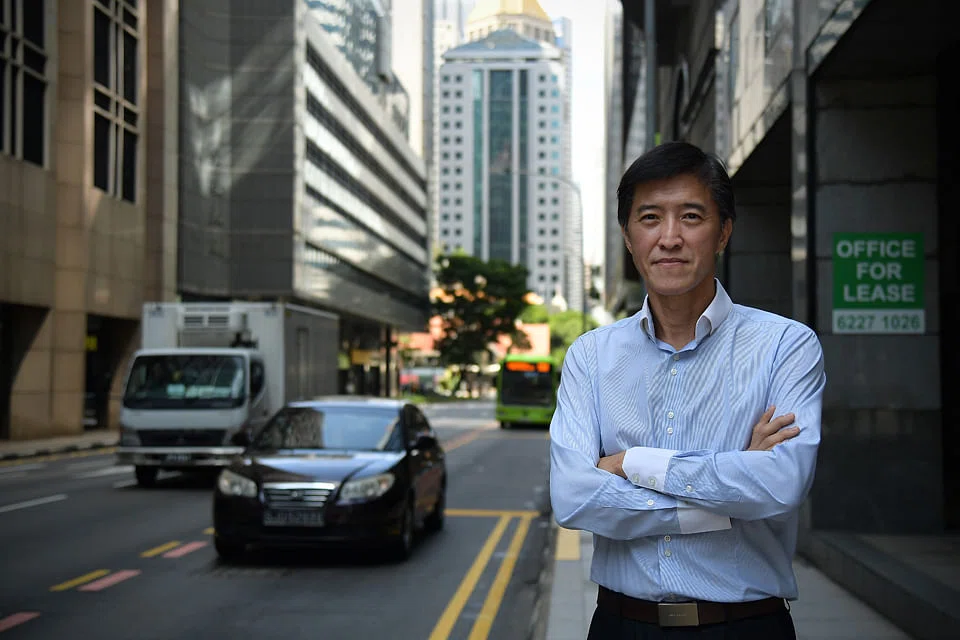
ALEX Chng, the substantial shareholder of VibroPower Corporation who is trying to oust the company's directors, believes his property development background will give the supplier of power generators an advantage in winning contracts to supply generators to the real estate sector.
Mr Chng and his cousin Lim Eng Tiong had on Sept 14 exercised their rights to requisition an extraordinary general meeting (EGM).
At the time, they collectively held almost nine million VibroPower shares representing 16.5 per cent of outstanding shares. Shareholders holding at least 10 per cent of a company's voting shares can requisition an EGM.
Mr Chng had wanted to reject a proposed placement exercise, boot out all VibroPower's three directors, and appoint himself and two others to the board.
VibroPower's board currently consists of executive chairman Benedict Chen Onn Meng, and independent directors Ernest Yogarajah s/o Balasubramaniam and Toh Shih Hua.
Mr Chng has proposed himself as executive director, and Jonathan Zhang and Christopher Huang as independent directors. Mr Zhang is chief operating officer of a karaoke business, while Mr Huang is a corporate and tax lawyer.
Unfortunately for him, VibroPower's board went ahead on Oct 5 with the proposed placement of 9.5 million new shares to father-and-son duo Wong Kim Siong and Wong Chong Heng.
The placement shares were sold at S$0.132 apiece.
Vibropower's shares have been falling since. They closed Wednesday at S$0.15, down 37.5 per cent over the last three days.
Mr Chng said he is in talks with his lawyers on his options, but he intends to continue with the EGM. The date of the EGM has not yet been set.
Mr Chng said he first started investing in Vibropower last October as he deemed it undervalued.
The former research manager and assistant general manager of brokerage firm Alliance Securities said the shares were trading just a shade over 10 Singapore cents then, versus their net asset value at about 47 cents a share.
On top of this, the company had a manageable debt load and its controlling shareholder did not hold too large a stake.
At the start of 2020, when there was the opportunity to subscribe for excess shares in a rights-cum-warrants issue, he increased his stake to about 4 per cent. He continued to buy shares regularly on the open market.
From January this year, Mr Chng also tried to arrange a meeting with the chairman Mr Chen to discuss his plans and intentions for the company. But he was repeatedly put off, with the company citing Mr Chen's unavailability or sensitive periods.
On Sept 8, VibroPower had announced a placement. The company said it hoped to leverage on the networks of the two Mr Wongs to explore more investment or business opportunities in Malaysia. They were introduced to VibroPower by Mr Chen.
The placement gives the Wongs almost 15 per cent of the company while diluting Mr Chng's stake from 12.5 per cent to about 10 per cent, and Mr Chen's stake from 22.49 per cent to 19.13 per cent.
The new shares were placed out at a 10 per cent discount and made up 17.62 per cent of the company's existing issued share capital - close to the regulatory limit of 20 per cent.
Mr Chng has questioned the need to place so many shares, so cheaply, and so soon after the completion of the rights-cum-warrants issue. "You already secured S$1.54 million from the rights issue and there is a potential S$1.8 million coming from the warrants issue," he said. "This is really unfair to shareholders and to me."
VibroPower reported a net loss of S$2.62 million for 2019, versus a net profit of S$448,000 a year ago. Revenue fell 28.8 per cent to S$11.03 million, from S$15.48 million.
The company was further hit this year by customers' delays in taking deliveries as project schedules were affected by the closure of construction sites during the "circuit breaker".
Vibropower reported losses of S$1.57 million for the first half, from a profit of $108,000 a year ago, as revenue fell 64.4 per cent to S$2.77 million.
Mr Chng believes he and his proposed board can do a better job.
His family business, PIP Marketing, has had a hand in several private property developments here. He also supervises the day-to-day management of Paya Ubi Industrial Park and maintains tenant relationships.
"One of the biggest customer base for power generators is developers," he said, adding that he has a network of developers that can benefit the company's business. If appointed to the board, he also plans to expand the company's business into developing countries such as Malaysia and India.
When approached for a response, a VibroPower spokesman said: "On matters pertaining to... the recently completed placement of shares, the company has complied with the relevant requirements under the SGX-ST Listing Rules and made the necessary disclosures in its announcements and annual reports, as appropriate.
"With regard to the company's core business, the company continues to see growth opportunities and will capitalise on them as they emerge. The company will make such announcements as and when these new opportunities arise."
TRENDING NOW
Far East Organization’s The Serra Residences sells less than a quarter of units released at average S$3,460 psf

MAS, SGX must address our IPO problem

A bumpy road ahead for some of Singapore’s fresh graduates in their job search

Once staunchly pro-China, Malaysian Chinese businesses are now distancing themselves from Beijing

