

Views on improving S'pore's stock market
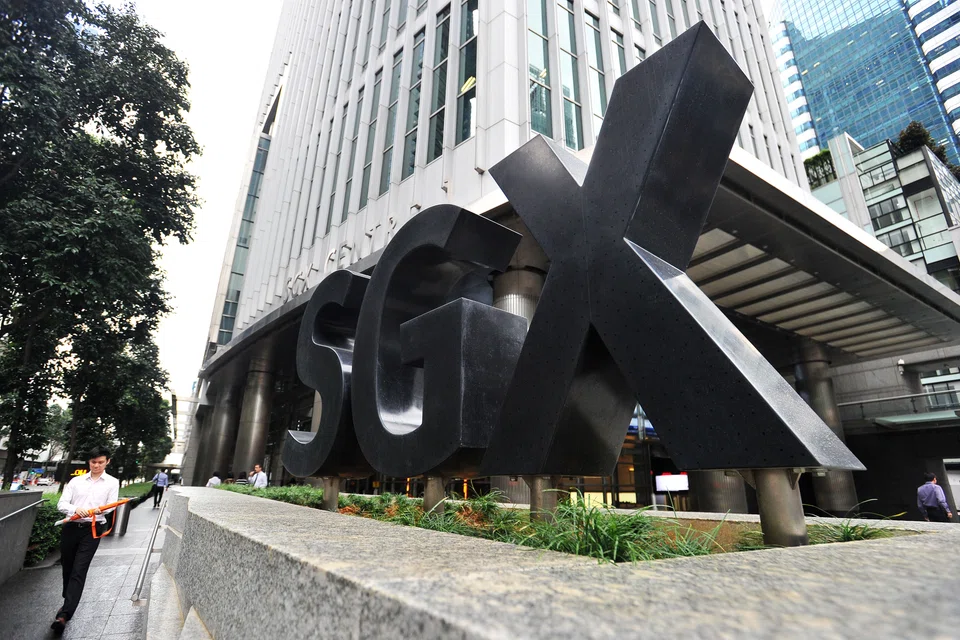
WE refer to the articles by R Sivanithy, "Remisiers write to Tharman to resolve issues plaguing market" and "Call to restore market lunch break: MOM unable to help" (BT, Feb 5).
In response to the report on the Society of Remisiers' appeal letter to Deputy Prime Minister and Finance Minister Tharman Shanmugaratnam, the Securities Association of Singapore (SAS) would like to give its views on some of the points raised. We agree with investment specialist S Nallakaruppan that this is not a finger- pointing exercise but a need for the various stakeholders to engage in constructive discussion to improve the market structure.
Many factors can impact market sentiment. We believe that all market participants and stakeholders share the same concern that the market needs to function effectively.
For investors, it is of paramount importance that safeguards are in place to protect their interest. SAS supports measures to ensure that investors fully understand the risks before they invest their money. This is especially so for those using their retirement funds. Younger and tech-savvy investors may turn to their mobile or the Internet for their investment needs. Remisiers need to keep up with changes in the evolving investment landscape and determine creative ways to reach out to their clientele.
Market liquidity
Market liquidity vis-a-vis trading volume is vital to any stock exchange as this drives price discovery. In the process, it facilitates fair valuations for businesses listed on the bourse.
Conversely, the absence of market liquidity would derail efficient price discovery. While we applaud the Singapore Exchange (SGX) for its many efforts in ramping up market interest, perhaps more could be done to draw new companies - especially mid-cap and reputable foreign ones - to list here and build SGX's reputation as a market leader for listings.
The prevailing market liquidity in Singapore is very much driven by retail interest and large portfolio funds comprising insurance and foreign pension funds. These sources of funds tend to be transient and could be sporadic and sentiment-driven.
SAS believes the absence of a consistent infusion of investment funds is the crux of the matter concerning the current state of the market.
What everyone needs (including SGX) is the sustained investment of domestic pension monies in the market. This is seen in other global markets in the US, Europe and Australia, where it is mandated for pension fund investment to provide a substantial percentage for domestic market liquidity.
SAS supports the stand that pension monies like CPF funds must be properly safeguarded. It does not support relaxing current rules to permit individual CPF account holders to make direct investments on their own. The penny stock saga in October 2013 bore testimony to the vagaries and pitfalls of the market then.
Recent announcements and the review of the need to maintain a prescribed Minimum Sum till one reaches 65 lends credence for these funds to be professionally managed.
Performance of the panel funds must be made transparent and unit holders should be given the flexibility to switch their investments between funds to elicit the best returns from their CPF money.
The sustained investment of long- term funds will benefit our market and increase overall market capitalisation, thereby driving liquidity and making SGX a more vibrant market.
Increase in public float
SAS members have dealt with many IPOs in Singapore and overseas, and are able to share their experience.
Setting aside a minimum public offer size of at least 25 per cent is no guarantee that it will be taken up.
Unlike the placement tranche against which the issuer would have received a firm indication of interest, he has no clear visibility ahead of public demand until the IPO closes. When the issue is registered, the issuer faces the risk of undersubscription as there is no opportunity to place more shares in the placement tranche to soak up the shortfall in the public tranche.
Members' experience with many IPOs overseas shows that the IPO allocation arrangements address the concerns of underwriters in public tranches over the unpredictable demand of retail investors. A small float of 5-10 per cent is set aside for the public tranche. In Hong Kong, if demand is overwhelming at the public tranche, there are clawback provisions from the placement tranche to the public tranche. Oversubscription of 100 times or more of the public tranche is not uncommon.
While the current arrangements on IPO allocation can be reviewed, we need to recognise the delicate balance in meeting the needs of various stakeholders.
Does the current specified investment products (SIPs) regime inhibit wider participation and drain liquidity on SGX? The opaque schemes concealing the true risks behind Lehman-type collateralised debt obligation (CDO) structures have made regulators more protective of the investing public. Even today, we continue to see certain types of exchange-traded funds (ETFs) being sold where the counterparty arrangements (hence risks) remain opaque.
The exam-based knowledge test for investors may not necessarily be the best solution. But that is still in the interest of investors for brokers to assess their knowledge before investing.
It is important that investors are made fully aware of potential risks and rewards before they trade in SIPs. Intermediaries like us have a duty to ensure that customers understand the product risks before an investment decision is made. There are various approaches that could be taken to help investors understand the product risks and qualify for such investments. Apart from product knowledge tests, there is also scope to explore a risk disclosure approach, consistent with the prevailing fair dealing guidelines.
Setting up truly independent committees
SAS has found the consultation process of regulators with stakeholders on proposed changes sufficiently robust. Views, especially from industry groups, are taken seriously and addressed.
Outcomes of public consultations may not necessarily be what we wished for but the deliberation process is generally rigorous with sometimes differing views thoroughly debated. We acknowledge that the regulators have to balance the interests of all stakeholders.
We are not quite sure, however, who or what "truly independent" committees or persons refers to. If the remisiers consider a "truly independent" committee someone who is "totally detached" or "totally ignorant" of the industry, this would not bode well. We may end up with a situation when these so-called "truly independent" parties may not fully comprehend the complex issues involved and the deep ramifications for stakeholders and the industry at large - let alone be able to find solutions.
Establishing third board for long-suspended counters
This issue has been much deliberated. SAS is not in favour of devoting resources to facilitate trading of such poor-quality and potentially hazardous stocks which have not seen any liquidity for years. SAS does not support a platform which could expose investors to the possibility of losing money on stocks that could be rendered worthless.
Continuous All-Day Trading (CAT)
SAS members have had reservations from the inception of this initiative but were acquiescent to it as it was deemed necessary for our market to be able to have continuous liquidity to meet the requirements of certain market participants.
Brokerages have made various arrangements to assist trading representatives work in a CAT environment. These include instituting a buddy-covering system during lunch hour, as well as mobile platforms to enable client order-taking. These measures aim to facilitate closer interaction between trading representatives and clients.
If this needs to be reviewed, SAS is open to further discussion with the relevant stakeholders to address the concerns raised.
Melinda Sam
CEO
Securities Association of Singapore
TRENDING NOW

He built the Vingroup empire. Now South-east Asia’s richest man is handing some key roles to his sons

Despite the de-dollarisation debate, demand for dollar liquidity in Asia is growing
Can a first-time homebuyer couple earning S$18,000 a month afford a new EC unit?

Asia needs new energy security architecture

