

Virus outbreak to take centre stage at local banks' FY19 results briefings
Investors will want to know the impact, what segments are most sensitive to the virus outside of hospitality and retail, and the extent of that risk
Singapore
THE focus of the upcoming Singapore banks' results will likely centre on the impact of the deadly novel coronavirus outbreak, with global growth expected to slow as China - the world's second largest economy - takes a hard hit.
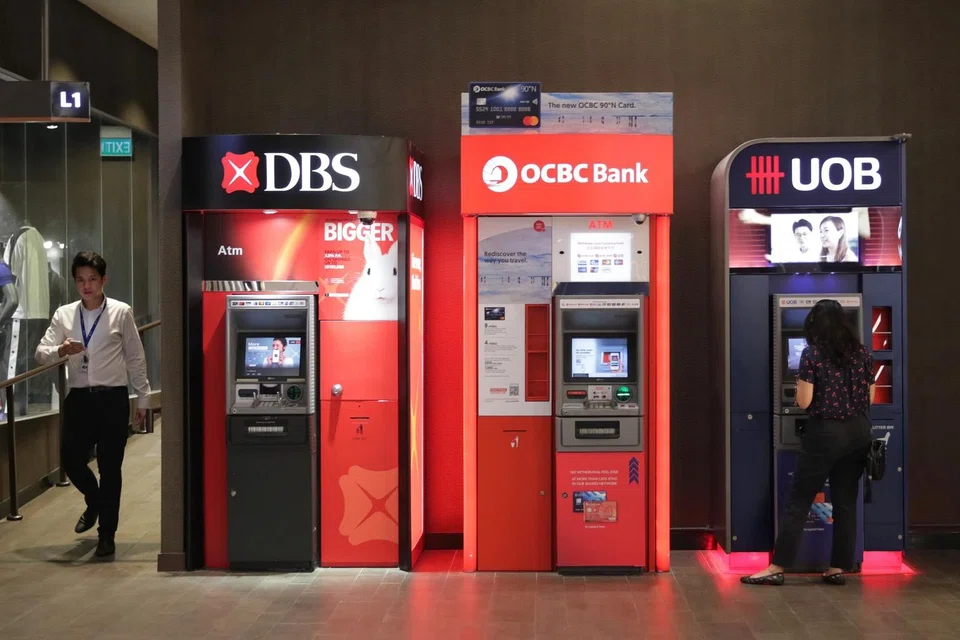
As it is, DBS, OCBC and UOB are projected to see continued pressure on margins and sequentially moderated earnings in the last quarter of 2019, even as analysts have raised the odds of higher dividends by the Singapore banks that should buoy interest in the trio.
Andrea Choong, banking analyst at CGS-CIMB, told The Business Times that the eventual transmission effects from the novel coronavirus are "concerning".
Investors will want to know what the impact will be, what segments are most sensitive to the virus outside of hospitality and retail, and the extent of that risk, she said.
"We believe that the severity of the virus on bank figures lies in the increased regional connectivity and heightened focus of Singapore banks in the Chinese region in recent years," she noted. Already, the virus outbreak has led to the suspension of banking outlets or services in Hong Kong by the trio.
Using the severe acute respiratory syndrome (Sars) episode of 2003 as a gauge, Singapore's gross domestic product (GDP) was revised downwards due to slowing business momentum, Ms Choong pointed out.
GDP fell from 4.2 per cent in the first quarter of 2003 to a negative 0.3 per cent in Q2, which was the quarter when Sars struck Singapore.
"A similar downward revision could be on the cards, and if so, banks' growth levels will likely slow further," she added.
Several economists including those from DBS and Maybank Kim Eng have since downgraded their GDP estimates for Singapore as well.
China's economy is now much larger than during the 2003 Sars crisis - about US$14 trillion now, compared with US$1.5 trillion back then - and the impact from a China slowdown will be magnified due to its stronger links with the rest of the world.
The Singapore banks' loan exposure to Greater China has also grown as the lenders ventured out of their home markets. Currently, DBS has the largest loan exposure at 30 per cent, followed by OCBC's 25 per cent, and UOB at 16 per cent.
While the impact on the banks will depend on the severity and timeframe of the virus outbreak, an S&P report in February found that in this time, the banks are likely to suffer weaker loan growth and more volatile earnings as it poses a drag on business and consumer confidence.
S&P estimated that the transport and general commercial sectors respectively account for about 4 per cent and 10 per cent of Singapore's domestic loans.
"This is meaningful exposure, but we believe the impact to banks in the short term will be manageable, given their healthy profit levels and financial strength," said the report.
But if the outbreak persists, job losses in the tourism and general commercial sectors would cascade to higher delinquencies on credit card receivables and, to a lesser extent, residential mortgage portfolios, said S&P. "The transmission to consumers and other sectors would have a wider impact on asset quality."
DBS analyst Lim Rui Wen concurred, saying that a worse-than-expected virus outbreak which will affect tourism and retail businesses could "unwind expectations of credit cost and NPL (non-performing loan) declines", posing risks to bank earnings.
Ongoing trends such as margin compression and flattish loan growth are likely to continue, and should show up in the Q4 earnings.
Analysts believe that earnings in the last quarter of 2019 could have eased quarter-on-quarter on the back of weakening net interest margins (NIMs) as falling interest rates get reflected in asset yields.
Fee income is also likely to ease due to seasonal factors, but wealth management is still expected to grow while card-related fee income should benefit from the year-end festivities.
Maybank Kim Eng analyst Thilan Wickramasinghe also flagged that credit charge guidance could also come in higher - an area that should be closely watched for additional cautionary provisioning on the backdrop of the virus outbreak as well as further woes from Hong Kong.
Analysts suggested that the banks might increase dividends, given high capital ratios, and as the uncertainty over the reported interest from DBS and OCBC to acquire Indonesian lender Bank Permata has ended. Bank Permata was eventually sold to Bangkok Bank.
"DBS and OCBC have a higher likelihood of this, given CET1 (common equity tier one ratio) levels are well in excess of regulatory requirements," said Mr Wickramasinghe.
As of Q3 2019, OCBC's CET1 ratio - a measure of a bank's financial strength - was at 14.4 per cent and the highest among its peers. DBS stood at 13.8 per cent, and UOB, at 13.7 per cent. The ratios are all above previous indications of the optimal range of 12.5 to 13.5 per cent.
DBS will release its Q4 and full-year 2019 results on Feb 13; OCBC and UOB will report on Feb 21.
At the end of trading on Monday, DBS closed down 20 Singapore cents to end at S$25.11, OCBC closed down 14 Singapore cents to end at S$10.72, and UOB closed down 38 Singapore cents to end at S$25.57.
TRENDING NOW
One-third of Singapore-listed firms at risk in severe AI downturn: MAS

‘We don’t want to stay as we are’: CEO Patrick Ng builds a more resilient Huationg

He built the Vingroup empire. Now South-east Asia’s richest man is handing some key roles to his sons

Radiant World table shows six lenders with US$870 million exposure

