

Virus worries knock HK stocks to 7-week low after Chinese New Year break
Hong Kong
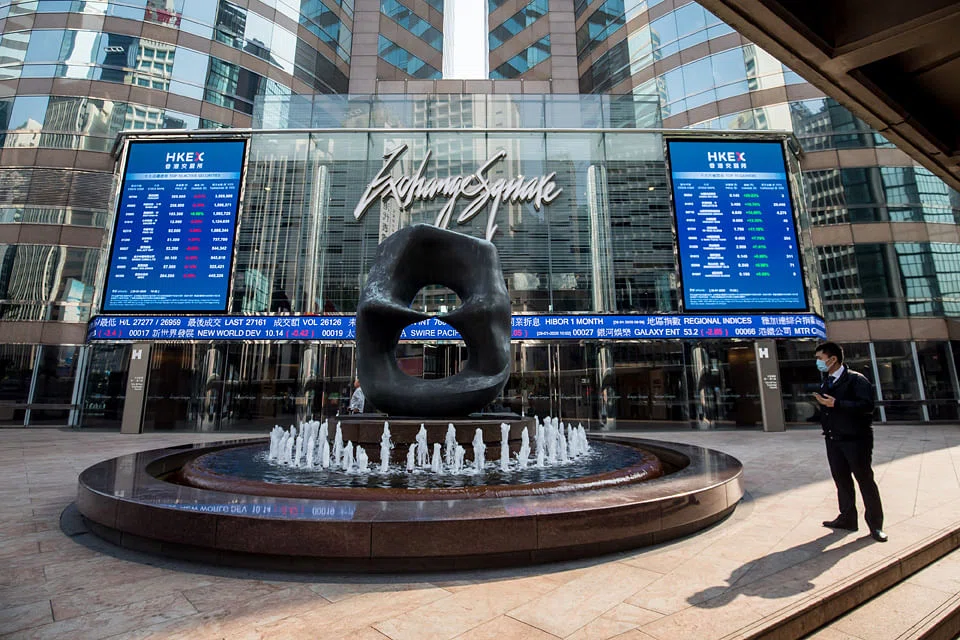
HONG Kong's stock market tumbled almost 3 per cent on Wednesday in the first trading session since the spread of a virus in China accelerated over the Chinese New Year holidays.
The Hang Seng index hit a seven-week low, with shares of China-exposed stocks, financials and the travel and tourism sectors leading declines as investors braced for the economic impact from the epidemic, which originated late last year in Wuhan in central China.
Transport has been all but shut down in parts of the country, travellers have cancelled bookings and some shops, restaurants, cinemas and tourist sites have closed.
The Hang Seng ended down 791.99 points or 2.83 per cent at 27,289.55. The Hang Seng China Enterprises index fell 3.38 per cent to 10,650.43.
Macau casino operators Galaxy Entertainment and Melco International Development each fell more than 5 per cent. Airline Cathay Pacific dropped 3 per cent.

The biggest H-shares percentage decliners were Byd Co Ltd and Country Garden Holdings Co Ltd, both of which fell more than 6 per cent.
The drop in the Hang Seng index dragged MSCI's Asia-Pacific share index down, extending four days of falls, though markets elsewhere in the region were largely firmer after several days of heavy selling.
China's stock, currency and bond markets have all been closed since Jan 23 for the Chinese New Year celebrations and are scheduled to reopen on Feb 3.
Fears of the spreading coronavirus have knocked global stock markets over the past week. Transport, tourism, retail and luxury stocks have been at the frontline.
Sean Darby, global equity strategist at Jefferies in Hong Kong, said the early Hang Seng reaction on Wednesday had been "very benign" and the index may have further to fall.
"They might be disappointed later on, because I suspect the maximum pain might be some time early next week once the authorities have realised that Hubei is like a massive warehouse for China," he said, referring to the province where Wuhan is the capital city. "While you might not have lost any production, the fact is that the supply chain has got broken."
China's National Health Commission said on Wednesday the national death toll from the virus outbreak had risen to 132 with 5,974 confirmed cases.
With China on holiday, investors have been selling the Australian and New Zealand dollars as a proxy for the yuan. They have also been buying Antipodean sovereign bonds and US Treasury debt on wagers central banks globally might have to ease policy to offset the economic drag from the virus.
If the virus continues to spread rapidly, analysts expect Beijing to roll out a series of liquidity and credit support measures soon to support businesses.
Linus Yip, chief strategist at First Shanghai Securities, said there had been some bargain-hunting buying on Wednesday but the correction in markets would continue.
"Depending how the A-share market performs on Monday, it may bring volatility to Hong Kong stock market again," he added.
A large China ETF, the iShares Large-Cap ETF, bounced on Tuesday after hitting its lowest levels since October, but remained 9 per cent lower than on Jan 17.
Worries about the economic impact of the virus and expectations of more aggressive monetary easing have weighed on China's currency, too.
The offshore yuan has fallen about 1.3 per cent against the US dollar since Jan 20 and moved closer to the 7-per-dollar level that it rallied from in late December as Sino-US talks on a preliminary trade deal got under way.
It was quoted at 6.9645 at 0810 GMT on Wednesday. REUTERS
MORE REPORTS:
Share with us your feedback on BT's products and services
TRENDING NOW
From AI financing to Indonesia outlook: 4 takeaways from Singapore banks’ Q3 results
VinFast, Mitsubishi weigh Philippine EV production as state incentives near
Analysts cut DBS target price on lower 2027 earnings, but see buying opportunity after share price slide
Could Japan trigger the next global financial crisis?

