

VMware chief defends Broadcom deal as means of merging hardware and software
Amid fears that Broadcom will drain VMware, Raghu Raghuram emphasises R&D will remain strong.

Sharanya Pillai
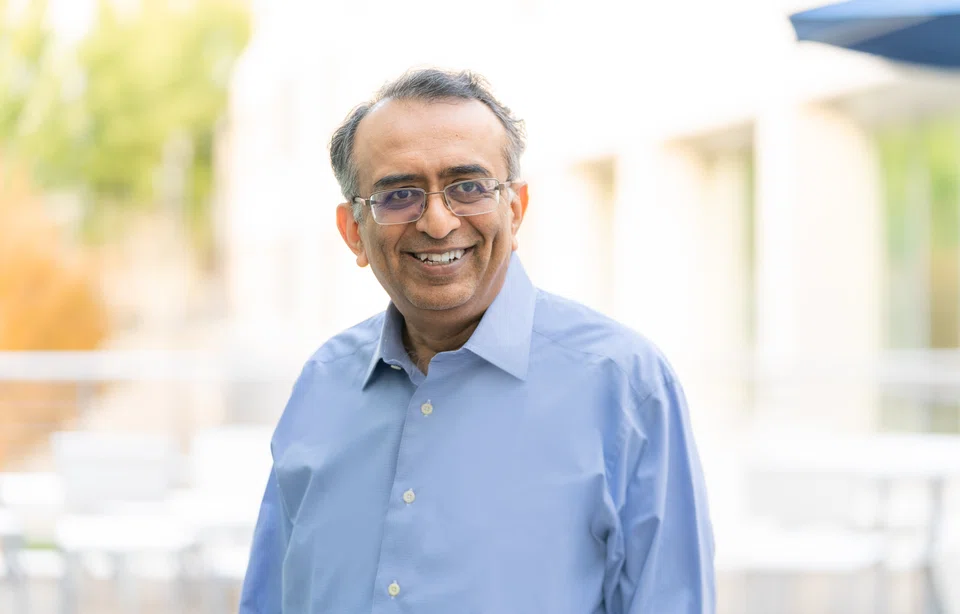
RAGHU Raghuram, chief executive of VMware, is keen to talk about the software company's research and development (R&D) trajectory once the company is part of a larger entity.
Just 6 months after being spun out from Dell Technologies, VMware fielded a suitor: chipmaker Broadcom, which on May 26 announced a US$61 billion cash-and-stock bid for the New York-listed company.
The blockbuster deal is expected to be completed in Broadcom’s financial year ending Oct 31, 2023. VMware shareholders can choose to receive 0.252 shares of Broadcom stock or US$142.50 in cash per share, subject to a proration. The total US$138.23 per-share price tag represents a 44 per cent premium to VMware’s US$95.71 closing price on May 20, before media reports emerged of talks.
Investors haven't exactly cheered the deal. Broadcom's shares saw a brief pop but began to fall within days of the announcement. They have since recovered, but are still lower than where they were before the deal became public knowledge.
Shares of VMware, meanwhile, have risen 27.4 per cent to US$121.96 as at Aug 12. That is below the cash value of the deal as well as the stock value of US$140.67 based on Broadcom's close on Friday (Aug 12) at US$558.23.
There have been suggestions the deal won't take place due to antitrust concerns.
Hock Tan, the Malaysian-born American chief executive of Broadcom, has been on an acquisition path for years. Regulators are expected to block any further attempts to consolidate the semiconductor industry, so he has turned his attention to software.
But customers of VMware are worried. Broadcom’s playbook for software roll-ups – with past deals including CA Technologies and the enterprise security business of Symantec Corp – has been associated with heavy cost-cutting and a big focus on raising profits. “Don’t break VMware” was the most commonly expressed sentiment among several hundred enterprise leaders, in a survey by S&P Global Market Intelligence.
It makes sense, therefore, that Raghuram wants to emphasise the benefits of the deal for investors and customers.
“There are opportunities for collaboration there,” he said, noting that VMware has been working with semiconductor vendors on a 2-year research effort. Under Project Monterey, the company is running its virtualisation technology on central processing units that are running on network cards – potentially marrying the fields of virtualisation and chipmaking to make data centres more efficient.
“Even more than that is possible down the road. Broadcom has a history of a lot of semiconductor innovation. We have a history of software innovation. When you bring those two together, I think a lot of things might be possible,” he said.
Challenging year
Founded in 1998, VMware is widely regarded as a key player in virtualisation software – which allows the hardware elements of a computer to be divided into “virtual machines”, raising the hardware’s efficiency.
VMware enables enterprises to work with multiple cloud systems, manage all their apps, implement security solutions and even allow work from home with the VMware Anywhere Workspace solution. Its key products include multi-cloud workload platform vSphere+ and storage virtualisation software vSAN.
The company has gone through several ownership changes. EMC Corp acquired it in 2004 for US$635 million, then listed it in 2007 while retaining a majority stake.
Dell paid US$67 billion to buy EMC in 2016, and as a result, EMC’s stake in VMware. Dell then spun out its 81 per cent ownership in VMware in November 2021. Dell chief Michael Dell is still VMware’s largest shareholder with a 36.8 per cent stake.
Despite its large market share – nearly 40 per cent, according to research and data provider IDC – VMware has disappointed investors.
A Barclays analyst noted that prior to the Broadcom deal announcement, the company had been trading at a depressed enterprise value of 11 times estimated free cash flow for 2023..
And although the company has been consistent in generating profits and cash flows, its latest earnings missed analyst expectations. For Q1 FY2023 ended April this year, VMware saw net income fall 43.1 per cent to US$242 million on higher operating expenses. Revenue inched up 3.1 per cent to US$3.1 billion.
A Bloomberg Intelligence report speculated that supply chain disruptions may have had an indirect impact on VMware, delaying server and hardware shipments from partners.
Russia-Ukraine tensions have also weighed on VMware. In March, the company announced its suspension of all business operations in Russia and Belarus, and the Donetsk and Luhansk regions of Ukraine.
“Definitely that impacted our results in the first quarter… and a little bit throughout the year, because we had some notable customers in Russia,” said Raghuram. Excluding the impact of the suspensions in Russia and foreign currency, VMware’s Q1 revenue would have grown 5 per cent to US$3.14 billion.
The next phase
Raghuram believes VMware’s revenues will improve in predictability as the company transitions its business model from perpetual licence software to subscription and Software-as-a-Service (SaaS). SaaS is also good for VMware’s own innovation process, he said.
“The SaaS subscription model basically (means) the vendor takes more responsibility for the management and operation of the software, so that customers can free up the IT team to do more things…
“It also allows us to innovate faster; if we can keep all the software that all the customers have at the same level, then we can introduce new capabilities faster.”
VMware is also projecting what kinds of technologies might be available 5 years from now, such as next-generation machine learning, and how that might be incorporated into its core products. Another “moonshot” is looking at how AI could be built even if the sources of data are distributed, rather than consolidated.
“We don’t know if any of those will work. And even if they work, it will be 5 years from now; You won’t see it next year. It’s not the ‘sending a man to the moon’ type of moonshot, but there’s still a very high technology uncertainty."
TRENDING NOW

Motoring tycoon Peter Kwee is back in court: Here are his previous legal battles

Demand, tech capabilities position Apac and AI as Skyscanner’s next growth frontiers: CEO Bryan Batista

Beyond the greenback, Vietnam’s big borrowers turn to Asian-currency bonds
Nvidia’s outlook cut to stable by Moody’s on governance concerns

