

Volatility pushing the wealthy to focus on risk, succession: HSBC’s Tommy Leung
The shift is especially evident among business owners, whose wealth remains tied to their operating countries
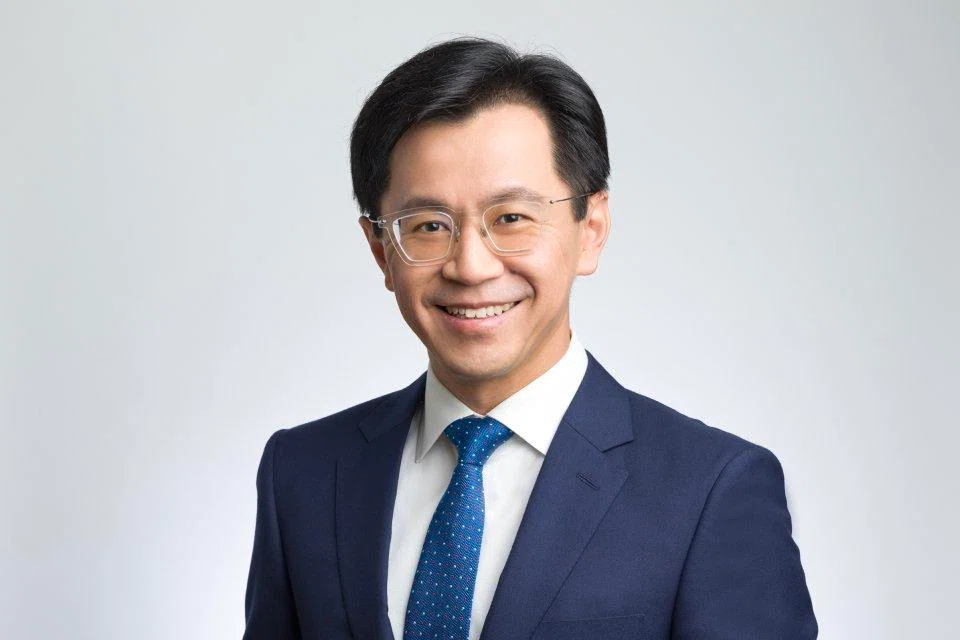
[SINGAPORE] Market volatility is forcing high-net-worth investors to reshape their priorities, with private-banking conversations shifting away from pure returns towards risk management, diversification and succession planning, said Tommy Leung, HSBC’s head of global private banking for South Asia.
The shift is especially pronounced among entrepreneurs, who account for about two-thirds of HSBC’s private banking clients and whose wealth remains closely tied to their operating markets.
For this group, the need to diversify has therefore become more pressing, prompting more families to diversify geographically and use Singapore as an offshore booking centre, Leung noted.
“Diversification is highly correlated to the amount of wealth a client has,” he said. “I do not think it is about one single geopolitical trigger that has led to this diversification, but… (instead) the client’s needs and overall level of wealth.”
Having multiple booking centres has become more attractive as a result, he added.
When setting up family offices in Singapore, clients evaluating where to base their assets weigh several factors. These include legal stability, ease of doing business, tax frameworks, and ease of access to opportunities and professionals for support networks.
“Singapore ranks highly across all these different areas,” Leung observed. “It may not be the absolute top in each category, but on balance, it is way ahead of the competition.”
Risk management in focus
Beyond geographic diversification, risk management has taken on renewed urgency as market volatility rises.
Leung said that clients increasingly need to understand how systemic shocks, such as sharp movements in interest rates or oil prices, impact their portfolios.


Banks such as HSBC are deploying quantitative tools that draw on historical data to model how past crises – such as the 1973 oil shock during the Yom Kippur War – would play out across the current holdings in clients’ portfolios, he noted. These can allow clients to understand and manage their risk better.
Current geopolitical tensions have also put the notion of safe-haven assets to the test. Leung observed that during recent risk-off periods, only a narrow subset of assets actually rallied – chiefly, the US dollar, and to some extent, mega-cap US technology companies.
The performance of financial assets often depends on “positioning”, he added. For instance, gold – traditionally a safe haven – saw sell-offs in recent weeks because it had become a “crowded trade”.
“What is a safe haven today may not be a safe haven tomorrow,” Leung explained. “What you really want to know is where the risks are hidden in your portfolio, so you can be prepared if something material happens.”
Education, sizing key for private markets
On the recent wave of private-credit redemptions in the United States, Leung said that investor education is critical, particularly around the illiquid nature and limited transparency of these products.
To manage risk in private markets, sizing is key, he noted, adding that it provides “tremendous value” in a diversified portfolio.
“If you do not invest in private markets, you are missing a huge chunk of the opportunities globally,” he explained. “Private markets still offer you a decent private-market premium or liquidity premium that adds to the longer-term return.”
Leung added that, amid risks and volatility, opportunities remain, such as the “very exciting space” of artificial intelligence. “Not just AI, but the new economy, new technology in general.”
However, he cautioned that these assets and opportunities are often “richly valued”, flagging the need for understanding valuations and the “right price” even within compelling themes.
Succession planning
Wealth planning conversations are also shifting in scope, extending beyond asset management to longer-term questions of legacy.
“The roles that these entrepreneurs play are also different compared to before,” Leung said. “They are the founders of businesses, and they themselves are investors.”
He added that these entrepreneurs tend to have twin imperatives of extracting liquidity from assets and preserving wealth across generations.
This transition involves a new generation stepping into the frame with a different set of challenges, inheriting not just wealth, but also significant responsibility.
As these businesses mature, Leung sees more conversations moving towards separating ownership from day-to-day operations.
He noted that private banks are engaging clients earlier in the process, helping to build networks, drawing on lessons from past experiences, and laying the groundwork to diversify and protect wealth for the long term.
These, he said, all add up to diversify, protect and ultimately transfer wealth across generations.
Decoding Asia newsletter: your guide to navigating Asia in a new global order. Sign up here to get Decoding Asia newsletter. Delivered to your inbox. Free.
Copyright SPH Media. All rights reserved.
TRENDING NOW

Prima to move out of historic Keppel Road flour mill building in 2028

Grab CEO’s wife Chloe Tong on life with Anthony Tan and finding her purpose

OCBC sheds S$8 billion in value as shares close nearly 6% down; analysts cautious on banks

As Asia’s food delivery giants rejig the pie, who will win the market?

