

Volatility to surge in agri-commodity markets amid trade tensions
If trade relations sour between China and US under Donald Trump, there may be notable risks to US food and agriculture exports, particularly soybeans

AGRI-COMMODITY markets are gearing up for a challenging 2025, with strong fundamentals, escalating trade tensions and shifting currency dynamics expected to drive significant volatility across the sector.
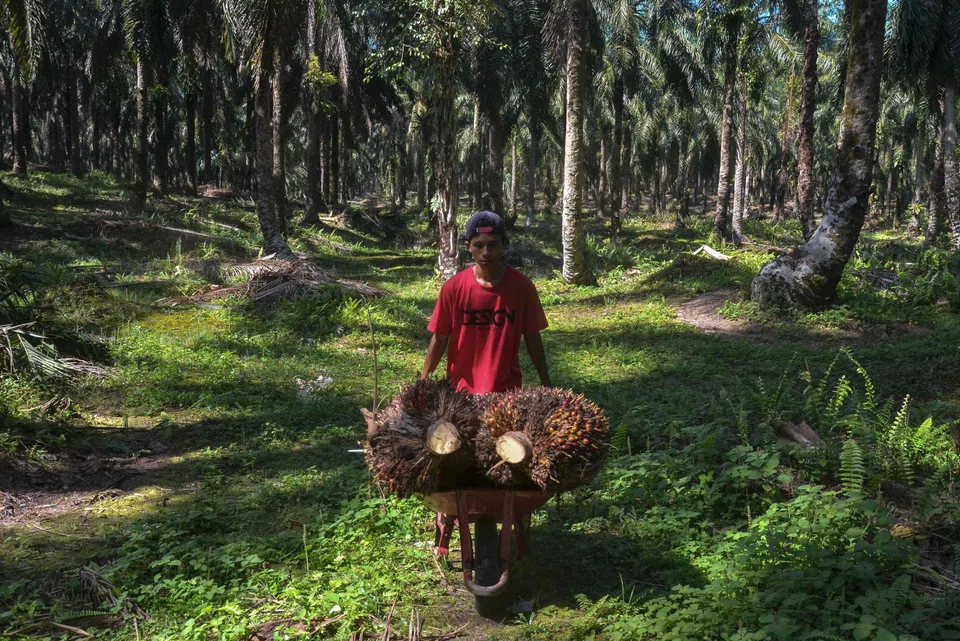
Tree crop commodities, such as crude palm oil (CPO), cocoa and coffee, are expected to sustain elevated prices, supported by strong fundamentals while a stronger US dollar threatens to pressure dollar-denominated softs (agricultural products).
In contrast, ringgit-denominated palm oil may see further gains.
Early 2025 is set to spotlight cocoa and coffee as the most dynamic markets, while ample grain supplies could keep price growth in check, said Jonathan Parkman, head of agricultural sales at commodities broker Marex.
Production woes to keep CPO prices elevated
Rabobank’s senior analyst Oscar Tjakra noted that tree crop commodities such as CPO and natural rubber, on top of coffee and cocoa, have registered at least 20 per cent higher year-to-date price growth given tight supplies on weather disruptions and old tree age profiles.
As at Dec 12, palm oil contracts have traded at an average price of RM3,921 (S$1,188) per tonne, reflecting a 36.6 per cent increase year-to-date.
Tjakra noted that global palm oil prices will continue to be supported in 2025.
“The combination of limited year-on-year total palm oil production increase in Indonesia and Malaysia, and year-on-year biodiesel demand growth in 2025 in Indonesia will result in global palm oil’s supply and demand deficit situation in 2024/25 season,” said Tjakra.
He added that the deficit situation in global soft oils (soy, rapeseed and sunflower) will also provide support to palm oil prices in 2025.
OCBC’s Asean economists, Jonathan Ng and Ahmad A Enver, predict that CPO prices will remain at current elevated levels through the first quarter of 2025, before beginning to normalise from the second quarter onwards.
“We revised our forecast for CPO price to average RM4,200 per tonne in 2025, up from RM4,000 per tonne previously,” said the OCBC team.
In a note published on Nov 4, BMI raised its price forecast for Bursa Malaysia-listed third-month CPO futures contracts. The 2024 forecast was revised upward from RM3,850 per tonne to RM4,050 per tonne, while the 2025 projection increased from RM3,650 per tonne to RM3,900 per tonne.
BMI highlighted that market sentiment will remain highly sensitive to supply levels in Indonesia and Malaysia, with ongoing concerns about reduced production in these key regions.
Political instability clouds outlook
Geopolitical disruptions and political instability are adding layers of complexity to the agri-commodity market outlook.
According to Marex’s Parkman, smaller markets such as cocoa and coffee are primarily influenced by weather conditions in producing regions. In contrast, larger commodity markets, including wheat, corn and soybeans, are significantly impacted by geopolitical tensions.
Potential increased trade tensions with China under the incoming US President Donald Trump’s administration pose notable risks to US food and agriculture (F&A) exports, particularly soybeans.
Rabobank’s head of RaboResearch for F&A in North America, Roland Fumasi, and senior consumer foods analyst Tom Bailey noted that China, the third-largest market for US F&A exports, has already reduced its purchases.
They noted that over the past 24 months, Chinese F&A imports from the US have dropped by 27 per cent from their 2022 peak, with a 22 per cent decline in the last year, contributing to weaker prices for soybeans and corn.
“Further downside risk is imminent, as higher US tariffs will undoubtedly elicit a retaliatory response on US F&A products,” the team said.
Soybean prices are particularly sensitive to the trade tensions between the two giants as China accounted for over 51 per cent of US soybean exports.
Ano Kuhanathan, head of corporate research at Allianz Trade, said that as the US is a major player in the production of key crops such as corn, soybeans and wheat, it could have an impact on global prices for these commodities should US farmers scale down production.
TRENDING NOW

Once staunchly pro-China, Malaysian Chinese businesses are now distancing themselves from Beijing

Stocks to watch: HPL, Aims Apac Reit, Zico, Advanced Systems Automation, ComfortDelGro

‘How many will survive?’: Bubble fears arise as China’s humanoid robotics face reality check

Smaller board lots can’t fix a market run by three banks

