Watch this space: Analysts upbeat on Singapore’s new space agency, but see no near-term lift for stocks
ST Engineering and local telcos are among the expected potential beneficiaries

[SINGAPORE] The formation of the National Space Agency of Singapore (NSAS) marks a pivotal step in the Republic’s push to strengthen its position in the global space economy.
But although analysts are optimistic about its long-term structural potential, they warn against expecting an immediate boost to corporate earnings or share prices.
Announced on Feb 2, the agency that will spearhead Singapore’s national space ambitions will come into being on Apr 1 under the Ministry of Trade and Industry (MTI).
In a statement, MTI said that Singapore’s strengths in advanced manufacturing, aerospace, micro-electronics, precision engineering and artificial intelligence position it well to capture new opportunities in the space technology sector.
Carmen Lee, head of equity research at OCBC, described the move as a “long-term structural theme”, adding that it would likely open up new business opportunities over time.
The space ecosystem is not starting from scratch in Singapore. The government estimates that there are more than 70 space companies operating here, hiring more than 2,000 professionals among them.
Beyond the Republic, Lee expects more cross-border collaboration in space technology as governments and corporates ramp up investments.
In 2023, Deloitte estimated the economic value-add of earth observation data in the South-east Asian economy to be US$15 billion, a sum expected to hit US$100 billion in 2030.
The global space economy is projected to grow to US$1.8 trillion by 2035, opening up opportunities across satellite communications, earth observation and advanced manufacturing.
Space technology is broadly defined as the collection of tools and technologies developed to facilitate space-related activities, such as global communication, space exploration and satellite imagery.
Telcos, tech among potential beneficiaries
Analysts say local telco operators, namely Singtel and StarHub, stand to benefit.
“We see it as a strategic enabler for telcos to enhance network coverage and resilience,” said Chu Peng, analyst at OCBC.
While the domestic market alone may not be a significant revenue generator, partnerships or regional expansion could amplify the benefits, she added.
“The move supports long-term opportunities in innovation, diversification and regional leadership.”
Companies in supporting industries such as aerospace and defence, electronic equipment and instruments, along with those in the technology sector, may also see opportunities.
Krishna Guha, analyst at Maybank Securities, cited ST Engineering as one such beneficiary, noting that the group has had a presence in the global space economy – particularly in ground-segment technology – for more than two decades.
He added that the company has plans to launch a constellation of satellites, and to develop inter-satellite laser communications in the near future.
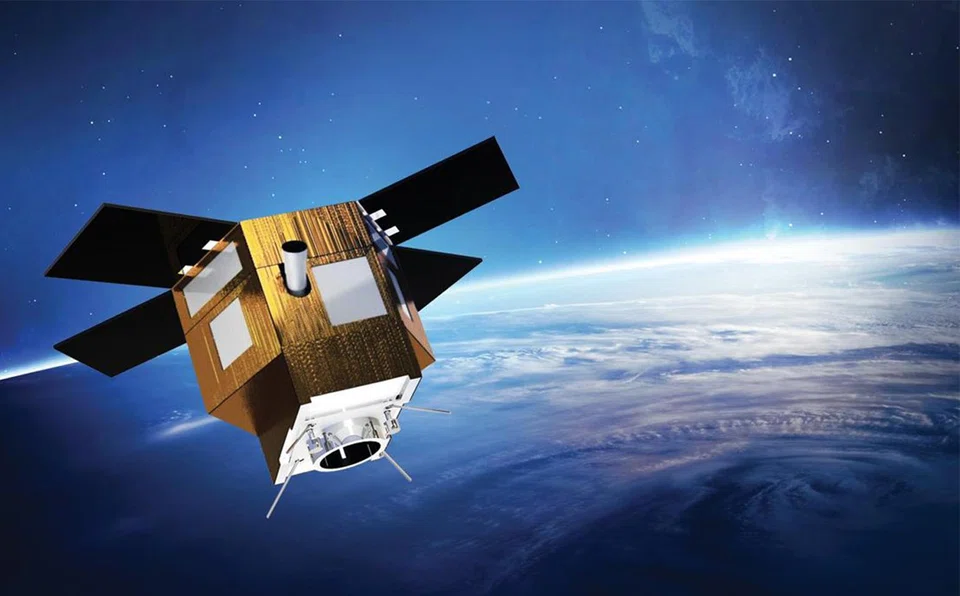
Earlier this month, ST Engineering announced that it is designing and developing new satellites in Singapore over the next few years.
One of these satellites will be able to provide coverage across the equatorial region, including by delivering high-resolution images to support missions in environmental monitoring and disaster-response planning, it noted.
Jarick Seet, analyst at Maybank Securities, identified Singapore-listed Addvalue Technologies as a company which will also benefit from the space programme.
Addvalue is a “front runner” in the space and satellite sector with more than 20 customers, mainly from the US, he added, noting that over 60 per cent of its revenue comes from these sectors.
Benefits, but not so soon
Still, analysts stressed that the formation of the space agency might not immediately translate into additional revenue for companies.
NSAS will assume and build upon the current functions of the Office for Space Technology and Industry, Singapore.
Guha noted that while the space sector is a new growth pillar for ST Engineering, it is “not a material order book component as of now”.
Lee agreed, stating that it is “still early days” as the announcement was made only in February. She noted that the company’s share prices have not yet reacted to the news.
“Once contracts emerge, it will be a better time to assess who the winners are and the roles these companies are playing in the entire business value chain,” she said.
For now, the formation of NSAS signals the intent of Singapore’s space ambitions, but investors may have to wait before seeing a lift-off in earnings.