

Ways to give green buildings movement a bigger push
BCA's CEO says Singapore can use more solar energy, achieve further research breakthroughs in energy efficiency, and get building occupants more involved.
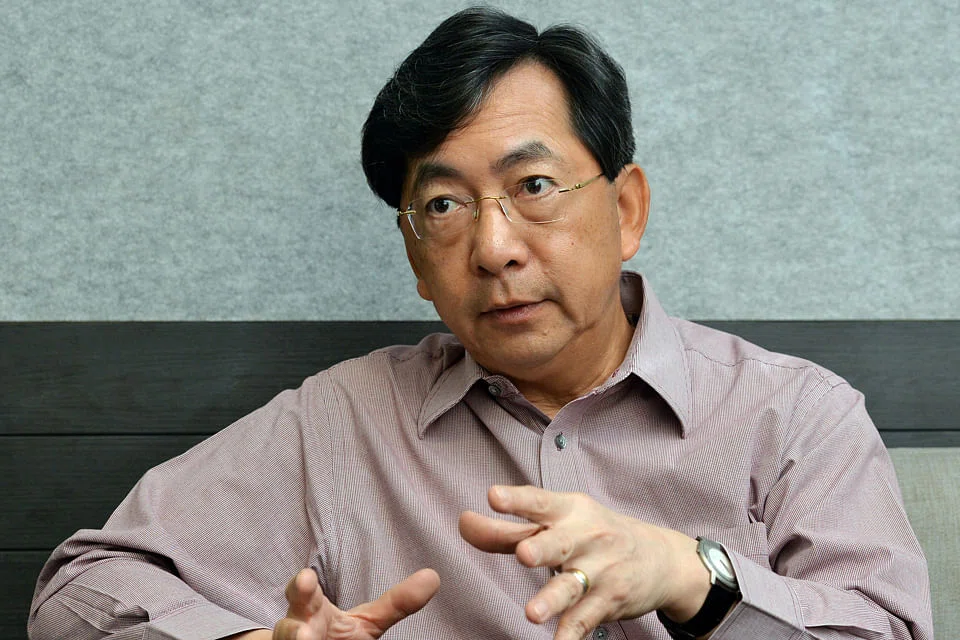
BUILDING and Construction Authority (BCA) CEO John Keung believes there are three ways Singapore can further improve its green building standards.
First is the use of more renewable solar energy to power buildings - after all, the sun is the most promising and feasible energy source for Singapore compared to other kinds of renewable energies, says Dr Keung.
To this end, BCA is encouraging designers to either adopt solar energy in building designs now, or make provisions for their adoption in the future.
"The key point is that the cost of solar adoption has come down significantly. If you look at our zero energy building at BCA Academy (meaning the building produces enough energy to run itself), we built it in 2009 and procured solar panels on the rooftop 1-2 years before that," says Dr Keung.
"The payback period for the solar energy then was 25-30 years, which is a long time. Today, if we retrofit a same building to make it a zero energy building, the payback period is just 7-10 years. It is a significant drop. Solar energy has become a lot more viable today."
In addition, BCA is building a rotatable sky lab at its Academy in conjunction with the Lawrence Berkeley National Laboratory in California to test new facade design and materials at any orientation to the sun and wind.
Second is to try to achieve further breakthroughs in energy efficiency, while keeping it cost-efficient. "Today, the typical Green Mark Platinum project is about 30 per cent more energy efficient than a normal code-compliant building. Why can't it be 40 per cent, 50 per cent, 60 per cent more?"
"Depending on design, to achieve Platinum, you still have to pay 2-3 per cent additional premium on top of the construction costs. Why can't it be cost neutral or even cheaper? You need to achieve breakthroughs in your use of design materials to see if it's possible to achieve a cost-neutral decision for a Platinum building. This will require more research and study, which the government is very supportive of," he says. In this regard, the National Research Foundation last October said it would allocate S$52 million to set up a programme focused on green building innovation.
Third is to get building occupants to come onboard to do their part in saving energy. To achieve this, BCA has held pop-up roadshows in office buildings to increase awareness among office workers of what they can do to green their offices and watch their energy consumption patterns.
"Did you know that if you look at a typical commercial building and its total energy consumption, users' plug-in load - all the laptops, printers, coolers, et cetera, they take up half the building's energy consumption? So it's not just the central air coolant, lifts and so on, that use the most energy. The users themselves contribute at least half.
"So even if the building is green but the users are not, you are not getting the full benefits. But this is the most difficult part, because changing behaviour is always the hardest. It's an uphill task."
Singapore's green building movement started in 2005, first with the development of the Green Mark scheme, a tropical version of the US LEED and UK BREEAM green building certifications.
This was followed by Singapore's first roadmap which offered incentives such as funds and extra gross floor area to help developers overcome the initial hurdle of higher construction costs of new buildings.
The government also set a target to train 20,000 green-collared professionals by 2020 to build up knowhow and competencies in the industry. (Target check: there are over 13,000 professionals currently.)
Along the way, studies carried out also began to persuade developers who realised that building green actually adds about a 2-per-cent premium to property values, on top of benefits like energy savings.
The second masterplan in 2009 then focused on getting existing buildings to retrofit to meet Green Mark standards. Some S$100 million was set aside to co-fund building owners' retrofitting, helping to defray as much as half the retrofitting costs in some cases.
BCA also got the Parliament to accept its proposal to get all building owners to achieve a minimum Green Mark standard for existing buildings when a cooling system is installed or retrofitted, among other requirements.
Since the second masterplan, the government has required all larger new air-conditioned public-sector buildings to achieve the highest Green Mark accolade, which is Platinum. All existing buildings owned by government agencies must also meet Green Mark GoldPlus standard by 2020.
The third roadmap, which is where we are now, then focuses on getting the building tenants and occupants to do their part for the environment.
Some developers such as Lendlease and City Developments now practise something called "green leases", which basically include terms that tenants need to abide by, on how a building should be occupied, operated and managed in a sustainable way. Awards and recognition are also given to owners and tenants who work together in this regard.
Satisfied with his agency's work, Dr Keung says: "Today I daresay we are probably one of, if not the only, global leader in the tropics. In the tropical belt, I don't think there is another city that has done as much as us in green building.
"That's why we are able to share our knowledge with so many cities and countries in the world. At last count, around 75 cities have some projects certified under the Green Mark scheme by BCA."
TRENDING NOW

Nvidia reinstates Jensen Huang as CEO; Trump says move poses no national security risk

Beyond the greenback, Vietnam’s big borrowers turn to Asian-currency bonds

Indonesia’s coal tycoon Low Tuck Kwong replaced as Bayan Resources president-director

Six workers file employment claims against Crystal Jade Food Manufacturing

