

Weak valuations, liquidity on SGX could drive further listings outside Singapore in vicious circle

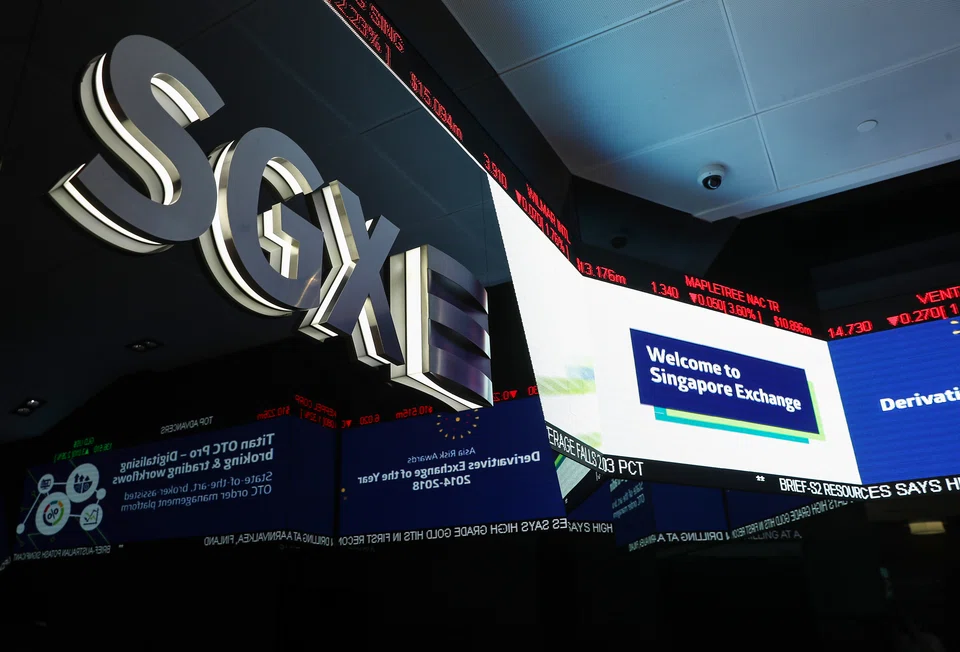
A STREAM of delistings from the Singapore Exchange (SGX) – and the lack of new listings to replace them – could lead to a hollowing out in the Singapore market, according to industry watchers.
They also warned that the number of delistings could reinforce the perception of a lack of liquidity and poor valuations in the Singapore market, which has led to an increase in the privatisation of Singapore-listed companies.
“If this issue is not properly addressed, it could in turn perpetuate the perception that the Singapore market is not an attractive place to raise capital,” said Robson Lee, partner at Kennedys Legal Solutions.
David Gerald, founder and president of the Securities Investors Association (Singapore), or Sias, believes a downward spiral in investor confidence in Singapore’s stock market could result in decreased valuations across the board.
This will further exacerbate a decline in investor trust, creating a “vicious circle” that must be avoided, Gerald said. “With each delisting that goes through, potential offerors – usually the controlling shareholders – may be tempted to follow suit.”
Meanwhile, SGX is also grappling with a lack of new entrants to the market, which has resulted in an overall decline in the number of listed companies here.
Singapore saw just three Catalist listings and no mainboard listings in the first half of 2023.
This is in stark contrast to initial public offerings (IPOs) taking place in other countries in the region. For example, Indonesia saw 44 IPOs over the same period.
CMC Markets sales trader Oriano Lizza said companies that perceive the stock exchange to have poor valuations and liquidity have decided to turn to international bourses, with many opting for Hong Kong or the US.
“A recent example of this would be Grab’s listing on the Nasdaq, which has not necessarily proved fruitful in terms of price action, but has given the company global exposure,” he said. “Companies such as Osim and Razer have also gone with Hong Kong as a more desirable exchange due to higher valuations.”
IPOs are also no longer the only way for such companies to raise capital. Kennedys’ Lee pointed out that family offices, venture funds and private equity have provided small-cap companies with “attractive alternatives” to raise funds.
Carmen Lee, head of OCBC Investment Research, believes that if this trend continues, “there will be a dearth of small-cap ideas for investors looking to invest in that space”.
Overall impact of small caps
Despite this, some industry observers said the wave of delistings has made limited impact on trading.
The shrinking number of companies on the bourse has not always resulted in a fall in SGX’s overall market capitalisation, according to data from the World Federation of Exchanges.
Although the number of listed companies has been declining from 2018 to 2022, total market capitalisation has increased year on year in two of the four years.
There are at least 32 companies that have delisted from SGX in the last year, or announced that they are going to delist. These have largely been small to mid-cap sized companies, often with lower trading volumes.
For example, palm oil producer Global Palm Resources had an average monthly trading volume of just 81,900 shares in the three months before it received a privatisation offer from its chief executive Suparno Adijanto and six family members.
In the last year before its delisting on Jul 4, its monthly trading volume had hit as low as 8,000 in November 2022. Movement only picked up when the privatisation offer was launched in March this year, reaching around 2.3 million that month.
In comparison, STI constituent Wilmar International , which is also in the agricultural sector, had an average monthly trading volume of 125.3 million in the last 12 months, according to Bloomberg data.
OCBC’s Lee said light trading is often a reason for these delistings. “The cost-to-benefit ratio must be favourable for companies to continue to be listed,” she said.
That said, not all delistings are negative. Lee noted that companies delisting voluntarily may be doing so as they are not looking to tap the market for funds or performing any capital-raising exercises.
They “could also reflect the life cycle of companies towards a more mature level of development”, said Jeremy Tan, CEO of Tiger Fund Management, the fund management sister company of Tiger Brokers (Singapore).
CMC Markets’ Lizza added that delistings can also have a positive effect when a company’s owners make an attractive offer for the shares still in the market. “This perceived value of an underperforming company can be seen as a low-cost buying opportunity for investors,” he said.
Benefits of small caps
While these small-cap companies may not be heavily traded, industry watchers believe they have an important role in the market.
Tan said they provide investors with the opportunity to tap into companies with higher growth potential, such as those focused on disruptive industries, innovations or emerging markets.
“Investors could also benefit from diversification and better risk-adjusted return with portfolio exposure to uncorrelated market sectors, as opposed to solely investing in blue chips and passive investing,” he added.
OCBC’s Lee said such small caps have widened the selection of stocks that investors can buy, catering to niche interests.
IG market strategist Yeap Jun Rong noted that compared to blue chips, small-cap counters could appeal to more aggressive investors due to their higher risks, requiring more cherry-picking from investors.
Sias’ Gerald said that as long as a company has good fundamentals, they will still be able to attract investors, and may even turn into multi-baggers.
“Big companies have to start somewhere, and most of them begin as small-cap companies. For local companies, SGX remains a good platform for them to list and grow,” he said.
Market watchers also called on regulators and the local bourse to “do more” to improve market liquidity and valuations.
For example, Kennedys’ Lee said that Singapore’s Temasek and GIC are significant investors in “promising and profitable” ventures, and would be able to influence investee companies to list on the Singapore market.
This would in turn boost institutional investors’ interest in SGX, he added.
TRENDING NOW

Knight Frank’s Tan Tee Khoon leaves firm, Nicholas Keong takes over auction business
Keppel Energy, Sembcorp Utilities and Tuas Power to supply biomethane in pilot project

GovTech retrenches another 38 staff in second round of layoffs
Take-up of new private homes dives 45% in Q3 as prices accelerate with 1.4% rise

