Fullerton Health could turn to courts for rescue as woes mount and white knight seems elusive

SINGAPORE'S troubled Fullerton Healthcare (Fullerton Health) could be left with little option but to go down the judicial management (JM) path as time runs out and a sour shareholder stand-off jeopardises any potential sale to rescue the private healthcare solutions firm.
"Clearly, the (sale) process has gone on for very long with a lot of names thrown around... this sale has not materialised for various reasons and this has led to this whole conversation on JM," a reliable source told The Business Times (BT).
Fullerton Health, a "pan-regional platform" that offers corporations everything from health insurance plans and access to a network of healthcare providers to benefit plans, and also provides primary care and diagnostics, counts Hong Kong-based private equity (PE) firm RRJ Capital as its largest creditor.
RRJ is co-founded and led by Malaysian brothers - the region's prominent dealmakers - Richard and Charles Ong.
RRJ Capital's chairman and chief executive Richard Ong joined the board of Fullerton Health as non-executive director after the PE firm lent its heft and subscribed to the healthcare firm's senior perpetuals 2 years ago - about a couple of years after it first ploughed money into the firm by picking up its convertible preference shares.
Fullerton Health's financial conundrum came to a head after a potential white knight, Beverly Hills private equity firm Platinum Equity, walked away from its sweetened non-binding offer in September last year following a protracted sale process that began early 2021, BT learnt.
Then, 2 days before Christmas last year, Shanghai Topcare Medical Services, which is undergoing a business transformation into health services, said it signed a "framework agreement" with David Sin of SIN Capital to acquire Fullerton Health for up to S$800 million.
Sin, Fullerton Health's co-founder, president and deputy chairman, controls SIN Capital, which majority owns Fullerton Health. Credited for transforming the firm from a Singapore-centric entity to a pan-Asian platform since he emerged as majority owner in 2012, Sin appears eager to sell given the firm's stressed financials.
This potential sale with the Shanghai firm, with a noticeably lower price tag than some US$1 billion bandied about much earlier, could run into roadblocks if it needs consensus among Fullerton Health's shareholders, which has been proven to be elusive so far.
For a while last year, when the medical services firm put itself on the block under "Project Phoenix" and hired Bank of America as the deal's advisor, it had seemed like a sale would close, not least because healthcare assets were all the rage amid the pandemic.
Of some 50 potential bidders who were approached in the first round, the firm drew 9 non-binding offers including from KKR, Platinum Equity, Warburg Pincus and Coalition Capital. An option to explore a possible sale to a special purpose acquisition company (SPAC) threw up a preliminary offer from Longview Acquisition Corp II - a third-party SPAC listed on the New York Stock Exchange and sponsored by a New York-based hedge fund.
Then in July, in the thick of the sale process as the firm was sussing out its options, Sin sued the firm's minority shareholders and medical doctors Michael Tan and Daniel Chan. The move underscored the long simmering tension between the 2 camps of shareholders. Dr Chan and Dr Tan, once chums now turned foes of Sin, are also Fullerton Health's co-founders and directors.
At the heart of the legal dispute that is ongoing, is how much of Fullerton Health, which also counts China's giant insurer Ping An Insurance (Group) as shareholder, should be put on the block for sale. Sin wants to sell all of Fullerton Health while the doctor duo do not wish to sell their shares in the firm and are keen to stay on as directors and shareholders.
In court documents, the doctors have accused the majority shareholder of wanting to "drag along minority shareholders into a sale" and argued instead that they have veto rights and rights of first refusal.
This so-called "Mexican standoff" could be an impediment to any sale, including the latest one involving the Chinese party, said 1 observer.
Amid the brouhaha, a key director at Fullerton Health Edwin Basuki quit the firm in November, BT learnt. Basuki, Fullerton Health's former executive director, group chief commercial officer and M&A (mergers and acquisitions) head also stepped down as managing director of SIN Capital end-2021. He has been a director and has held these positions since 2015.
A check on Fullerton Health's website confirmed that Basuki is no longer part of Fullerton Health's board and management team. When contacted, Basuki declined to comment.
Meanwhile, Fullerton Health appears to be running out of option to remedy its mounting liquidity woes.
In the company's FY2020 accounts, auditor Deloitte & Touche highlighted once again (it did this for FY2019 as well) a "material uncertainty relating to going concern", saying the firm is exposed to increased liquidity risk as it faces looming debt payments over the next 12 months up to October this year. This will hinge on its ability to successfully negotiate and raise additional funding by March 2022.
Fullerton Health's losses widened to S$243 million in FY2020 from the previous year, largely owing to impairments, and it is saddled with just over S$220 million of borrowings, consisting of bank borrowings and senior unsecured guaranteed bonds. Some S$156 million of debt was due in 2021 and S$59 million due in 2022, according to its latest accounts.
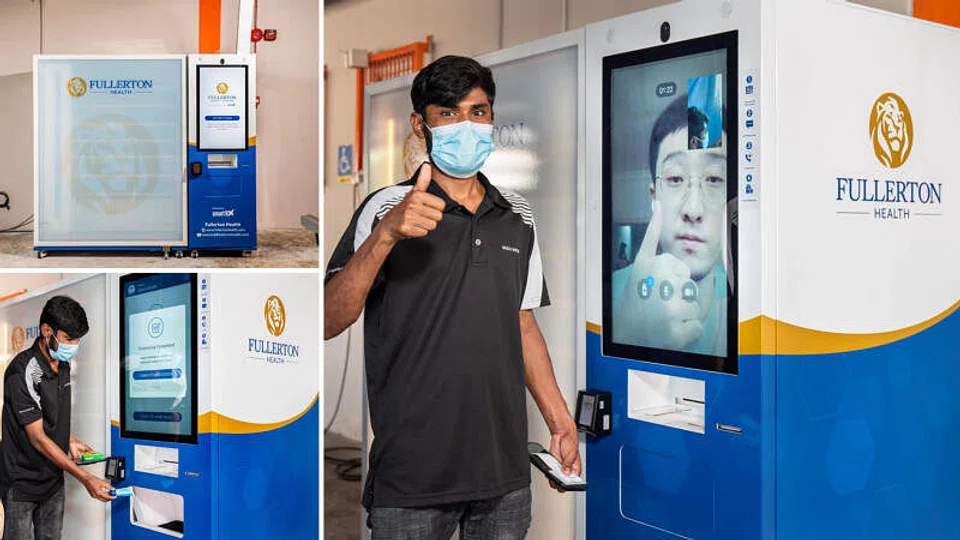
Fullerton Health owns 500 medical facilities, runs a network of over 12,000 third-party healthcare providers and operates out of 10 markets in Asia-Pacific.
Even amid its precarious financial health, the firm's business appears to have ratcheted up as it leverages on its offerings across the healthcare value chain in pandemic times, chiefly in Singapore, Indonesia and the Philippines.
In Singapore, the firm is involved in 8 national Covid-19 projects including managing dormitory medical posts for migrant workers, and operates 10 vaccination centres, most notably the one at Raffles City Convention Centre.
Fullerton Health generated new revenue of nearly S$40 million across the markets in 2020 for Covid-related projects such as screening tests and expects the figures to cross S$100 million in 2021, said the firm in a letter to stakeholders in October last year.
"The group's financial performance in the first 9 months of 2021 has been very positive and is expected to outperform the prior year. On a comparable basis, we expect our 2021 EBITDA (earnings before interest, taxes, depreciation and amortisation), to be 15-20 per cent higher than that of 2020, and our net income to be positive for 2021," the firm added.
READ MORE