S-Reits pivot to 'new economy' in tough 2021; look forward to brighter year ahead

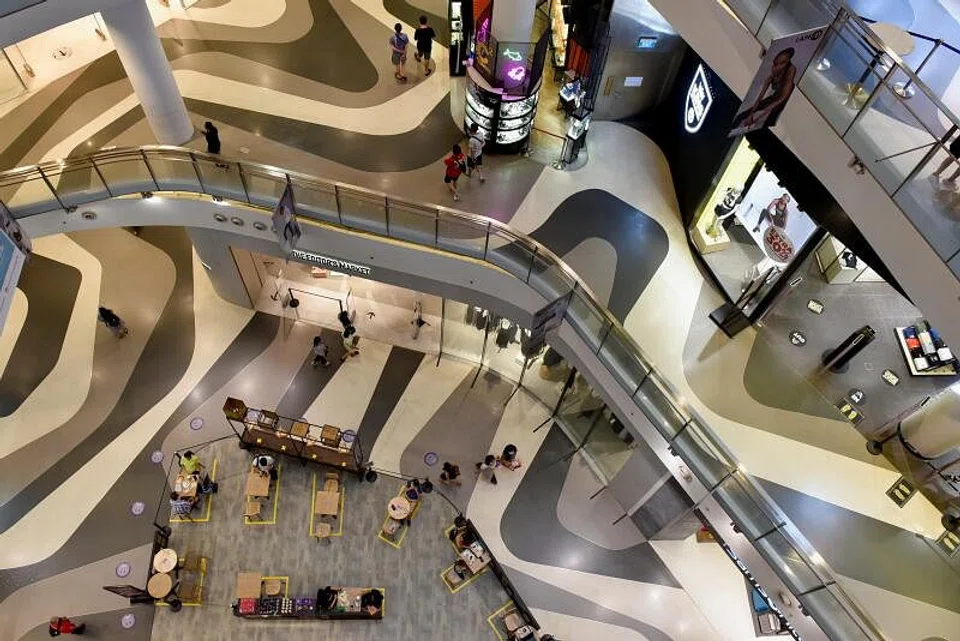
SINGAPORE-LISTED real estate investment trusts (S-Reits) underperformed in 2021, weighed down by prolonged pandemic-related restrictions and growing fears of inflation and rising interest rates.
The iEdge S-Reit Index edged up 0.9 per cent in 2021 and chalked up a total return of 5.2 per cent. In comparison, the benchmark Straits Times Index (STI) rose 9.8 per cent and delivered a total return of 13.6 per cent over the same period.
"The relative underperformance mainly comes from the market pricing in expectations that the US Federal Reserve could be looking to raise rates as economic conditions improve and inflation rates pick up through the course of 2021. This is on the back of a combination of supply chain disruptions amidst rising demand," said DBS analysts Derek Tan, Rachel Tan, Dale Lai and Geraldine Wong in a recent sector report.
While underperforming the benchmark index, the real estate investment trusts (Reits) have improved from their lacklustre performance in 2020, when they grappled with lockdowns at the onset of the pandemic. In 2020, the iEdge S-Reits Index fell 6.8 per cent and delivered a total return at negative 2.5 per cent.
As protracted Covid-19 measures such as capacity restrictions at shopping malls and work from home regimes continued to batter businesses, Reits found themselves forced to quickly adapt.
Much of the focus for S-Reit in 2021 had been on pivoting to in-demand "new economy" sectors such as data centres and e-commerce logistics. Some also made acquisitions to position for growth when the Covid-19 situation improves.
For example, CapitaLand China Trust (CLCT) AU8U in October announced its maiden foray into the China logistics sector with the S$297.7 million acquisition of 4 prime logistics assets in Shanghai, Kunshan, Wuhan and Chengdu.
Formerly known as CapitaLand Retail China Trust, the Reit in September last year expanded its investment mandate beyond the retail sector. Including the completion of the acquisition of 5 business park properties in Suzhou, Xian and Hangzhou in the first half of 2021, this brings CLCT's new economy assets to 21.4 per cent of its assets under management.
Some hospitality trusts, which bore the brunt of border closures, also turned their attention to purpose-built student accommodation (PBSA) assets.
Hotel and serviced residence landlord Ascott Residence Trust (ART) HMN added 8 student accommodation assets in the US to its portfolio in 2021. It also acquired 3 rental housing properties in Japan.
This brings ART's rental housing and student accommodation assets to close to 16 per cent of its portfolio value. The Reit manager has said its medium-term target is to increase the proportion of this segment to 15 to 20 per cent of its portfolio value.
Asset acquisitions announced by S-Reits in 2021 amounted to at least S$12.7 billion in total purchase consideration, according to Singapore Exchange (SGX) company announcements. The number of deals totalled around 52, with the majority in the new economy space.
This is higher than the S$9.4 billion that S-Reits injected into property investments for 2020, said the Institute of Real Estate and Urban Studies, based on its analysis of data from Bloomberg and S-Reits' announcements.
The pivot to new economy assets has also culminated in the proposed merger of ESR-Reit J91U with Ara Logos Logistics Trust K2LU , which is expected to be completed in early 2022. The combined entity, to be named ESR-Logos Reit, will hold some S$5.4 billion in total assets and is expected to be among the 10 largest S-Reits based on its theoretical free-float market capitalisation.
"This proposed merger is transformational and accelerates the pivot of ESR-Logos Reit to new-economy sectors that are set to dominate and deliver sustainable growth," said Adrian Chui, the chief executive officer of ESR-Reit's manager.
Nearly two thirds of the combined portfolio will be in the logistics and high-spec industrial space, or what the Reit manager dubs "in-demand new economy real estate".
To top off 2021 for S-Reits, the managers of Mapletree Commercial Trust (MCT) N2IU and Mapletree North Asia Commercial Trust (MNACT) RW0U on Dec 31 proposed a blockbuster merger to create one of Asia's 10 largest Reits with a theoretical market capitalisation of approximately S$10.5 billion.
The merged entity, to be named Mapletree Pan Asia Commercial Trust (MPACT), will have assets under management (AUM) of approximately S$17.1 billion. The combined portfolio will comprise 18 commercial assets across Singapore, China, Hong Kong, Japan and South Korea.
The investment mandate for the enlarged Reit will also be expanded geographically to include other key Asian gateway markets. This is seen as a move by the Reit to position for inorganic growth across Asia. Post-merger, the enlarged entity will have debt headroom of approximately S$3.8 billion.
Some of this growth is expected to come from an increase in its business parks segment, which currently accounts for 21 per cent of the enlarged portfolio.
The year also saw 2 new Reit initial public offerings (IPOs) - both in the new economy space.
Logistics and industrial Reit Daiwa House Logistics Trust (DHLT) made its trading debut on the SGX Mainboard in November while pure-play data centre trust Digital Core Reit (DC Reit) DCRU commenced trading barely 2 weeks later in December in what was Singapore's largest IPO of the year.
The additions bring the number of Singapore-listed real estate investment trusts (S-Reits) and property trusts to 44, with a combined market capitalisation of over S$110 billion.
Moving into 2022, analysts see the cloudy skies for S-Reits easing slightly, despite headwinds from US Fed rate hikes.
"The uncertainty of the timing and pace of Fed hikes in 2022 will likely be an overhang for the S-Reits' share prices in H1 2022," the DBS analysts said. "Using the 2013-2015 taper period as a guide, S-Reit prices lagged the Straits Times Index (STI) before outperforming strongly upon the start of rate hikes in December 2015 with this uncertainty removed."
"We see a possible repeat of such trends in 2022 but acknowledge the key compelling differences for S-Reits to do better this time round," they added. "As the outlook remains unclear in the immediate term, we believe that investors should stay invested alongside selected 'domestic reopening' plays and S-REITs with a 'new economy' focus for their stronger growth profiles."
Jefferies analyst Krishna Guha advocates a "barbell strategy" for the S-Reit sector.
He warns that the hospitality sector will be weighed by the tapering of government and staycation demand as well as a protracted recovery of international travel. On the other hand, the commercial and industrial sectors could pick up pace.
"Commercial Reits will benefit from progressive reopening, domestic demand resulting from higher wages and measures such as the introduction of e-commerce taxes. Simultaneously, industrial Reits will benefit from structural demand for new economy assets - logistics, data centres, and life sciences parks - as well as shifts in supply chains," Guha said.
READ MORE
- Mapletree Commercial Trust, Mapletree North Asia Commercial Trust propose merger
- Daiwa House and Digital Core: A tale of 2 Reit IPOs
- CapitaLand needs to pull a rabbit out of the hat for Singapore's largest Reit to multiply