

STI hits 30-month high as net institutional buying of heavyweights soars
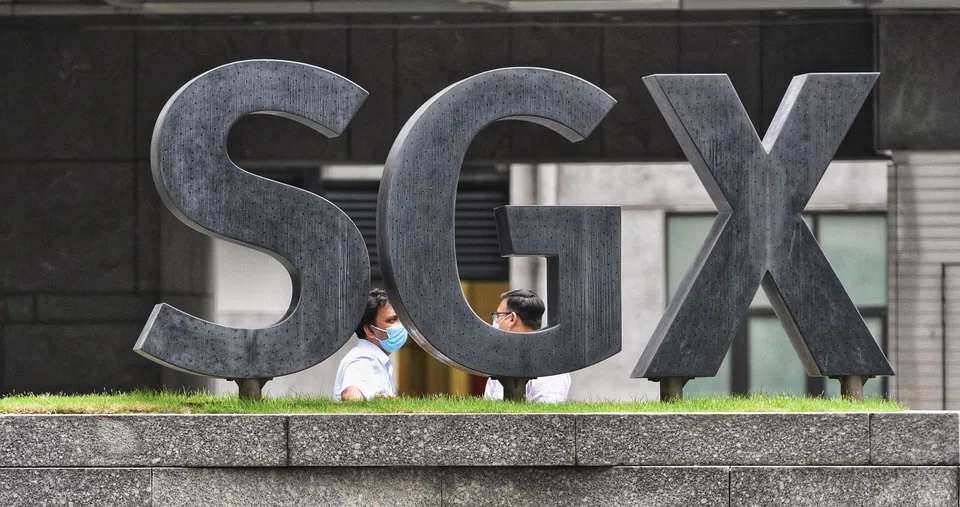
THE first trading session for the Chinese New Year saw the STI return to levels last seen in July 2019, ushering in more than S$200 million of net institutional buying, before ending the week at 3,331.41 with a 6.7 per cent gain for the first 5 weeks of 2022.
For the month of January, Singapore stocks reported S$803 million of net institutional buying, following on from more than S$200 million in net institutional selling in December 2021. During January, the STI gained 4.0 per cent, and ranked as Asia-Pacific's most defensive stock benchmark for the month, as the FTSE Asia-Pacific Index declined 3.9 per cent in Singapore dollar terms.
The higher energy and food prices, supply chain constraints in addition to the Omicron variant, have seen multiple central banks begin withdrawing accommodative monetary policy, while the International Monetary Fund (IMF) has made a 0.5 per cent downward revision to its global growth forecast to 4.4 per cent in 2020.
In Singapore, CPI began 2021 with a 0.2 per cent year-on-year (yoy) gain in January and ended 2021 with a 4.0 per cent yoy gain in December 2021. The Monetary Authority of Singapore raised the S$NEER policy slope slightly in January, with the off-cycle tightening attributed to the outlook for inflation on recovering global demand and persistent supply-side frictions.
Sector flows
Due to the nature of this current wave of inflation, the above-trend growth forecast for 2022 and the current juncture of central bank policies, the key market drivers have had varied impacts across stock sectors.
Within the STI, the bank sector, comprising DBS, D05 OCBC O39 and UOB, U11 which maintain a combined 45 per cent weight in the STI, averaged 9.5 per cent gains in January on S$842 million of net institutional buying. The remaining stocks saw S$39 million of net institutional selling in January.
Reits and technology stocks were among the worst performing sectors in January, which saw as many as 12 stocks from the 2 sectors rank among the 15 Singapore-listed stocks with the highest net institutional selling in January.
Banks
While global Reits and technology stocks saw some headwinds in January, sectors such as banking and energy saw tailwinds. During January, the CME FedWatch Tool expectations for a US interest rate hike at the Mar 16, 2022 FOMC increased from 50 per cent to 100 per cent, with expectations that rates would be increased to the 125-150bps target range by the Dec 14, 2022 FOMC, rising from 10 per cent to 34 per cent.
This coincided with the 2-year/10-year US Treasury Yield curve extending the 60bps upward shift seen in 2021, with a 30bps upward shift in so many days. The sooner rather than later outlook for the normalisation of interest rates saw global banks outpace global benchmarks and drive the performance of the 3 STI heavyweights in January.
The imminent US interest rate increases are seen to positively impact net interest margins (NIMs) of the banks. From Q4 2019 to Q3 2021, DBS' NIM declined more than 40bps from 1.86 per cent to 1.43 per cent, while OCBC's NIM fell 25 bps from 1.77 per cent to 1.52 per cent and UOB's NIM dipped 21 bps from 1.76 per cent to 1.55 per cent.
Other drivers of the bank sector to watch in 2022 other than loan growth, include the ongoing digitalisation of the industry, broadening of consumer and wealth management services, continued focus on supply chains and growth markets, and the ability to keep allowances low. On cue, UOB proposed to acquire Citi's consumer business in Indonesia, Malaysia, Thailand, and Vietnam on Jan 14, while DBS announced that it was acquiring Citi's consumer banking business in Taiwan on Jan 28.
Energy sector
Higher energy prices saw Brent Crude Oil Futures trade as high US$91.70/bbl on Jan 28, after ending 2021 at US$77.78/bbl. Geo Energy Resources, RE4 Rex International 5WH and RH Petrogas T13 are among a select group of stocks involved in the exploration and production of energy resources, and averaged 8.9 per cent gains in January.
Meanwhile Sembcorp Industries, U96 which has pressed on with the strategic transformation of its portfolio from brown to green energy, generated a 14.0 per cent return in January. Sembcorp Industries, Geo Energy Resources and Rex International ranked among the 20 Singapore-listed stocks with highest net institutional buying in January, while RH Petrogas ranked just outside the top 30. Also, Rex International announced plans to transfer its listing from Catalist to Mainboard.
Singtel & Jardine Matheson
Increased digitalisation has also had an impact on the STI's next largest weight after the banks, Singapore Telecommunications Z74 (Singtel). During January, Singtel saw the next highest amount of net institutional buying after the 3 banks, with the stock generating a 4.7 per cent return.
Back on Nov 11, Singtel reported that its H1FY22 (ended Sep 30) net profit more than doubled yoy to S$954 million. It attributed the result to its ongoing strategic reset to develop new growth engines in information and communications technology (ICT) and digital services. Singtel's ICT arm, NCS, reported it had changed its revenue mix significantly over those 6 months ended Sep 30, growing its digital revenue by 37 per cent yoy, which contributed 48 per cent to NCS' total revenue.
Jardine Matheson Holdings J36 (JMH) maintains a similar STI weight as Singtel. Together, DBS, OCBC, UOB, Singtel and JMH maintained a combined 58 per cent weight in the STI as at the end of January. The conglomerate ranked as a top 20 stock by net institutional buying in January, while generating a 7.3 per cent return in Sing-dollar terms. Since its share buyback announcement on Sep 30, it has gained 16.4 per cent in Sing-dollar terms.
UMS
Outside of the STI, UMS Holdings 558 maintained the highest net retail buying in January, with S$42 million of net buying, while the Volume Weighted Average Price (VWAP) of the month was S$1.35. Previously, the precision engineering group saw S$33 million of net retail buying with a VWAP of S$1.30 in October and S$32 million of net retail selling with the same VWAP measure at S$1.44 in November 2021.
Globally, semiconductor stocks gave back around one-quarter of their 2021 gains in January, readjusting for potential 2022 supply constraints, while also paralleling the declines in global 5G, cloud and date centre stocks.
SPH
On the other side of the coin, outside of the STI, Singapore Press Holdings T39 (SPH) attracted the highest net retail selling in January with a VWAP of S$2.33.
Prior to this, SPH was ranked as a top 10 stock by net retail buying in 2020 with a VWAP of S$1.38, and a top 3 stock by net retail selling in the subsequent year with a VWAP of S$1.72.
While its major restructuring is near its final steps, varied strategic initiatives and business transformations in the stock market that attempt to increase shareholder value are continuing in 2022.
Keppel
Aside from announcing the share buyback programme after the Jan 27 close, Keppel Corporation BN4 reported that its FY21 (ended Dec 31) net profit surged to S$1.02 billion, the highest net profit for the group in 6 years.
Keppel stated that the Vision 2030 transformation contributed to the return on equity (ROE) turnaround to 9.1 per cent, compared to negative 4.6 per cent a year ago, with the long-term ROE target at 15 per cent. The 2030 initiative aims to refocus its portfolio into an integrated business, providing end-to-end solutions for sustainable urbanisation, with a focus on energy and environment, urban development, connectivity, and asset management.
Pending FY21 (ended Dec 31) financial results of the STI heavyweights include - DBS scheduled to report before the Feb 14 open, UOB before the Feb 16 open, and OCBC before the Feb 23 open. The market also expects Singtel to provide a Q3FY22 (ended Dec 31) business update by the end of this week, and JMH to report its FY21 (ended Dec 31) financial results in the second week of March.
Decoding Asia newsletter: your guide to navigating Asia in a new global order. Sign up here to get Decoding Asia newsletter. Delivered to your inbox. Free.
Share with us your feedback on BT's products and services
TRENDING NOW

He built the Vingroup empire. Now South-east Asia’s richest man is handing some key roles to his sons
32 companies, 6 individuals bag accolades at Singapore Corporate Awards 2026
Can a first-time homebuyer couple earning S$18,000 a month afford a new EC unit?

Floods compound Philippine growth woes from public-works scandal

