

Wee Hur gears up for growth with bigger ambitions
Group’s chiefs consider its workers’ dormitory and construction businesses as key drivers of future growth

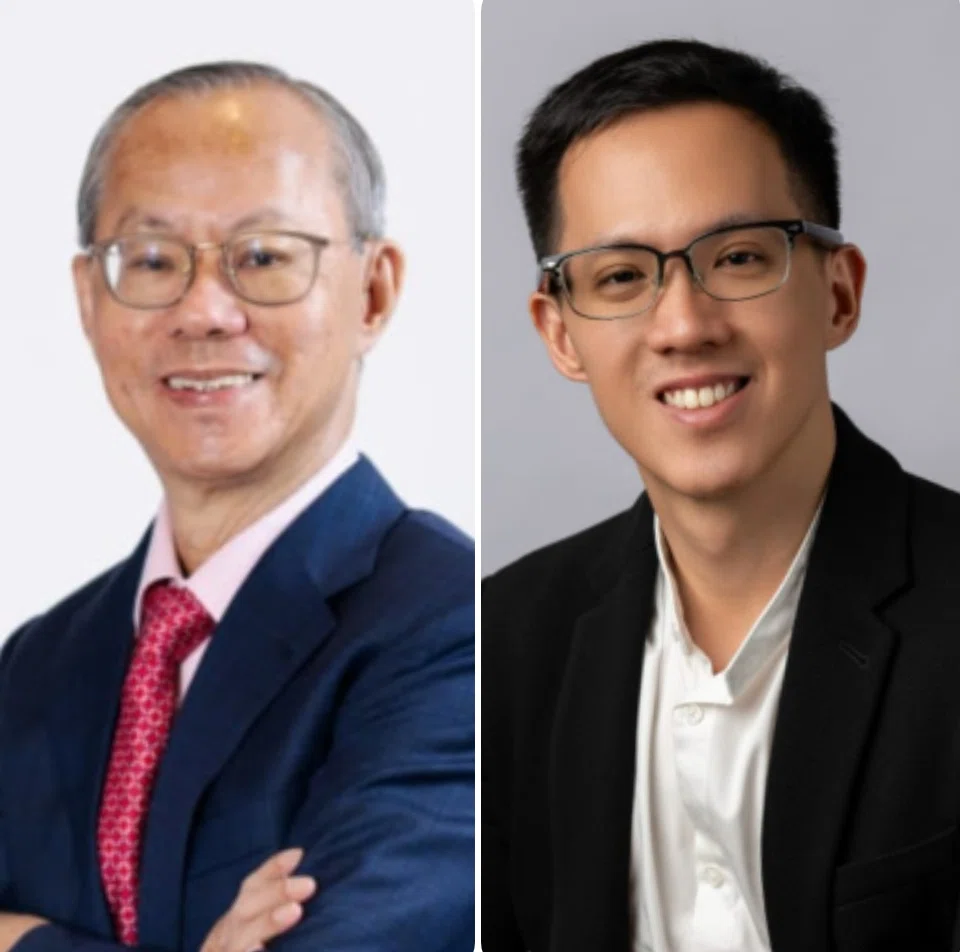
[SINGAPORE] Property developer Wee Hur is planning to launch another student housing strategy in Australia, with planning underway for a potential rollout in the third or fourth quarter of 2026.
The move follows the Singapore-listed company’s divestment of seven purpose-built student accommodation (PBSA) properties under its first PBSA Master Trust (Fund I) for A$1.6 billion (S$1.3 billion) to global investor Greystar in April 2025.
Wee Hur was able to monetise a substantial portion of its investment and re-allocate capital to new opportunities, while retaining a 13 per cent stake in the portfolio.
Goh Wee Ping, chief executive officer of Wee Hur’s fund management arm Wee Hur Capital, told The Business Times that the business’ decade-long strong track record, with two “very successful” billion-dollar transactions in the Australian student housing market, puts it in a strong position to raise more institutional capital for the next phase of expansion.
While the company previously relied heavily on its own balance sheet to build the business, it is now in a position to leverage group capital more efficiently to begin warehousing new deals.
“With that, we should have the ability to raise a lot more from institutional capital, larger family offices,” said Goh, who is the son of Wee Hur’s executive chairman and managing director Goh Yeow Lian.
The elder Goh believes the group is in a “strong financial position”, bolstered by the PBSA divestment and a S$500 million note programme, allowing it to redeploy capital into core businesses.
Wee Hur reported S$277.12 million in cash on its balance sheet for the first half of 2025.
Founded in 1980 as a construction firm, the group diversified into workers’ dormitories and later into Australian PBSA in 2014.
Reflecting on Wee Hur’s first foray into student housing, Goh Wee Ping noted that the company had to contribute 60 per cent of the capital due to a lack of track record. Now, the group expects to reduce its capital commitment to 10 to 20 per cent, while attracting more institutional investors to co-invest alongside.
However, he sees challenges in the Australian student housing market with more players entering the PBSA and co-living markets.
To stay ahead, the group is focusing on off-market deal sourcing to avoid bidding wars and exploring ways to disrupt the operating model through better use of technology.
“Now is the time to look at changing operating models so that we have a better operating margin,” he added.
Headwinds
To be sure, Wee Hur is facing some headwinds across its various business segments, which include PBSA, construction, Singapore property development, workers’ dormitory and fund management.
For the six months ended Jun 30, 2025, the group reported a 42 per cent year-on-year decline in net profit to S$38.7 million, from S$66.5 million a year earlier. The weaker bottom line was largely due to the absence of S$59.9 million in profit contributions from associates and joint ventures following the PBSA disposal.
Despite this, Goh Yeow Lian believes that the company’s core business continued to do well in H1 2025, supported by strong execution and sustained market demand.
Its adjusted net profit – after adjusting for other gains and losses, one-off items under other income and share of profits from associates – rose 164 per cent to S$61.7 million, from S$23.4 million.
When asked whether this figure provides a more accurate picture of the group’s performance, Goh Wee Ping noted that fair value adjustments often obscure the core earnings.
He emphasised that the key drivers of Wee Hur’s core earnings are its workers’ dormitory and construction segments, which remain the group’s primary growth engines.
“Business is good”
While Singapore property development was the largest revenue contributor in the first half of 2025, mainly from the Bartley Vue condominium which is expected to be completed by year-end, this contribution will taper off.
“Next year, there is no more revenue pocket to be recognised so we need to look at a new pipeline,” said Goh Yeow Lian.
Wee Hur has been actively tendering for land under the Government Land Sales (GLS) programme, but has yet to secure any.
The older Goh highlighted that the market has now become more competitive, making it difficult to acquire land unless one is “very aggressive”.
If this trend continues, Goh Wee Ping said, it could limit contributions from the property development segment in the coming year. However, he does not see this as a negative development.
After all, the group also saw improved performance in the construction and workers’ dormitories segment.
Its Tuas View Dormitory, launched in 2014 as Singapore’s first purpose-built foreign worker accommodation, achieved an average occupancy rate of 93 per cent in 2024. For 2025, Goh Wee Ping expects occupancy and performance to remain steady or improve slightly.
The group is also on track to complete its second dormitory, Pioneer Lodge, designed to house 10,500 workers.
“We need to give it at least one year to stabilise and bring all the tenants so I see this is potentially going to be a huge contributor to the business, and this has quite a long runway,” the younger Goh added.
He noted that Tuas View generates an annual revenue of S$85 million to S$90 million on a stabilised basis and expects Pioneer Lodge to perform within a similar range.
The construction segment also remains robust. The group secured approximately S$440 million in new contracts from two Housing and Development Board projects, which was attributed to sustained efforts to strengthen its quality scores under the government’s Price-Quality Method (PQM) framework.
“Construction is a bright spot in the Singapore market, (and) a lot of our peers have also shone very brightly so I think we are no exception,” said Goh Wee Ping.
Wee Hur is aiming to expand its construction order book to between S$1 billion and S$1.2 billion, a level that he believes the team is well-positioned to handle. He noted that the PQM structure allows the group to secure contracts at more sustainable margins, typically in the 8 to 10 per cent range.
Goh Yeow Lian described this margin range as the “surviving rate”.
“Business is good, and Wee Hur is working very hard,” he added.
TRENDING NOW

ComfortDelGro appoints two new independent directors

Once staunchly pro-China, Malaysian Chinese businesses are now distancing themselves from Beijing

NoonTalk needs continued financial support from CEO Dasmond Koh, auditors warn

DP Architects sets the benchmark for sustainability disclosure and design

