

With WFS under its belt, a supersized Sats aims for S$8 billion in revenue by 2028
The acquisition has made Sats more geographically diversified; the company has also tweaked its business mix

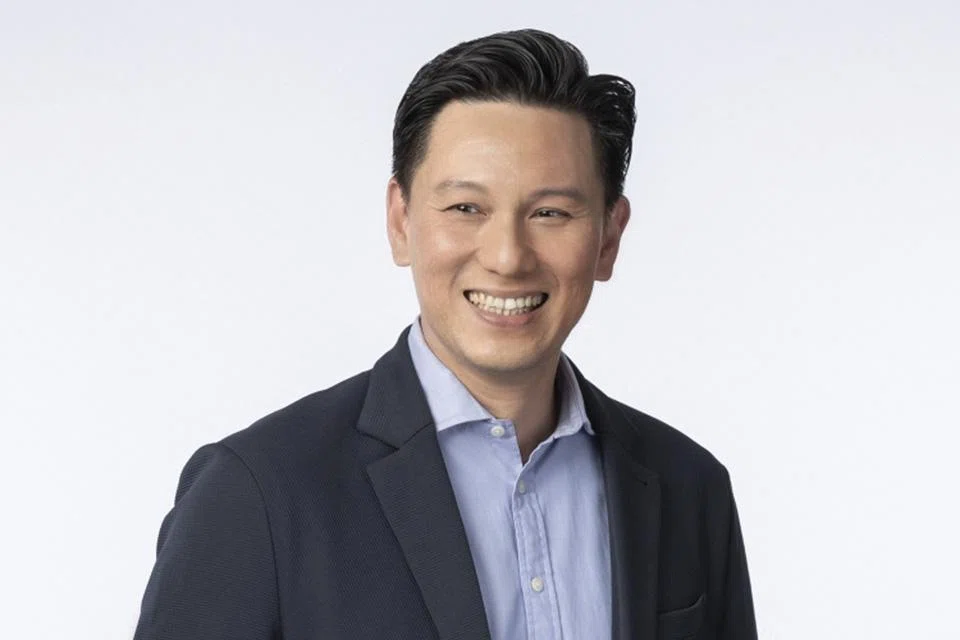
AIRPORT-services provider Sats is “in the right spot”, says its chief executive officer Kerry Mok.
After acquiring Worldwide Flight Services (WFS) in 2023, it is ready to tap the opportunities arising from the geopolitical tensions across the world, and companies’ adjusting their supply chains to get around the fallout from these hotspots.
Post-acquisition, the supplier of in-flight catering and ground handling services can now talk to customers about leveraging its enlarged network, rather than just try to win contracts station by station.
Mok told reporters on Thursday (May 30), following Sats’ announcement of its results for FY2024 ended March: “We have the network to benefit from any change, and our discussions with our customers are completely different.”
He said that there being little overlap between Sats and WFS paved the way for a smooth integration of the companies, without having to take out systems or lay off redundant staff. He is also confident that there would be no worries about infighting and disruptions as management teams vie for the top jobs.
“I want to keep everybody in because there’s not enough talent, and we want everybody to grow,” he said.
The acquisition of WFS has made Sats more diversified geographically. Singapore accounted for just 34 per cent of the company’s revenue in FY2024, down from 85 per cent in FY2022, and the Americas now contribute to 36 per cent of its revenue.
Even its business mix has changed. Cargo handling accounted for the bulk of revenue in FY2024, at 49 per cent; food solutions contributed to 22 per cent, down from 55 per cent in FY2022.
An offshoot of the WFS acquisition is Sats’ partnership with global logistics firm Kuehne + Nagel. The two parties recently signed a memorandum of understanding to drive value-chain improvements and sustainability.
“Today, (Kuehne + Nagel) is not even talking to any of our competitors, because the network they have is very small compared to ours,” said Mok.
Sats now has access to key hubs such as Miami and Los Angeles, which gives it the opportunity to do things it could not do before. With the WFS acquisition, Sats is banking on snagging higher-value contracts, including more complex jobs.
“I think we have the ability to simplify our customers’ lives by creating value in different ways, driving total cost of ownership down by giving them better service offerings; combining services within one location is where we need to go,” said Mok.
Sats is riding the wave of recovery in travel. Operating statistics have reached pre-Covid levels – even when contributions from the WFS acquisition are excluded. While the company registered a loss in the first quarter of FY2024 as a result of the integration, both Sats and WFS became profitable in the subsequent three quarters, noted Manfred Seah, Sats’ chief financial officer.
Coupled with WFS contributions, Sats swung back into the black with earnings of S$56.4 million for FY2024, from a loss of S$26.5 million in FY2023. The company also announced a final dividend of S$0.015 per share.
Full-year revenue jumped to S$5.15 billion, from S$1.76 billion the year before.
The market appears to have cheered the results: Shares of Sats rose as much as 6.8 per cent on Thursday.
The company’s senior management has set targets to be achieved by 2028 – to cross S$8 billion in revenue and to achieve a return on equity of 15 per cent.
To hit these marks, Sats will focus on repaying its loans, reinvesting into capital expenditure and resuming dividends to its shareholders.
For FY2025, Sats will repay S$200 million of borrowings, reinvest S$300 million and resume dividend payment. The capital allocation will be based on keeping its net debt to earnings before interest, taxes, depreciation and amortisation (Ebitda) at between 3.5 and four times. Sats’ net debt to Ebitda was 3.9 for FY2024. (* see amendment note below)
As for its dividend policy, Seah cautioned that Sats would not return to its pre-Covid policy, under which up to 80 per cent of earnings was paid out to shareholders. Instead, the priority would now be to repay debt, and give out higher dividends only as earnings rise.
“Even banks in Singapore aren’t paying that much; we are not going back to that level because we have better use of our capital to deploy for growth,” said Mok.
One area of growth for Sats is in food solutions. The company is leveraging the global demand for Asian flavours; it also plans to build the capacity to serve ready-to-eat meals to airlines without having to build facilities in airports.
Sats’ food factory in Thailand has the required licences to export to Europe, but its capacity is still being ramped up to meet current demand. It will focus on Europe first, given that the US market, for example, imposes strict protein controls and limits food exports to vegetarian or seafood options.
Sats will look to get a foot into Europe through its brand, Monty’s Bakehouse. Over the next year or so, as the facility in Thailand gets up and running, the company will also set up non-aviation food businesses in Europe.
“We have a team now in Hamburg that is showcasing our food product to the market in Europe,” said Mok.
* Amendment note: This article previously stated Sats’ gross debt to Ebitda ratio instead of net debt to Ebitda ratio.
TRENDING NOW
Prima to move out of historic Keppel Road flour mill building in 2028

Grab CEO’s wife Chloe Tong on life with Anthony Tan and finding her purpose

OCBC sheds S$8 billion in value as shares close nearly 6% down; analysts cautious on banks
As Asia’s food delivery giants rejig the pie, who will win the market?

