What are fund managers and how can they revive the market via new MAS incentives?
Market watchers think initiatives by MAS’ equities market review group could spark more interest in the market

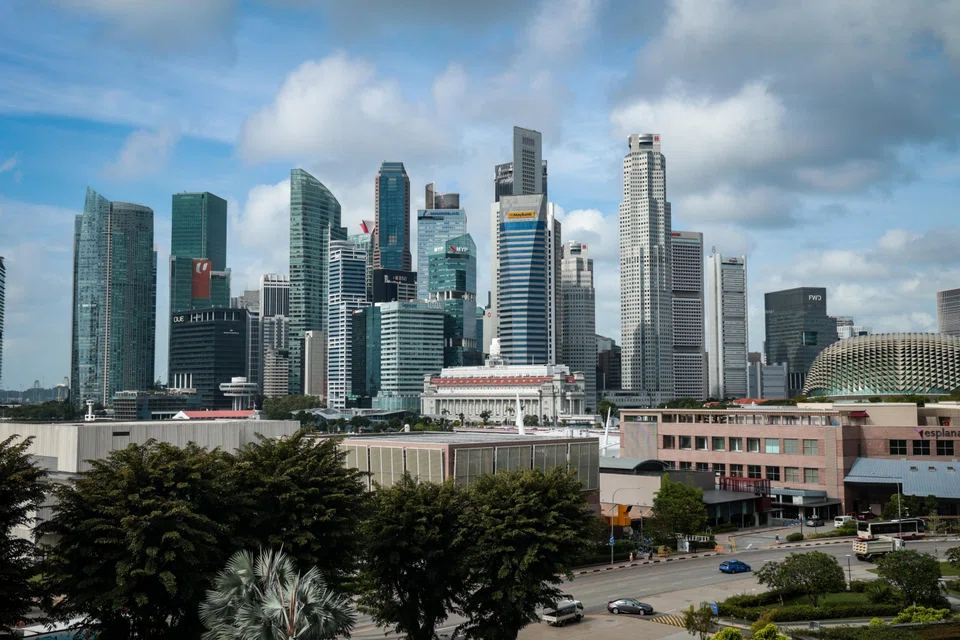
[SINGAPORE] Last year, the Monetary Authority of Singapore (MAS) set up a review group to revive the Singapore equity market. The group is committed to studying ideas to encourage listings, increase investor participation, and improve the listing process, among other moves.
In February, the review group unveiled its first set of measures, including some targeting fund managers.
These measures include tax exemptions on their qualifying income arising from funds investing substantially in Singapore-listed equities, as well as an enhanced concessionary tax rate for newly listed fund managers.
Another key measure unveiled was a S$5 billion investment initiative, called the Equity Market Development Programme (EQDP), designed to channel funds to asset managers with a “strong investment track record” and a focus on Singapore-listed equities.
The Business Times explains what the fund management industry is, how big it is in Singapore, what are some big names globally and domestically, as well as how the measures are expected to revive the market.
What is fund management?
Fund managers primarily manage an investment fund. They make decisions on buying and selling of securities, as well as balancing the portfolio, with the aim of achieving the desired returns for investors while managing risks associated with the portfolio.
How big is Singapore’s fund management industry?
Singapore’s fund or asset management industry has grown significantly over the years. Total assets under management grew exponentially from S$25.6 billion in 1991 to S$5.41 trillion as at 2023.
According to the Singapore Asset Management Survey 2023 released by the MAS, Singapore saw “continued interest from global and regional asset managers seeking to establish offices here to tap regional opportunities”.
As at end-2022, there were 1,194 licensed and registered fund management companies in Singapore. This figure increased to 1,250 as at end-2023.
Who are some of the big names internationally and some of the local players?
BlackRock is the biggest asset manager, with US$11.6 trillion in assets under management at the end of the fourth quarter of 2024. Other leading global asset managers include Vanguard, State Street and Fidelity.
Some major global and local banks also have asset management units. For instance, Lion Global Investors, a wholly owned subsidiary of OCBC Bank, is 70 per cent owned by Great Eastern Holdings.
Another name is Fullerton Fund Management, which is part of Seviora, an independent asset management group that is owned by Temasek.
How the new measures are set to revive the market
Market watchers anticipate the initiatives by the review group will attract more fund managers and drive greater interest in the market.
Paul Chew, head of research at Phillip Securities Research, believes the measures will attract fund managers, particularly those with “sufficient management capacity”.
However, he noted that what is crucial is the ability to grow the funds following this initial capital injection.
Christopher Wong, client portfolio strategist at Fidelity International, thinks the measures can potentially drive more interest in the market over the short to medium term.
“An increase in volume, and an improvement in price discovery and valuations could lead to more investors considering allocations to the market,” he noted.
James Leong, chief executive of Singapore-based asset manager Grasshopper Asia, noted that aside from the time for new fund managers to come to market due to the heavy load of applications, the main challenge they face when investing in Singapore is liquidity.
He said: “Most fund managers have guidelines on minimum market capitalisation and liquidity requirements for stocks they invest in.”
Next step: More needs to be done to boost liquidity
Despite the measures being “a step in the right direction”, Wong recommends other measures to be considered to further strengthen the equity market.
For instance, measures targeted at further improving corporate governance to unlock profitability and value in the market could spark more interest from investors seeking higher-quality companies.
Another area of consideration is encouraging more listings in structural growth sectors such as technology, consumer discretionary and healthcare.
Wong pointed out that these sectors “have seen strong interest globally over the past years”, and could help garner more interest in the Singapore market, which historically has a large proportion in traditional sectors like banks and real estate investment trusts (Reits).
At the same time, market watchers also say that more needs to be done to boost liquidity.
Grasshopper Asia’s Leong said: “The equities market review group is trying to increase the variety of players in the market, starting with institutional investors. For that to be sustainable, we have to look at boosting the entire ecosystem of participants.”
Phillip Securities Research’s Chew noted that MAS is building a stronger ecosystem to support the small and mid-cap stocks in Singapore, through research, investor relations and regulation initiatives.
He believes liquidity will improve “when prices and confidence rise”.
DBS Group Research analysts Yeo Kee Yan and Foo Fang Boon think the S$5 billion EQDP will be positive for small and mid-cap stocks with market cap of S$500 million to S$3 billion, possibly in areas such as fintech, innovation and sustainability.
They noted that the average daily value of shares traded on the Singapore Exchange year to date is around S$1.18 billion. “Every S$5 billion liquidity injection lifts (the) average daily value of shares traded by S$19.8 million or 1.7 per cent.”
MAS will begin evaluating eligible fund managers and strategies in the coming months, with both local and international managers being eligible for participation. New and existing funds will also qualify.
It said in a statement on Feb 21: “These strategies should be actively managed, invest in a range of companies and not just index component stocks, and over time draw in investments from other investors.”
Fidelity International’s Wong pointed out that companies outside of the benchmark Straits Times Index tend to be smaller in market cap with lower liquidity.
“It might be more difficult for portfolios with larger assets, especially those with broader regional or global mandates to invest into them,” he noted.
However, Grasshopper Asia’s Leong thinks that when liquidity improves, MAS could foster products like new indexes and exchange-traded funds with an emphasis on investing in smaller cap stocks. These are “efficient and cost-effective ways” of investing in such stocks.