

What are significant risk transfers – and why is DBS reportedly considering them?
Analysts say that other banks in Asia, including OCBC and UOB, could eventually explore similar deals

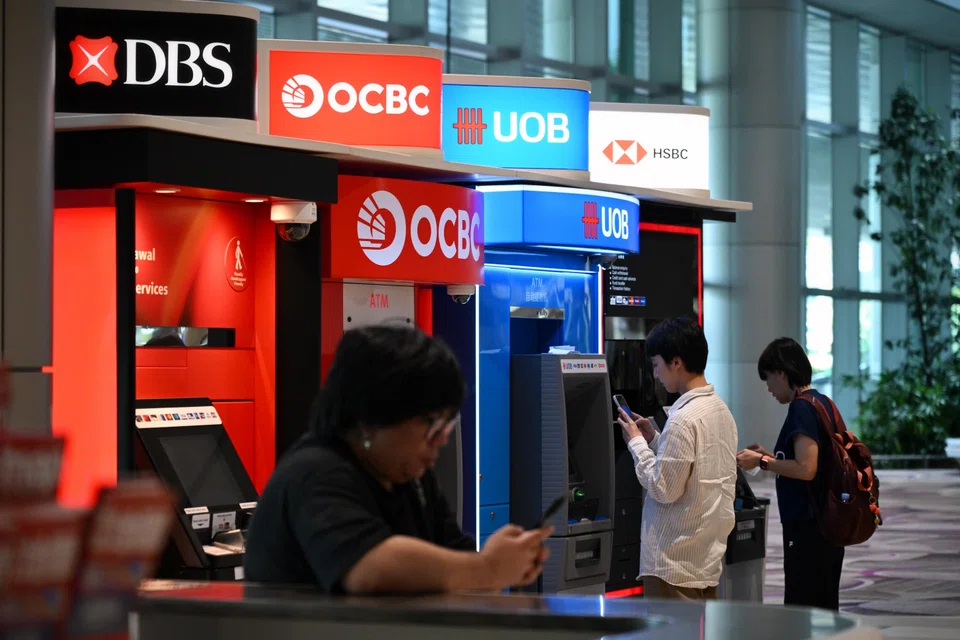
[SINGAPORE] A week ago, media reports surfaced that DBS – South-east Asia’s largest lender – is weighing a foray into significant risk transfers (SRTs), putting this relatively niche corner of bank capital management into the spotlight.
DBS is reportedly considering an SRT transaction and in talks with funds that invest in such instruments, after Standard Chartered carried out a similar deal in 2025 tied to US$1.5 billion of trade finance loans, Bloomberg reported on Jan 8. That move allowed Standard Chartered to obtain regulatory capital relief for its Singapore subsidiary.
The Business Times looks at what SRTs are, why DBS might be evaluating such a structure, and how likely Singapore’s other local banks – OCBC and UOB – are to pursue similar transactions.
A DBS spokesperson declined to comment when contacted by BT.
What are significant risk transfers?
In simple terms, SRTs function like a form of credit insurance for banks.
Under an SRT, a bank transfers a defined portion of the credit risk from a pool of loans – such as trade finance, corporate or small business exposures – to external investors, typically specialist credit funds, insurers or asset managers.
The bank retains ownership of the loans and continues servicing them, but passes on part of the potential losses if borrowers default.
In return for taking on that risk, investors receive a premium or yield that is typically higher than similarly rated traditional bonds.
For banks, the key benefit lies not in funding, but in capital efficiency. If regulators recognise the risk transfer as effective, the bank can reduce the amount of regulatory capital it must hold against those loans, freeing up balance sheet capacity for growth or portfolio rebalancing.
How meaningful could the resulting capital relief be for DBS?
The amount of capital relief a bank can achieve from an SRT depends on three main variables, said Rena Kwok, senior credit analyst at Bloomberg Intelligence.
These are: the size of the loan portfolio involved; the tranche of risk transferred – with “junior” tranches absorbing losses first but offering higher returns, and “senior” tranches only incurring losses after junior tranches are fully written down, but providing lower returns; and whether regulators formally recognise the transaction for capital relief.
In Singapore, regulatory recognition is determined by the Monetary Authority of Singapore (MAS).
For DBS specifically, the lender is “operating from a position of strength”, Kwok noted. As at its latest disclosures for the third quarter ended Sep 30, 2025, DBS reported a Common Equity Tier-1 (CET-1) ratio of 15.1 per cent, which sits “comfortably above MAS minimums”.
“This means DBS could use SRT as tools for capital efficiency, flexibility and portfolio steering, not capital repair,” she said.
The CET-1 ratio is a core measure of a bank’s financial strength. It measures the bank’s highest-quality capital – primarily common equity and retained earnings – relative to its risk-weighted assets.
When an SRT is recognised under Basel III rules – a global regulatory framework for banks – the transferred portion of credit risk can attract a lower risk weighting. This reduces the bank’s risk-weighted assets, which in turn lifts its CET-1 ratio, even if the absolute amount of capital remains unchanged.
By comparison, OCBC reported a CET-1 ratio of 15 per cent in the same period, while UOB’s stood at 14.6 per cent. MAS’ minimum CET-1 requirement for Singapore banks is 9 per cent, including a capital conservation buffer.
How common are SRTs in Asia – and are OCBC and UOB likely to follow?
Historically, SRT issuance has been dominated by European and North American banks, where deep institutional investor bases and longer-established regulatory frameworks have supported more active markets.
There are now “early signs of changes” that Asian banks are beginning to adopt SRTs, though uptake is “likely to be gradual and uneven”, Kwok said.
“This is because Basel III SRT frameworks are gradually embedded across Asia-Pacific at varying degrees,” she explained.
From a capital optimisation perspective, it would be “unsurprising” if OCBC and UOB were at least evaluating such structures, she added.
Lorraine Tan, director of equity research in Asia at Morningstar, similarly said that more banks could be exploring these deals.
“It’s hard to say how impactful it would be specific to each bank but presumably the positive is that it should be like an insurance to improve the credit standing of riskier (assets),” Tan said.
That said, for the “well-capitalised” Singapore lenders, “I would argue that it’s not as necessary for them to sell SRTs unless they believe the risk transfers are well worth the added cost”, she added.
TRENDING NOW

JPMorgan, BlackRock among those making bid to manage CPF savings

GIC in talks to lease bulk of 88,000 sq ft CapitaSky space to be vacated by Allianz

BN-PN’s Melaka election landslide puts spotlight on jobs, investments and political divides

Why Singapore, Johor and Riau Islands should build a cross-border ecosystem for AI

