What can Singapore companies learn from the latest rally in US-listed meme stocks?
Cultivating a large following of small investors could significantly boost a company's market value

THOSE clueless retail investors who hang out on Reddit are at it again.
The condescending tone was unmistakable in financial news reports about the rollercoaster performance over the past week of US-listed meme stocks such as AMC Entertainment, Bed Bath & Beyond, BlackBerry and GameStop.
Some reports characterised what was happening as just another bout of excessive speculation fuelled by very loose liquidity in financial markets. Others noted that short sellers seemed more prepared than they were in January to cope with the sudden rally in these stocks.
For me, the most interesting take on the news was how some of these companies are embracing their meme status and engaging the self-styled "apes" on Reddit.
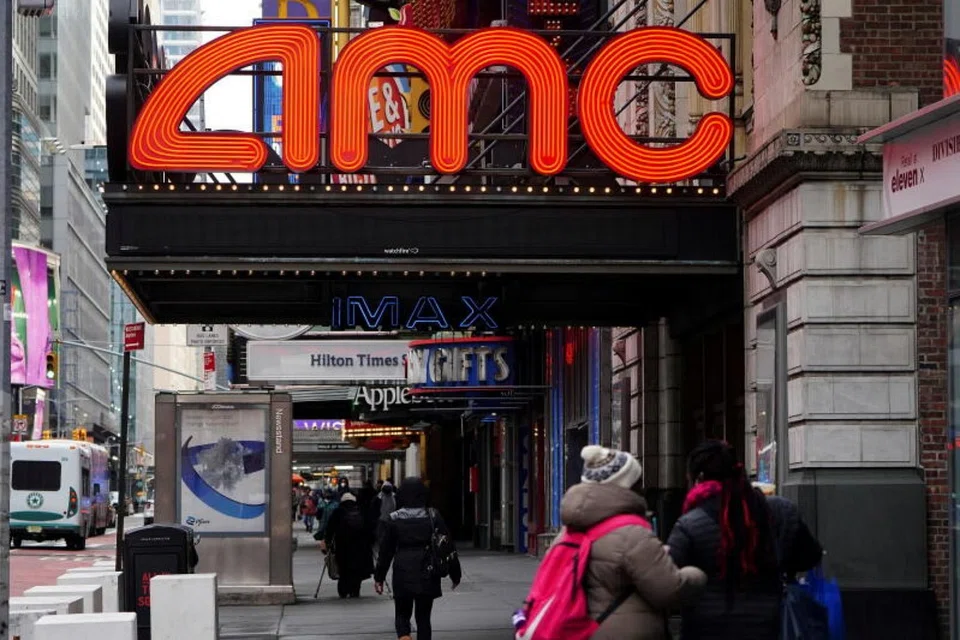
In particular, movie theatre chain AMC wasted no time last week in using the big run in its share price to raise fresh equity.
The stock, which started the week at US$26.12, ended the Wednesday session at US$62.55. The following day, June 3, AMC said it had completed the sale of 11.55 million new shares at an average price of US$50.85, to raise some US$587.4 million.
Only two days before that, on June 1, AMC announced it had raised US$230.5 million from Mudrick Capital by selling 8.5 million shares at US$27.12 each. Shares in AMC ended Friday at US$47.91, up more than 80 per cent for the week.
AMC has used its elevated share price over the last few months to repeatedly raise much-needed cash. With the 11.55 million shares sold on Thursday, the company has raised almost US$1.25 billion in Q2 2021 alone.
Meanwhile, AMC has also been reaching out to the more than three million retail investors who own some 80 per cent of its shares and encouraging them to become loyal customers as well as owners of the company.
This past week, the company unveiled an investor relations platform dubbed "AMC Investor Connect" through which it is promising to deliver shareholder-exclusive promotions, direct communications from AMC's CEO Adam Aron as well as information on the company and the wider movie industry.
"Many of our investors have demonstrated support and confidence in AMC. We intend to communicate often with these investors, and from time to time provide them with special benefits at our theatres. We start with a free large popcorn on us, when they attend their first movie at an AMC theatre this summer," said Mr Aron.
Mr Aron also sat down last week with Trey Collins, the host of the Trey's Trades channel on YouTube and an ardent fan of AMC.
In the widely watched interview, Mr Aron emphasised that he works for the shareholders of AMC. He explained that the share sales had enabled AMC to stave off bankruptcy, and put it in a position to pay down its liabilities and contemplate acquisitions. He also urged AMC's shareholders to support its proposal to increase its authorised share capital by 25 million shares, to enable the company to continue issuing new shares when needed.
'My first kiss'
Mr Aron's efforts to win over the Reddit investor community have not gone down well with everyone though.
Some news reports and commentaries last week make snarky references to AMC adding billions of dollars to its market value by offering retail investors free popcorn instead of real financial returns.
Some professional market watchers accused AMC of "preying" on retail investors to dig itself out of its financial hole.
In the face of Covid-19, AMC reported a loss of US$4.6 billion for 2020. Revenue was down more than 77 per cent to US$1.2 billion. AMC took impairment charges of more than US$2.5 billion during the year.
AMC reported a further loss of US$567.2 million for Q1 2021. It ended the quarter with negative shareholders' funds of US$2.3 billion.
Even before Covid-19 came along, AMC was struggling in the face of disruptive technological trends such as movie streaming services. It has actually reported losses in three out of the last five financial years.
So, why are retail investors flocking to AMC?
"They want to feel like they matter. They want to feel like these short sellers who have bet against this stock and bet against the retail investor for years and years, and decades and decades, were wrong this whole time," said Mr Collins, winding up his interview with Mr Aron last week.
He went on to suggest that AMC is an underdog of sorts, to which retail investors could relate at an emotional level. "I have a million memories, great memories. I had my first kiss ... at an AMC movie theatre," Mr Collins said.
Lessons for Singapore
Shares in AMC are probably wildly overvalued right now. Yet, given the willingness of retail investors to support its lofty share price, the company can hardly be accused of exploiting them. If anything, AMC's effort to engage its retail shareholder base might hold lessons for Singapore's corporate sector.
Unlike AMC, many of Singapore's leading companies have a controlling shareholder on which they can rely in a really desperate situation. Indeed, some of the most significant corporate moves since the onset of Covid-19 were seemingly hatched with little thought for minority investors.
For instance, most of SIA's minority investors baulked at its mandatory convertible bond issue last year. This resulted in Temasek Holdings taking up almost all of the issue. SIA is now in the process of issuing a second tranche of MCBs.
As the experience of the meme stocks has shown, however, having a large following of small investors can have a positive impact on a company's market valuation. Singapore companies should perhaps take a leaf from AMC's playbook and develop retail investor communication initiatives that are more targeted.
Also, consumer facing companies, such as Singtel, should not underestimate the benefit of cultivating owners of the company as customers and vice versa.
Over the past 10 years, Singtel has delivered a total return of 25 per cent (dividends reinvested basis). All of that positive return came from dividends (its share price actually declined some 24.9 per cent during the period).
However, Singtel has struggled to sustain its dividend payouts recently. For FY2021 ended March 31, it paid a total of just S$0.075 per share. This was lower than FY2020's S$0.1225 per share, and even lower than FY2019's S$0.175 per share.
As at June 2, 2020, Singtel had nearly 331,000 shareholders, with more than 71 per cent of them holding only between 100 and 1,000 shares.
Offering every individual shareholder a voucher exchangeable for some Singtel product or service with a face value of, say, S$100 would compensate for the reduced dividend income that the majority of the group's investors have suffered.
That probably will not be enough to turn Singtel into a hot meme stock like AMC or GameStop, but it might go some way in renewing enthusiasm for the company among many small investors.
READ MORE: Boom or bust: my one week roller coaster with AMC