What is tokenised gold, and why is it taking off in Asia?
Market watchers note that Singapore’s banks have taken a more measured approach towards tokenised gold offerings for retail investors
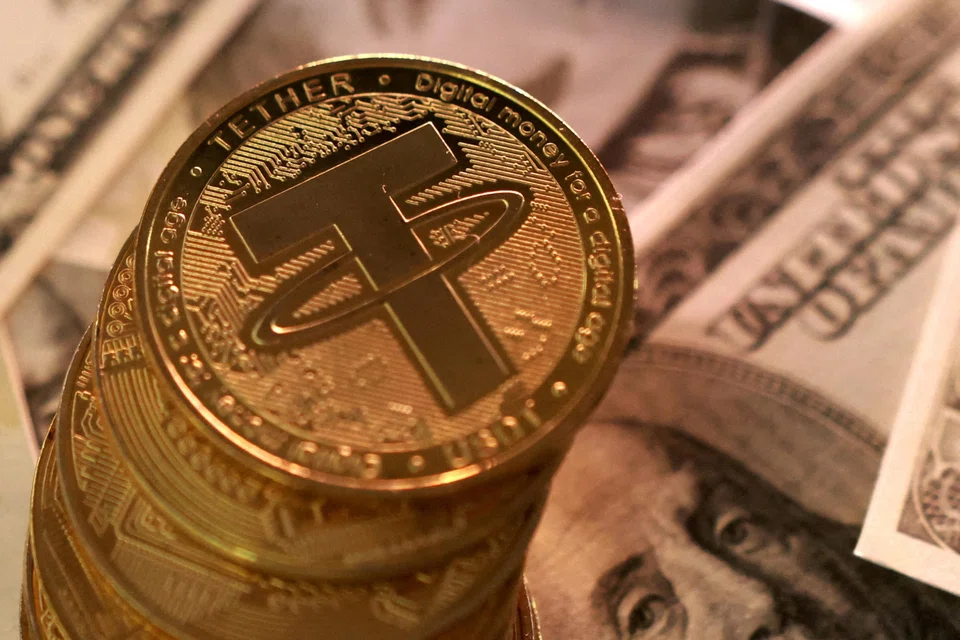
[SINGAPORE] Amid a year-long rally in gold prices that saw the yellow metal cross the US$5,000-an-ounce mark in the past week before pulling back, a quieter momentum has been building on the blockchain.
Tokenised gold – once a niche experiment for cryptocurrency enthusiasts, has more than tripled its market capitalisation to US$5.3 billion, up from around US$1.4 billion a year ago, indicated data from crypto data aggregator CoinGecko.
The rapid growth comes even as adoption across Asia remains uneven. While banks and asset managers in Hong Kong are actively expanding gold-backed token offerings, Singapore’s banks have yet to roll out such products at scale.
Robin Tsui, Asia-Pacific gold strategist at State Street Investment Management, noted that Singapore’s banks have not quite jumped on the tokenised gold bandwagon for retail investors, but are taking a more measured approach.
Meanwhile, Hong Kong has been actively growing its gold-backed token market to compete with regional bullion hubs such as Singapore, Thailand and Indonesia, noted Tsui.
He added: “(Hong Kong) has been pushing a lot of new innovations because it wants to grow itself as a hub for gold. So one way to do it is through the tokenised network.”
What is tokenised gold?
The tokenisation of gold converts physical gold into digital tokens on a blockchain – a decentralised digital database or ledger.
These gold tokens are typically pegged to specific weights of gold which can be redeemed for physical gold based on the issuer’s terms and conditions. Meanwhile, the issuer of the tokens holds onto the bullion.
On the blockchain, fractions of gold can be bought and sold. This increases the yellow metal’s accessibility by enabling fractional ownership and use in decentralised finance.
For example, Tether – the largest stablecoin provider – pegs its gold token XAUT to one troy ounce of gold. The crypto giant has been continuously adding to its bullion reserves, with a boost of 27 tonnes of gold in the fourth quarter of 2025.
Maybank analysts noted in a report on Friday (Jan 30): “The news of Tether becoming one of the biggest hoarders of gold at 140 tonnes and US$24 billion could also be fuelling a fear of missing out (Fomo) sentiment.”
Still, tokenised gold remains a drop in the ocean, with gold’s entire market capitalisation exceeding US$30 trillion in 2025. Gold on blockchain platforms also represents a fraction of the cryptocurrency market which stands at around US$3 trillion in market capitalisation.
However, industry observers noted that growth in tokenised gold has significantly outpaced that of Bitcoin and other cryptocurrencies in the past year, on the back of the precious metal’s breakneck rally amid macroeconomic uncertainty.
While market leaders Tether Gold (XAUT) and PAX Gold now command more than 90 per cent of the gold-backed token sector, asset managers and banks in the region are also issuing tokenised gold directly to investors.
What’s driving demand?
Gold and cryptocurrencies are often compared to each other because they are alternative assets serving as a hedge against inflation and market shocks. They also share the common trait of scarcity while being a store of value.
Ned Naylor-Leyland, investment manager for gold and silver at Jupiter Asset Management told The Business Times that the principal reason for tokenised gold’s growth is the strong performance of the precious metal backing it.
State Street’s Tsui added that another driving factor for tokenised gold is its 24/7 liquidity, compared to spot gold and gold-backed exchange-traded funds (ETFs) which typically trade during market hours.
HSBC introduced its Gold Token in 2024, which allows retail investors to acquire fractional ownership of physical gold in increments as small as 0.001 troy ounces through its digital platforms.
The bank’s Gold Token is available to retail and institutional investors in Hong Kong, as well as institutional investors in the UK. It is backed by physical gold stored in the bank’s London vaults.
In response to queries from The Business Times, a HSBC spokesperson noted that the total assets under the Gold Token are in the “hundreds of millions of US dollars”. Since its launch, the product has seen net inflows grow by an estimated 20 to 30 per cent, added the spokesperson.
“Given Hong Kong’s strategic position as a key access point for regional buyers and sellers, we see significant potential to broaden our Gold Token offering across select Asian markets over time,” said the spokesperson, without specifying whether Singapore would be among them.
Separately, Standard Chartered Ventures-incubated Libeara and FundBridge Capital launched a tokenised private credit fund offering secured gold-linked exposure in December 2025.
FundBridge Capital noted in a press release that Mustafa Gold, which operates gold in the retail sector, is the initial borrower of the fund. The fund allows investors to gain exposure to the performance of gold without incurring vaulting and other costs associated with holding bullion, said FundBridge Capital.
Tsui sees potential growth in the popularity of tokenised gold among retail investors and high net-worth individuals, especially if they have a strong understanding of blockchain technology.
However, he noted that the lack of transparency in tokenised gold due to the nature of it being on blockchain platforms could be a deterring factor for adoption, especially among institutional investors.
Cracks in trust
As trust in geopolitical and financial systems fractures, Naylor-Leyland noted a significant shift away from paper assets towards physical ownership and the repatriation of gold and silver.
This broader trend reflects a growing demand for tangible certainty, as both central banks and individual investors increasingly prioritise direct control over their assets within an uncertain digital and global landscape.
Apart from this wider trend, Naylor-Leyland remarked that the growth in tokenised gold suggests a rekindling of the relationship between the worlds of cryptocurrency and gold, which had previously diverged.
He distinguished gold-backed ETFs primarily as an investment vehicle, whereas gold-backed tokens function more as a “safe harbour instrument within a digital wallet”.
Decoding Asia newsletter: your guide to navigating Asia in a new global order. Sign up here to get Decoding Asia newsletter. Delivered to your inbox. Free.
Copyright SPH Media. All rights reserved.