

What’s driving the surge in family office foundations in Singapore – and is it just tax perks?
Governance demands and next-generation priorities are also pushing wealthy families towards more structured philanthropy

[SINGAPORE] Singapore is cementing its position as a regional hub for philanthropy, as a surge in family offices fuels a parallel rise in foundations and more structured forms of giving.
The number of family offices in Singapore has grown nearly 10 times in five years and risen to more than 2,000 as at end-2024, with the number of foundations following in tandem, driven by tax incentives, reputational considerations and a growing emphasis on legacy.
While there is no publicly available data on the number of foundations set up by family offices, industry participants said that the philanthropic ecosystem is undergoing a structural shift as it matures.
A charitable foundation is a non-governmental, non-profit entity with its own endowment, often funded by an individual, family, or corporation to support charitable causes.
In Singapore, philanthropic vehicles are typically registered as charities.
Based on the Commissioner of Charities’ annual reports, the number of registered charities increased from 2,321 in 2020 to 2,406 in 2024, representing an overall increase of about 3.6 per cent over the four-year period.
Industry watchers said that structured philanthropy is becoming more common as next-generation wealth holders seek to formalise giving and align it with their values.
Han Junwei, partner and co-head of the private wealth practice at Allen & Gledhill, is among those who have observed rising interest among wealthy families in using Singapore as a regional hub for their philanthropic activities through increased client queries.
Tommy Leung, head of private bank for South Asia at HSBC, echoed this sentiment.
“It is very common for clients to want to give back to society – some are very passionate about doing it on their own, so they create their own foundations,” he said.
Singapore is increasingly seen not just as a wealth management hub, but also a platform for “structured, long-term and regional philanthropy”, said Vikna Rajah, partner at Rajah & Tann Singapore.
He noted that wealthy families and family offices are shifting away from entirely private trust-based philanthropy and towards public foundations, often set up by way of grant-makers.
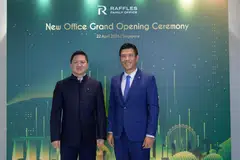
Recent developments underscore this momentum. Raffles Family Office (RFO) announced that it has set up its RFO Foundation in Hong Kong, with Singapore being considered as a future base.
Meanwhile, Singapore-based Chen Foundation, solely funded through a distribution of net investment returns from sister organisation Chen Capital, channels funds into areas such as healthcare, sustainability, and inclusive opportunities.
Regulatory support in Singapore
Regulatory support has strengthened Singapore’s appeal as a philanthropy base.
The Monetary Authority of Singapore (MAS) introduced the Philanthropy Tax Incentive Scheme for Family Offices (PTIS), which took effect from Jan 1, 2024, that allows for 100 per cent tax deductions on overseas donations for five years.
“While MAS does not directly regulate charities or foundations, it plays a key role in shaping an enabling environment,” said Rajah.
He noted that the recipient of the tax deduction need not be the fund or family office – it may be a beneficiary, the ultimate beneficial owner of the fund, or a related family business.
Beyond tax incentives, MAS initiatives include developing philanthropic advisory talent and efforts to promote best practices and impact measurement tools so that donors can carry out due diligence to measure the impact of their contributions, said a MAS spokesperson.
Kevin Teo, head of ImpactCollab at AVPN, noted that these measures – combined with making blended finance more legible within the incentive framework – allow it to function as a core component of a structured capital strategy rather than a standalone, high-risk allocation.
“These incentives can help to create the conditions for more capital to be directed towards catalytic roles within blended finance over time,” he noted.
Blended finance combines philanthropic or public capital with private investment as a way to fund projects with both financial and social returns, particularly in areas such as sustainability and development, he said.
As family offices grow more sophisticated, the setting up of foundations also signals increased focus on governance, accountability and impact measurement.
Many are moving beyond traditional giving and towards more integrated impact models and structured partnerships, and foundations provide them with a clear vehicle to deploy capital, track outcomes and collaborate across sectors, Teo said.
Platforms such as ImpactCollab, launched in 2025 with the backing of MAS and the Gates Foundation, are also emerging to connect grant makers with vetted impact organisations.
Global trend
This growing trend in Singapore mirrors a global move towards formalising philanthropy, particularly as wealth transfers across generations.
“Ad-hoc giving is no longer sufficient,” said Teo, pointing to the growing complexity of social challenges and the need for more coordinated solutions.
Rajah noted that this shift is occurring against the backdrop of the “great wealth transfer”, and is concentrated in jurisdictions with strong governance as well as supportive tax and regulatory ecosystems.
“These include markets such as Singapore, Hong Kong, the United Arab Emirates and Switzerland, where governments are actively courting family capital through tax incentives and public-private partnerships.”
Across these markets, Singapore stands out for its regulatory clarity and a highly favourable tax environment, giving it an edge in recent years, especially for Asian families, he added.
Teo said that this gives families more than just a place to house wealth – it offers a credible platform to deploy capital across Asia in a more coordinated and institutional manner.
“Singapore is increasingly being viewed not just as a wealth management centre, but as a base for more institutional and outcomes-driven capital deployment,” he said.
When comparing jurisdictions, he noted that the choice is less about one market being universally better than another, and more about the family foundation’s underlying purpose.
Looking ahead, industry watchers expect further regulatory development to reinforce Singapore’s position.
“The Ministry of Culture, Community and Youth is expected to continue to develop the regulatory framework in this area on top of the current regime, which will further position our nation as a regional hub for philanthropy,” said Allen & Gledhill’s Han.
Decoding Asia newsletter: your guide to navigating Asia in a new global order. Sign up here to get Decoding Asia newsletter. Delivered to your inbox. Free.
Copyright SPH Media. All rights reserved.
TRENDING NOW

LTA proposes combining car COE categories, adding rebate-surcharge system

StarHub to acquire MyRepublic’s mobile business amid ongoing telco consolidation

DBS, OCBC, UOB rout lops billions off STI as inflation, rate concerns spook investors

Grab CEO’s wife Chloe Tong on life with Anthony Tan and finding her purpose

