

When UBS bankers leave, clients' wealth stays: global head
Major retention factor is that "the brand is more important than the person"
Singapore
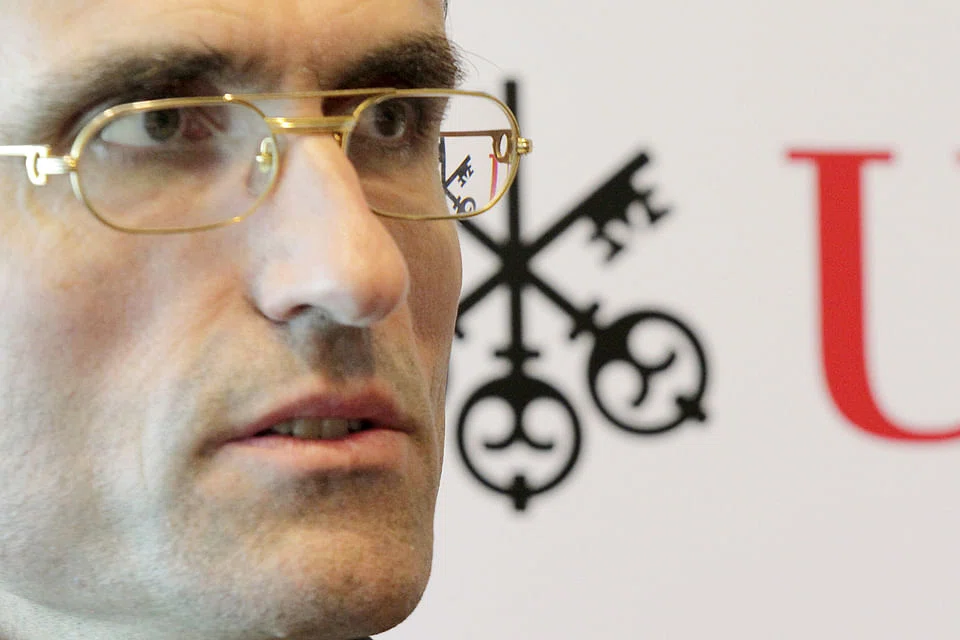
DESPITE the merry-go-round of private bankers, UBS has managed to keep more than 90 per cent of the assets of its richest clients with the bank when a banker leaves. This cements the ultra-high-net-worth (UHNW) segment as the most profitable tier of the bank, says its global head of the UHNW segment.
"This is the most profitable segment within (the) UBS organisation. We control costs by not overhiring," Josef Stadler, head of global UHNW, UBS Wealth Management, told The Business Times. "We do not frantically hire new people - for two reasons. First, it's very expensive; second, those people are very hard to find."
UBS's global staff count of about 800 for the UHNW segment - defined as those with at least 50 million Swiss francs (S$72 million) of investible assets - has not gone up dramatically in the last five years, said Mr Stadler. Yet assets have jumped, with UBS topping the league in wealth management, and in the UHNW segment.
"Unlike brokerage models that are applied by other competitors, the retention rate of assets once an adviser leaves is above 90 per cent," said Mr Stadler. "That means the brand is more important than the person. That's a major retention factor."
The private banking business is expected to grow in Asia. In just two decades, 917 self-made billionaires made more than US$3.6 trillion, a report by UBS and PwC in May showed. And Asia's billionaires make up 36 per cent of self-made billionaire wealth, now second only to the US.
But it is also a wildly expensive business, with costs making up at least half of income earned by private banks. Clients here have also been known to pick and choose banks' products, often pitting competing bankers directly against each other.
But Mr Stadler noted that there is less of a "shopping mentality" in the UHNW segment. "Our clients are happy to pay for performance. Most of them are entrepreneurs. They know about how challenging it is to run a business. They are fair partners."
Mr Stadler - who is in town for the bank's philanthropy forum this week - acknowledged that there is greater scepticism towards private donations, which donors have to manage.
"There is an undercurrent concern that due to unprecedented wealth creation, and wealth concentration, philanthropy may be a fig leaf for some of those entrepreneurs," he said, though arguing that these entrepreneurs have brought growth, and jobs.
Through their family offices, Asian philanthropists are following their Western counterparts in professionalising their charitable contributions, taking lessons from the West. This comes as family offices move from mere giving, to investing, in philanthropic projects, said Mr Stadler.
"Asians tend to learn very quickly from the mistakes of the West. Somebody told me here in Singapore, 'in the previous decade, when we had a problem, we looked West, and there was a solution. (Today), it is the opposite'," he said.
TRENDING NOW

He built the Vingroup empire. Now South-east Asia’s richest man is handing some key roles to his sons
32 companies, 6 individuals bag accolades at Singapore Corporate Awards 2026

Can a first-time homebuyer couple earning S$18,000 a month afford a new EC unit?

Floods compound Philippine growth woes from public-works scandal

