Who will show up at Singapore's tech IPO party?

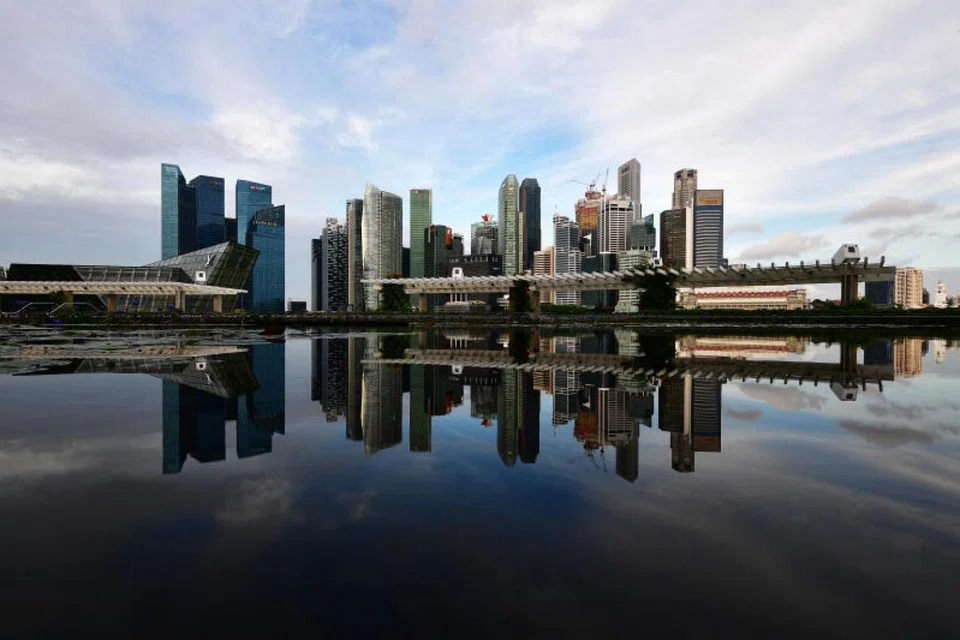
THE Singapore government has made its most ambitious move yet to attract tech listings to the local bourse. Now, it's time to see if any good companies actually show up.
Two decades ago, Singapore began spending tons of money and resources to build the country's startup ecosystem. Over the years it set up a billion-dollar fund, launched co-investment schemes and kicked off programmes to encourage entrepreneurship.
Today, it is employing a similar strategy to help high-growth companies pursuing initial public offerings (IPOs) to list locally, and complete the value chain from cradle to IPO.
A fund managed by a Temasek unit will, with a first tranche of S$1.5 billion, invest in companies with a view of anchoring their listings in Singapore.
Separately, the Economic Development Board's investment arm is setting up a new fund, of up to S$500 million, to invest in companies two to five years away from a public listing and steer them towards an IPO here.
Other initiatives include increasing co-funding of listing expenses and access to bespoke capital market solutions.
But this isn't the early 2000s. Alternative sources of private capital are now vastly abundant, and they come with fewer strings attached.
The trajectory of Singapore unicorns show that promising companies have no problems raising millions of dollars from a range of investors.
PatSnap, a data analytics company for intellectual property, received funding from SoftBank while online classifieds platform Carousell has backer Telenor in its fold.
Grab's US$39.6 billion SPAC (special purpose acquisition company) deal plainly shows that international investors can appreciate South-east Asia's growth story.
When it is time for startups to list, investors want the best price on the way out. Foreign bourses like Nasdaq can offer that, while SGX is increasingly being associated with low liquidity and old-economy stocks.
So even with the initiatives announced last week, will tech companies answer Singapore's call?
Sparks, then a fire
It might be unwise to underestimate the initiatives Singapore has unveiled.
A cash injection by a brand-name investor like Temasek at the IPO stage increases the chances of a successful listing - which may go some way in solving the valuation and liquidity concerns that have deterred venture capital firms from considering listing their portfolio companies in Singapore.
Local retail investors might also like the idea of a listing candidate backed by Temasek, though they should keep in mind that not every company backed by state-linked investors ultimately succeeds.
The new schemes might also be the clincher for mid-sized companies that are already interested in a Singapore IPO for fear of not getting noticed in the big US market.
One founder of a Singapore-based marketplace operator told BT that the company would not have considered SGX - SPAC framework or otherwise - if the latest initiatives had not been announced.
The details of the Temasek-managed Anchor Fund @ 65 have yet to be stated. But given the anxieties around being the first few tech startups to list in a nascent market, it will be in Temasek's interest to keep the terms of its investments flexible and align interests on both sides.
An ideal situation would be to have the "Bukalapak effect". Earlier this year, the Indonesian e-commerce marketplace raised US$1.5 billion in the Indonesia Stock Exchange's (IDX) largest ever IPO. IDX now has a healthy pipeline of companies eyeing a listing, including Grab-rival GoTo Group.
Singapore would be in a good position to follow through if it finds its own Bukalapak. The city-state is home to a healthy crop of mid-sized tech firms that should provide fertile ground to develop into an ecosystem attractive enough for such companies.
As for highly-valued regional startups, it would have to work doubly hard to get them to list in Singapore, amid increasing nationalist pressure for companies to list locally.
Secondary prizes?
In the meantime, the most high-profile startups are likely to continue flocking to New York or even Hong Kong, where regulators are preparing a SPAC framework.
It is hence heartening that the Anchor Fund will also help to anchor secondary and dual listings, as some companies might opt to do so as a form of "national service".
Nium, for instance, is hoping for a secondary listing in Singapore after a potential IPO in the US in the next 15 to 21 months.
"We were able to reach unicorn status because of (Singapore's conducive) environment, and Asia remains a key focus of our business," Nium's founder Prajit Nanu told BT.