

Why Iran and other doubts are bull market fuel
The surge in fears may signal the rally still has room to run
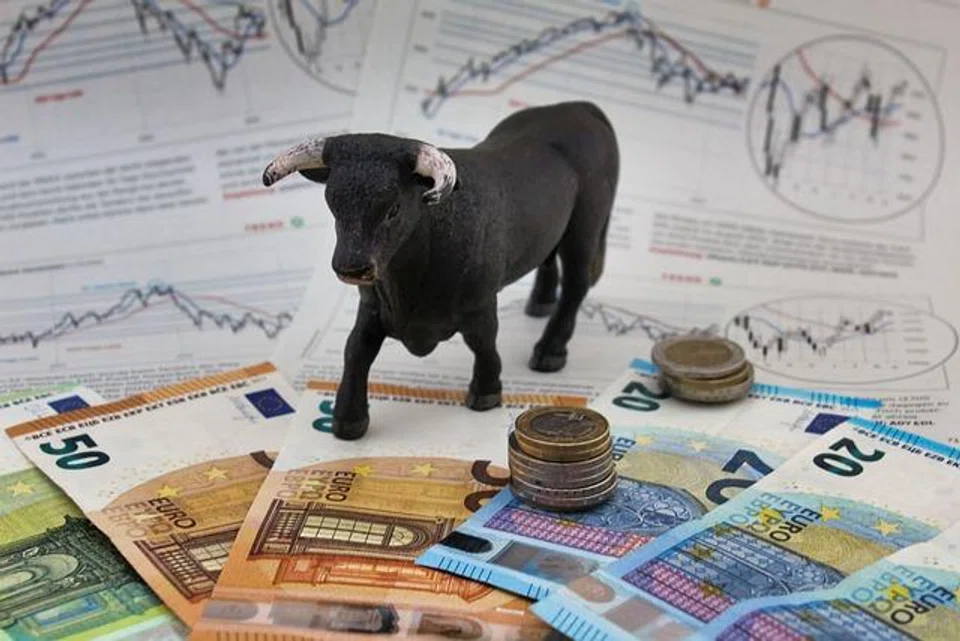
INCREDULOUS – that best describes responses to my bullish 2026 forecast. And that was before the Iran war sent fears into overdrive.
Most objections take a familiar form: “Yeah, but” a Strait of Hormuz disruption will send energy prices soaring. “Yeah, but” US President Donald Trump’s tariff tornado isn’t over. “Yeah, but” Monetary Authority of Singapore (MAS) tightening will whack exports.
I truly love “yeah, buts”. Each is a brick in the “wall of worry” that bull markets famously climb. Let’s consider why these “buts” won’t butt in.
Yeah, you were bullish. But surely the Iran war changes your view.
No – war is always humanly horrid. Full stop. But stocks are cold-hearted. Their response to regional conflicts – even in major oil-producing regions – follows a reliable three-step pattern.
First, volatility and rising oil prices arrive pre-conflict, as sabre-rattling stokes uncertainty. Then, once fighting begins, markets price in worst-case scenarios.
Then comes step three: relief. Stocks begin to recognise the conflict’s limited, temporary economic footprint – and the persistence of global growth. Markets typically price the future roughly 30 days to three months ahead, so they rise well before the fighting stops.
There is also a political incentive. If the conflict drags on, Trump has reason to seek a quicker resolution, with November’s midterm elections looming.
Doubters point to the now-blocked Strait of Hormuz – through which about 20 per cent of global oil flows – as evidence this time is different, with refiners scrambling for Qatari, Emirati and Kuwaiti supply.
Slow down. Roughly a third of Hormuz traffic is inbound for processing, not outbound. Those flows can be redirected – some perhaps to Singapore.
Pipeline workarounds exist for a meaningful share of affected oil, including via the United Arab Emirates and Saudi Arabia. Any easing of Russian oil constraints would also help loosen supply.
If I’m wrong? Higher oil prices don’t doom growth anyway. Crude traded above US$75 a barrel for most of 2023. Singapore and global gross domestic product grew. World stocks rose 22 per cent.
In the early 2010s, economies and equities expanded for years with oil near US$100. Adjusted for inflation, today’s US$100 oil is closer to about US$76 back then.
Okay, war might not crush stocks. But surely Trump’s unending tariff typhoon will.
Did much-fretted tariffs derail 2025? No. World stocks rose 14 per cent, and the STI roughly doubled that. Global trade grew, thanks to exemptions, new deals, transshipment and other workarounds – as I predicted.
Markets move most on surprises – and tariffs’ shock value is spent. Expect more threats and chatter, but expect markets to digest them and move on quickly.
Yeah, but with imported fuel costs rising and inflation picking up, MAS tightening is inevitable.
No, the notion that a stronger Singapore dollar will doom exports and stocks is overstated. History shows only a weak correlation between the currency and the STI’s moves.
Why? Because production is global. Goods are rarely sourced, manufactured and sold within a single country, diluting currency effects. And global firms routinely hedge against currency swings.
Yeah, but Trump’s unpredictability means those reliably bullish US midterm elections will be different this time.
People said 2022’s midterms were different. They weren’t! They almost never are.
US presidents’ parties have lost House seats in 22 of 25 midterms since 1926, with a median loss of 26 seats. They have lost Senate seats about 70 per cent of the time. That drives the gridlock markets tend to favour, as it stalls large, controversial legislation.
This time, Republicans hold a narrow four-seat edge in the House and 53 of 100 Senate seats. Even small shifts could hand Democrats control of one or both chambers. With Trump’s approval ratings weak, the odds of gridlock – and its market-friendly effects – look high, especially if the Iran conflict drags on.
Yeah, but how does the STI benefit from an American political phenomenon?
America’s S&P 500 and non-US developed markets have a 0.83 correlation over the past 20 years. Since minus 1.00 signals polar opposites and 1.00 indicates lockstep movement, what is bullish for US equities usually supports global markets. The STI’s correlation is lower, at 0.59, but still strong enough for Singapore equities to benefit.
Yeah, but isn’t the global bull market just too old to endure? Bull markets don’t die of old age. Deteriorating fundamentals, sudden shocks, excess sentiment or some combination ends them – always.
At 41 months, this one isn’t even old. Over the past century, the median bull market has lasted about 60 months. Only one ended shortly after its third year (1962 to 1966). This one is approaching its fourth.
Keep the gloomy “yeah, buts” coming. They keep sentiment in check, making it easier for reality to top expectations – bullish.
It’s time to worry when spirits run so high that the “yeah, buts” have finally butted out.
The writer is the founder, executive chairman and co-chief investment officer of Fisher Investments, an independent investment adviser serving both individual and institutional investors globally
Decoding Asia newsletter: your guide to navigating Asia in a new global order. Sign up here to get Decoding Asia newsletter. Delivered to your inbox. Free.
Share with us your feedback on BT's products and services
TRENDING NOW

Britain’s mansion tax shows the difficulty of targeting wealth

Once staunchly pro-China, Malaysian Chinese businesses are now distancing themselves from Beijing

The only common thing in S-E Asia is that we all eat rice: Cisco’s Asean president

Singapore data centre operator DayOne opts for US IPO at likely US$20 billion valuation

