Why is Top Glove raising fresh equity after repurchasing shares at a much higher price?
Board should ensure it is capable of overseeing business expansion amid falling profitability - while maintaining market confidence

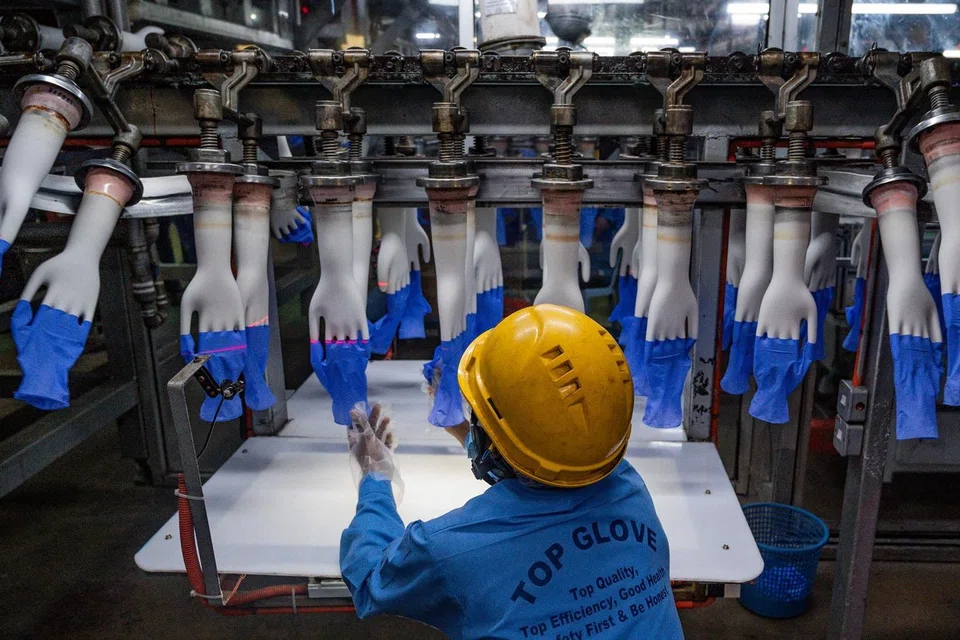
FOR a company in the midst of a massive boom in its business, Top Glove has given its shareholders a lot to worry about over the last several months. Just over a week ago, the company sparked a new set of concerns - this time about its capital management prowess.
On Feb 26, after its shares closed at RM5.24, the Malaysia-based maker of rubber gloves said it will issue 1.495 billion new shares to raise up to HK$14.95 billion or RM7.77 billion, and seek a listing in Hong Kong.
Top Glove said the proposed issue of new shares will enable it to "raise fresh capital without having the need to undertake a cash call from its existing shareholders". It said the Hong Kong listing would widen its investor base and strengthen its position to raise capital in the future.
So, what was the problem? Between Sept 9, 2020 and Feb 22 2021, Top Glove spent over RM1.4 billion (S$461 million) repurchasing 200 million shares from the market, at an average price that topped RM7 per share, according to a recent report by brokerage firm CGS-CIMB.
Why was Top Glove repurchasing its shares in the market if it needed fresh capital and did not want to trouble its existing shareholders?
More to the point, how are Top Glove's existing shareholders better off as a result of the company repurchasing its shares at more than RM7.00 and then issuing new shares at an implied price of HK$10.00 or RM5.20?
Will Top Glove even be able to pull off a major equity raising exercise now? With the widening availability of Covid-19 vaccines, there is a growing sense in the market that its revenues from the sale of rubber gloves are set to fall, or at least plateau.
Shares in Top Glove and other rubber glove makers have in fact been sagging since October last year, when the Straits Times Index began rallying strongly amid optimism that the vaccines would enable global economic activity to quickly restart.
Against this backdrop, it seems unlikely that Top Glove's proposed equity issue, which could expand its share base by more than 18.6 per cent, will get a warm reception in the market.
Top Glove's shares dipped immediately after the capital raising plans were unveiled, before clawing back some of the losses. Its Singapore-traded shares closed Friday at S$1.69, while its Kuala Lumpur-listed shares ended at RM5.25.
Earnings peaking
Much could depend on Top Glove's earnings over the next few quarters.
Going by information provided by the company in its Friday announcement, global revenue from the sale of gloves is approaching its zenith.
Citing estimates by Frost & Sullivan, Top Glove sees global sales volumes of gloves rising from 529 billion pieces in 2009 to 642.1 billion in 2020, 819.9 billion in 2021, 949.4 billion in 2022, and 1,077.5 billion in 2023.
Sales revenues have been growing more strongly than volumes though, because of a surge in unit prices in the face of the sudden jump in demand when Covid-19 emerged. Frost & Sullivan estimates global sales revenues to have risen from US$8.7 billion in 2019 to US$16.8 billion in 2020. It sees a further massive rise to US$43.3 billion in 2021.
As supply subsequently increases and unit prices normalise however, global sales revenues are expected to fall to US$31.8 billion in 2022, and to US$24.8 billion in 2023.
Top Glove is unlikely to be able to avoid this coming slump in revenue next year because Malaysian glove makers account for a major portion of global supply.
Frost & Sullivan estimates that Malaysia's export value of rubber gloves will rise from RM17.4 billion in 2019, to RM32.1 billion in 2020, and to RM86.8 billion in 2021; before subsequently falling to RM65.5 billion in 2022 and RM52.1 billion in 2023.
The big question is how surging revenue at Top Glove will affect its bottom line in the current financial year.
For the FY to Aug 31, 2020, Top Glove reported revenue of RM7.24 billion - more than 50 per cent higher than the RM4.8 billion chalked up for FY2019. The company's earnings for FY2020 came in at RM1.75 billion, versus the previous year's RM364.7 million.
For Q1 FY2021, Top Glove reported revenue of RM4.76 billion, up from RM1.21 billion during the same quarter the previous year. Earnings for Q1 FY2021 nearly hit RM2.38 billion, several times over the RM111.4 million reported for Q1 FY2020.
Clearly, blowout earnings numbers for the remaining quarters of FY2021 could spur demand for Top Glove's shares and put a more positive complexion on the equity issue it is proposing.
Top Glove is scheduled to report its Q2 FY2021 result on March 9.
No need for funds
If Top Glove were to report very strong earnings for FY2021 though, it would raise questions about the need for the fresh equity capital it is proposing to raise.
Top Glove has said that it expects its capital expenditure for the 5-year period from FY2021 to FY2025 to total some RM10 billion. While that sounds like an ambitious figure, it could probably be funded internally over the next five years given the huge leap in earnings Top Glove has already reported for Q1 FY2021.
Issuing more shares might just result in Top Glove's earnings being diluted. According to CGS-CIMB, the exercise would dilute its estimated earnings per share from FY2021 to FY2023 by between 11.2 per cent and 15.1 per cent.
"In our view, this fund-raising exercise is avoidable as Top Glove's expected stellar FY2021-FY2022 results should be able to support its capex plans, while it has zero gearing currently," CGS-CIMB said in its report.
The brokerage firm is forecasting earnings of nearly RM10.4 billion for FY2021 alone, and nearly RM5.3 billion for FY2022.
Investor rebuke
Over the past year, Top Glove was hit by a US import ban on its products, and a deadly outbreak of Covid-19 among its workforce. The company also fired a whistleblower who raised concerns about a lack of social distancing at its facilities.
At its recent annual general meeting (AGM), the company suffered the ignominy of at least two fund management firms -- BlackRock and Norges Bank Investment Management - voting against the reappointment of six independent directors.
The move was a response to Top Glove's failure to address labour and human rights issues in its supply chain, BlackRock said.
BlackRock went on to say that Top Glove's ineffectiveness in Covid-19 mitigation and its inadequate oversight of worker health and safety issues could have "potentially serious implications for its reputation" as a supplier of personal protection equipment to hospitals around the world.
BlackRock also said that it plans to vote against the re-election of Top Glove's other incumbent directors at future shareholder meetings.
As Covid-19 infections recede in the months ahead, Top Glove will face the challenge of expanding the scale of its business in the face of falling profitability. Its board should carefully consider if it has the calibre and skills to oversee this crucial transition - while maintaining the confidence of global investors.
- For more analysis and insight on market trends and corporate issues, listen to the Mark To Market podcast bt.sg/mark2mkt