

Why is silver whipsawing while gold steadies? Here’s what investors should know
Industry observers say thin liquidity and speculative unwinding are behind silver’s wild swings
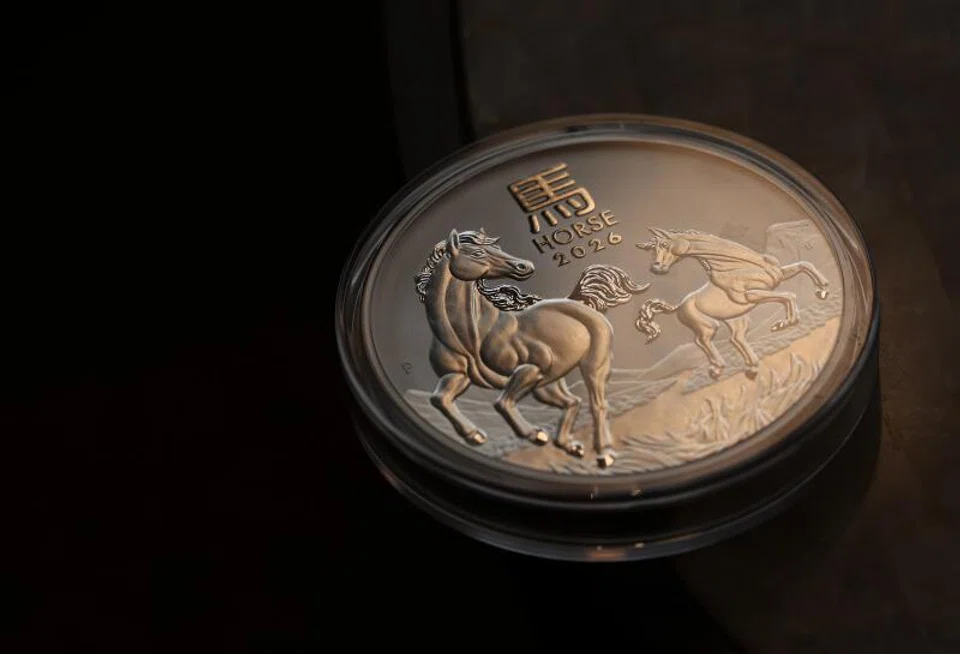
[SINGAPORE] Silver see-sawed between gains and losses on Friday (Feb 6), plunging nearly 10 per cent in early trade to US$64 an ounce, and then rebounding by around 6 per cent past US$70 an ounce.
The intra-day turbulence follows a brutal Thursday session, when the white metal sank around 20 per cent, effectively erasing its year-to-date gains following a scorching January rally.
While the price swings have been sharp, market watchers suggest that they are a by-product of market mechanics and leverage rather than any fundamental shift in the metal’s underlying value.
Franck Fayard, head of Marex Financial Products for the Asia-Pacific, noted that the relatively thinner liquidity in silver’s market often amplifies volatility. With fewer participants than gold, a handful of key players can move the market more easily, he said.
From plain vanilla to tactical strategies
Previously, institutional investors who were bullish on precious metals typically bought physical bullion or bullion-backed, exchange-traded funds to play the upside, said Fayard.
But heightened volatility has prompted a shift in approach: Investors are increasingly seeking to monetise the market’s sharp price swings instead of just focusing on long-term trends.
This has led to a shift from a “plain vanilla” exposure to “tactical” strategies through structured mechanisms, said Fayard.
Such products can be customised with embedded options, which allow investors to move from simple directional bets to yield-enhancement strategies. For example, some structures generate yield from volatility, while others secure downside protection for principal, depending on market conditions.
Similarly, Charu Chanana, chief investment strategist at Saxo Markets, said in a note that better opportunities for active traders may come from shifting their focus away from simply predicting the market’s overall direction.


Instead, she pointed to “dispersion and volatility” in prices as a primary source of potential gains. Chanana cautioned, however, that such strategies require defined risk, conservative sizing and realistic expectations.
She noted that the broader sell-off in metals appears to be a “positioning and balance-sheet event” rather than a change in fundamentals.
“We think the metals sell-off … could spill into broader cross-asset volatility via USD moves, margin dynamics and liquidity effects.”
What’s weighing on prices?
Kelvin Goh, head of precious metals and FX trading at Straits Financial Group, told The Business Times that silver’s near-term price behaviour is likely to be driven by the pace of arbitrage unwinding, the extent of forced selling, and whether new buyers emerge after prices pull back from recent highs.
“If buying interest in silver remains weak, the risk of a deeper intra-year correction increases,” said Goh.
Seasonal factors in Asia also weigh on sentiment. Ole Hansen, head of commodity strategy at Saxo Markets, pointed out that the Shanghai spot premium over London – which briefly surged above 30 per cent – has retreated to a three-week low of under 10 per cent, signalling waning marginal demand.
“With the Chinese New Year approaching and the Shanghai Futures Exchange set to close from Feb 16 to 23, further profit-taking and position-squaring look likely,” he said.
Looking ahead
While silver whipsaws, gold has been recovering steadily from a sharp correction in the past week.
Saxo’s Hansen attributed gold’s relative resilience to deeper liquidity, a broader investor base and continued central-bank demand.
“The widening divergence between gold and silver performance reinforces a recurring theme: silver behaves less like a monetary metal during periods of stress and more like a high-beta hybrid, amplifying both optimism and fear,” he said.
He added that while the current volatility is extreme, silver’s long-term role in portfolios – driven by the energy transition and constrained mine supply – remains intact.
However, he warned that historically, stabilisation occurs when realised volatility falls and speculative positioning is reset – conditions which he believes are not yet fully in place.
OCBC has revised its silver price estimate to US$133 a troy ounce by the end of 2026, up from US$81 previously.
Decoding Asia newsletter: your guide to navigating Asia in a new global order. Sign up here to get Decoding Asia newsletter. Delivered to your inbox. Free.
Copyright SPH Media. All rights reserved.
TRENDING NOW

Once staunchly pro-China, Malaysian Chinese businesses are now distancing themselves from Beijing

Looking beyond looming CEO succession, should UOB potentially pursue a transformative merger?

Could stablecoins be the future of money?

Grab CEO’s wife Chloe Tong on life with Anthony Tan and finding her purpose

