

Wider talent pools, smoother operations: What these S’pore firms gain from inclusive hiring
Job redesign and targeted support help employees with disabilities meet front-line demands, take on greater responsibilities and reduce reliance on temporary staff
IN SINGAPORE’S tight labour market, simple changes to how work is done can help employers tap a wider pool of talent.
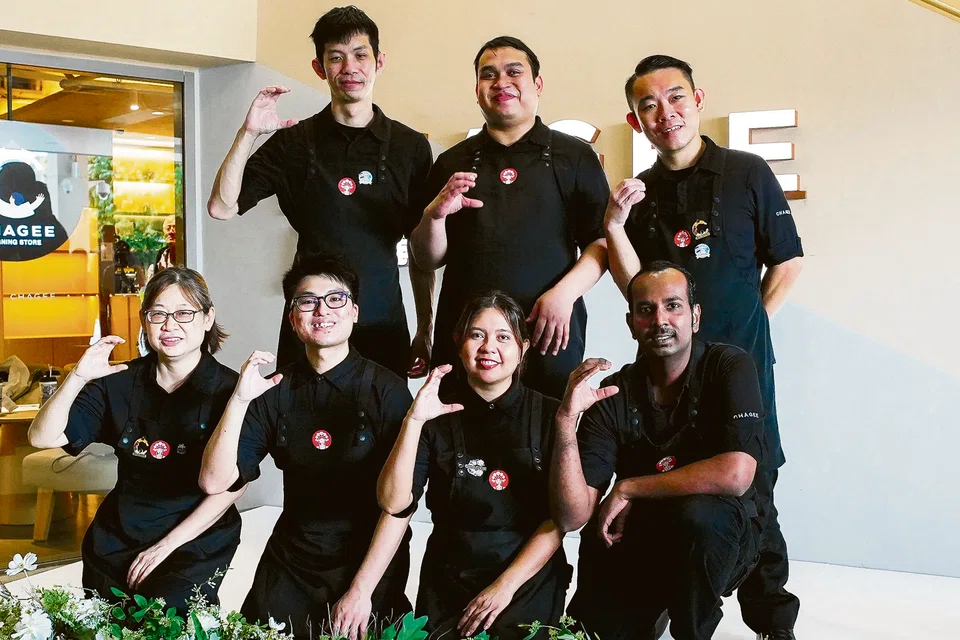
Small adjustments can open up roles to people with disabilities. At Chagee Singapore, tea machines feature red-light cues alongside audible beeps to signal when brewing is complete, allowing baristas who are deaf or hard of hearing to see when each batch is ready.
At Chagee’s first Signing Store at the National University of Singapore (NUS), workflows have also been adjusted so communication between front and back of house does not rely solely on verbal exchanges. For instance, a tablet-based calling system was introduced so deaf baristas at front of house could alert kitchen staff when ingredients were running low.
Adjustments like these have enabled employees to handle large order volumes during busy periods while meeting the same performance standards as other Chagee outlets.
Chagee’s approach to inclusive hiring predates the opening of the NUS store in June 2025. The company was already employing staff who are deaf and hard of hearing in its China operations.
“When we brought this approach to Singapore, we saw it not simply as a social initiative, but as part of how we think about building a stronger and more diverse workforce,” says Chagee Singapore’s chief executive officer (CEO) Lawrence Wen.
Since launching its inclusive hiring initiative here in October 2024, Chagee has hired 16 persons who are deaf or hard of hearing. They work as tea baristas, senior tea baristas, assistant store managers and store managers at its Signing Store at NUS.
One such employee is Jerome Wong, who joined as a senior tea barista. With guidance from his managers, he was gradually given opportunities to step up and has since been promoted to assistant store manager.
In his new role, Wong helps guide teammates and manage day-to-day operations, using text, sign language or hands-on demonstrations as needed.
“At Chagee, I learnt that good leadership is about building an environment where everyone can contribute and succeed together,” he says. “I also enjoy teaching customers simple signs such as ‘Thank you’, which helps create a more inclusive and welcoming space for everyone.”
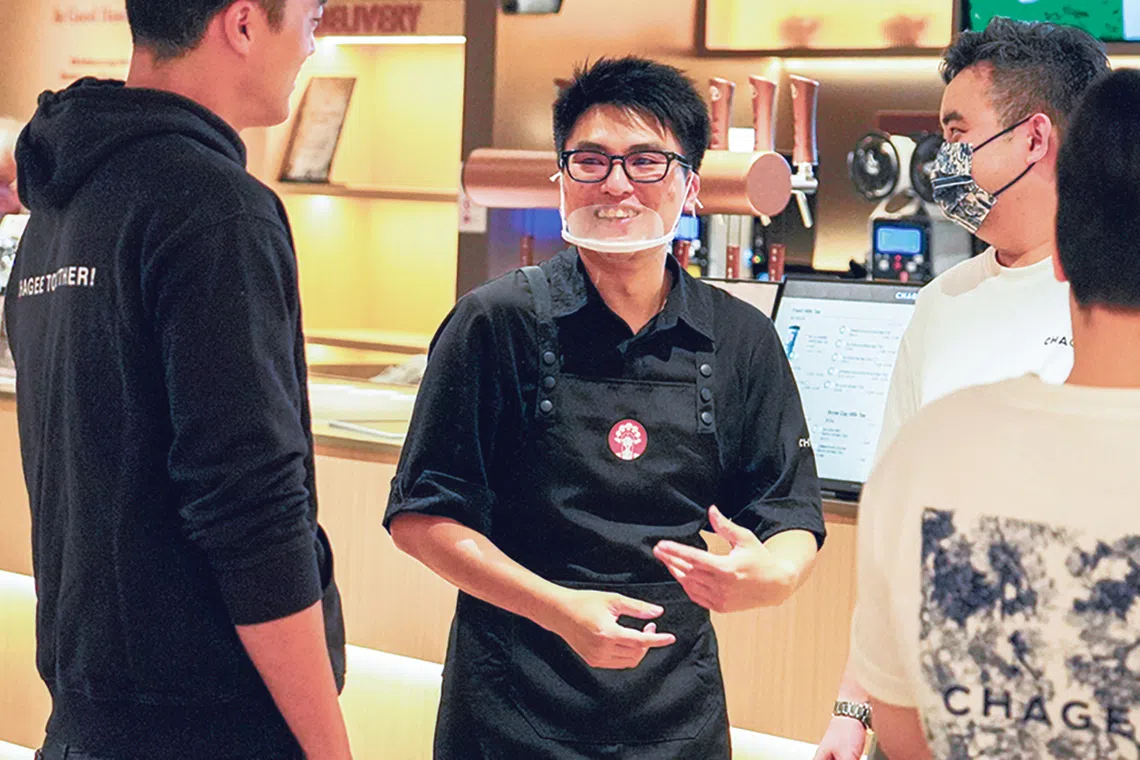
For Chagee, the benefits extend beyond access to a wider pool of talent. Customers at its NUS store interact with employees who are deaf or hard of hearing as they order and collect their drinks, making disability inclusion part of the everyday customer experience.
More importantly for the business, the store demonstrates that employers can widen their recruitment pool while still meeting the demands of frontline operations.
Where companies can start their inclusive hiring journey
Discover practical ways to put inclusive employment into action at the Enabling Mark Business Conference on Nov 10, 2026.
Hear from business leaders and employers through talks and breakout sessions as they share strategies for hiring and supporting persons with disabilities, building more inclusive workplaces and embedding inclusion into long-term workforce strategies.
From filling vacancies to improving operations and customer service
Like Chagee, Amara Hotels and Resorts has tapped a new pool of employees in the manpower-starved hospitality sector.
Amara began hiring persons with disabilities (PWDs) in 2018, following discussions with SG Enable, Singapore’s focal agency for disability and inclusion. Its first hires joined the stewarding and housekeeping departments.
Today, six PWDs work across a broader range of functions, such as pastry preparation, bell services and back-end food and beverage service.
Ivy Lau, regional director of human resources at Amara, says: “Over the past eight years, our thinking has evolved. What started as an opportunity we could offer has become a two-way relationship where our PWD colleagues bring real strength to the team.”
She cites the example of Muhammad Idil Sudin, who has an intellectual disability.
When he was first hired at Amara Singapore, Idil focused on greeting guests, assisting with luggage and coordinating taxis, supported by a buddy.
“We did a strengths-based assessment and found Idil has an excellent memory for faces and names, very warm guest interaction and is highly reliable with routines,” says Ivy.
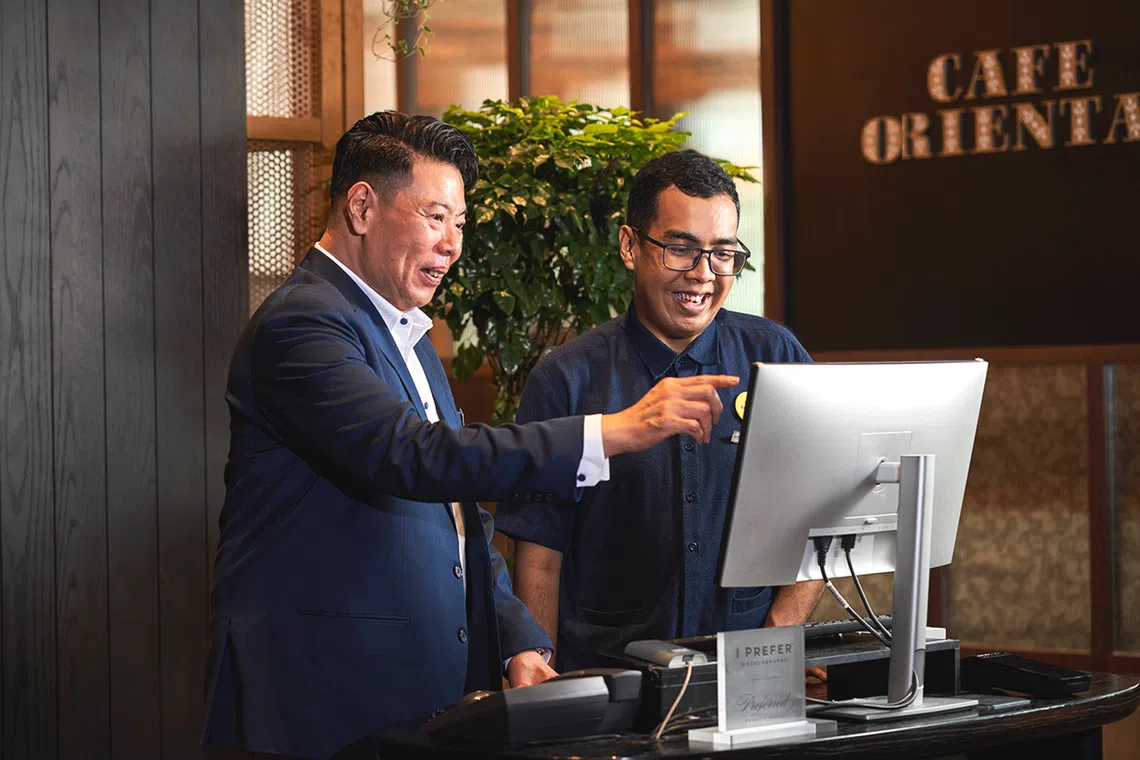
More than two years later, Idil is the go-to person for recommendations on food and places of interest.
High turnover is common in concierge and bell services. At Amara, Idil’s steady presence and 100 per cent attendance record have helped the hotel rely less on temporary staff during peak periods.
Guests have taken notice of his work performance, too.
“In the last six months, we received at least five guest comments per month specifically mentioning Idil as ‘the bellman who went the extra mile’ and who ‘always greeted us with a smile’,” says Ivy. “That kind of personal touch is hard to train.”
A simpler workflow introduced to help Idil now helps all new concierge hires learn the job, showing how changes made to support PWDs can benefit other employees too.
Unlocking potential through tech and job redesign
At technology services company NCS, inclusive hiring is helping broaden the talent pool, particularly in specialised technical areas, while job redesign and new assistive technologies are enabling employees with disabilities to develop their careers.
NCS currently employs 14 PWDs – eight with physical disabilities, four with hearing impairments and two who are on the autism spectrum.
One of them is Mohamed Raiyme Mohamed Salleh, an operations support executive with a hearing impairment. He joined the company in 2024.
“My role at NCS has evolved from supporting BAU operations to independently managing projects and taking on broader responsibilities,” says Raiyme. “The support and opportunities at NCS have helped me grow professionally and contribute more effectively to my team and the organisation.”
Technology has played an important role in that progression.
Speech-to-text applications allow Raiyme to follow spoken conversations during meetings and discussions. More recently, AI-powered smart glasses – made possible with a subsidy from SG Enable’s Assistive Technology Fund – allow him to see what others say via real-time transcriptions. This has helped him participate more effectively in workplace discussions.
NCS works with SG Enable to recruit candidates for suitable technology roles, assessing them on skills and job fit while providing interview accommodations where needed – such as providing an accessible venue, adjusting the interview format or allowing additional time.
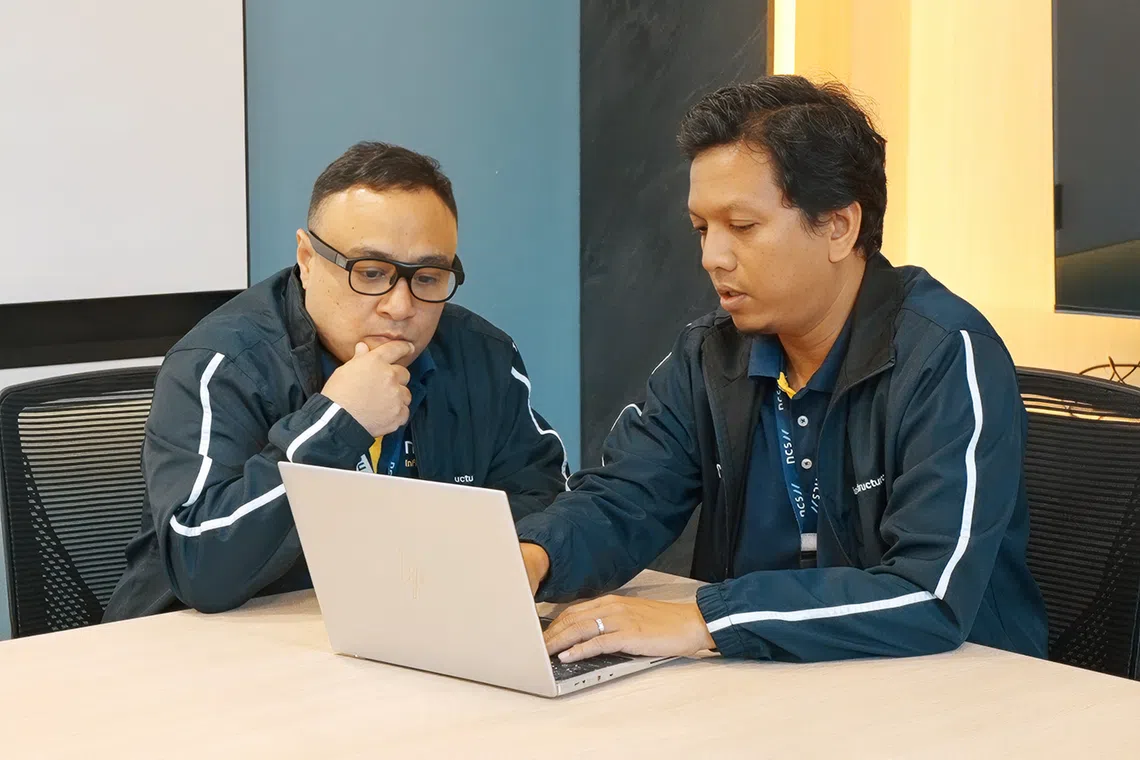
After hiring, the company makes adjustments to job responsibilities and provides workplace support tailored to the new hires.
NCS CEO Sam Liew says: “At NCS, we believe in creating an environment where everyone can contribute and thrive.
“We consider each individual’s capabilities, accessibility needs and career aspirations, while ensuring they are aligned with opportunities that support both their growth and the needs of the business.”
Edward Chew, senior director of the employment and lifelong learning group at SG Enable, says inclusive hiring is a practical way for businesses to widen their talent pool and strengthen their workforce.
He adds: “As these employers have demonstrated, reviewing how jobs are designed and providing the right workplace support can help employees with disabilities contribute meaningfully, while improving operations and building more resilient teams.”
Making disability inclusion work for employers
SG Enable and its partners work with companies at different stages of their inclusive employment journey – from recruitment outreach and job redesign to workplace integration, job coaching, assistive technology assessments and grant support.
In addition, SG Enable stewards the Enabling Mark, a national-level accreditation framework that benchmarks and recognises organisations for good practices and outcomes in disability-inclusive employment in Singapore.
Launched in 2020, the Enabling Mark has three tiers that reflect an organisation’s maturity in disability-inclusive employment:
- Silver recognises emerging practices;
- Gold reflects more embedded practices;
- Platinum recognises leading practices with sustained, organisation-wide impact.

Share with us your feedback on BT's products and services
TRENDING NOW

If Europe goes to war, the fallout will be felt in East Asia

Indonesia stocks suffer worst plunge in nearly 30 years as MSCI proposes standalone status
Vietnam’s race for growth tests pace of energy transition: experts

China’s market is tougher than ever. Where can Singapore firms still find room to grow?

