Will MAS dividend cap prompt DBS, OCBC and UOB to downplay their performance?
If banks can reward neither shareholders nor management, they might as well front-load bad loan provisions in 2020

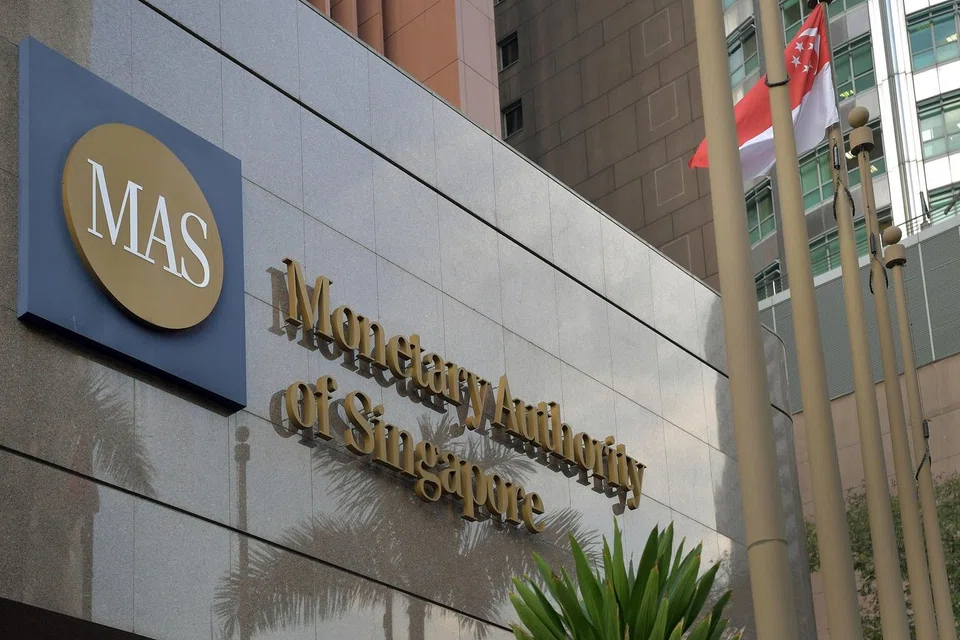
THIS past week, the Monetary Authority of Singapore (MAS) dealt a blow to investors by calling on the local banks to cap their dividends.
"We are fortunate that banks in Singapore entered the Covid-19 pandemic with strong capital positions. All the same, MAS wants to ensure the banks' capital buffers remain ample in the face of significant uncertainties ahead, so that they can sustain lending to the economy," said MAS managing director Ravi Menon, in a statement on July 29.
Specifically, MAS wants the local banks to cap their dividends per share for FY2020 at 60 per cent of what they paid for FY2019. MAS also wants the banks to offer their shareholders the option of receiving their FY2020 dividends in scrip in lieu of cash. "We have carefully calibrated the restriction on dividends, taking into account the needs of investors who may rely on this income," Mr Menon added, in the statement.
The move by MAS was hardly a bolt from the blue. Only a fortnight ago, Mr Menon said that MAS was in close discussions with the local banks on their capital management, and flagged the possibility of their dividends being restricted.
Yet, the market reacted quite negatively to the imposition of the dividend cap. The day after MAS made its statement, shares in DBS, OCBC and UOB suffered declines of 3.09 per cent, 3.82 per cent and 3.15 per cent, respectively. The benchmark Straits Times Index fell 1.7 per cent on the same day.
Why was the market seemingly so unprepared for the dividend cap?
One possible reason is that many investors believed the appropriate moment for such regulatory action has passed. If the purpose of the dividend cap is to ensure that the banks have ample capital buffers to sustain their lending activities, then surely MAS should have acted in March, when increasingly tough measures to curb Covid-19 were being implemented and financial markets were crumbling.
The second possible reason for the negative market reaction is that the dividend cap was viewed as a signal of sorts from MAS that the local banks should now adopt a more prudent stance in their operations. Interestingly, its statement included this line: "MAS encourages banks to conserve and carefully manage their capital, by exercising restraint in discretionary expenditure and management compensation."
This seems out of step with the current mood in the market, which is geared towards expectations of a rebound in economic activity as Covid-19 restrictions are gradually lifted or modified.
MAS shifted position
Some background might be useful here.
MAS did, in fact, unveil several regulatory and supervisory measures in early April to help the banking system cope with the Covid-19 fallout.
Among other things, MAS loosened certain capital and liquidity requirements for banks, to allow them greater capacity to support borrowers, until September 2021. MAS also advised the banks to consider the "extraordinary measures" taken by the government when assessing the impact of Covid-19 on the economy and estimating loan loss allowances.
MAS told the banks at the time that sustaining lending activities should take priority over discretionary distributions. It did not, however, put any limits on their dividend payouts. "While MAS does not see a need to restrict banks' dividend policies, the release of capital buffers should not be used to finance share buybacks during this period," MAS said in a statement on April 7.
Since April, all three of the local banks have paid out dividends that were higher than corresponding payouts in previous years.
On June 5, OCBC paid a final dividend with respect to FY2019 of S$0.28 per share. Along with an interim dividend of S$0.25 per share paid last year, its total dividend payout for FY2019 was S$0.53 per share.
For FY2018, OCBC paid an interim dividend of S$0.20 per share and a final dividend of S$0.23 per share, for a total of S$0.43 per share.
On June 29, UOB paid out a final dividend of S$0.55 per share as well as a special dividend of S$0.20 per share with respect to FY2019. Including an interim dividend of S$0.55 per share paid last year, its total dividend payout for FY2019 was S$1.30 per share.
For FY2018, UOB paid an interim dividend of S$0.50 per share, a final dividend of S$0.50 per share and a special dividend of S$0.20 per share, amounting to a total of S$1.20 per share.
Then there was DBS. On May 26, it not only paid a final dividend of S$0.33 per share for FY2019 but also an interim dividend of S$0.33 per share for Q1 2020.
For FY2019, DBS paid interim dividends of S$0.30 per share for the first three quarters of the year. Along with the final dividend, that adds up to a total dividend of S$1.23 per share. For FY2018, DBS paid an interim dividend of S$0.60 and a final dividend of S$0.60, for a total of S$1.20 per share.
While MAS took its time restricting dividend payouts by the local banks, regulators in the UK acted more aggressively at the outset. Earlier this year, HSBC and Standard Chartered said that they would withhold dividends they had already declared for 2019, and suspend their interim dividends for 2020, at the behest of their regulators in the UK.
Managing virus impact
To be clear, I am not arguing against regulatory curbs on bank dividends during times of uncertainty. Back in March, this column called for the local banks to stop their share buyback activities and cap their dividends in order to preserve their capital.
Yet, the local banks are well-capitalised and well-provisioned, and things are not as uncertain as they were four months ago. While Covid-19 remains a problem, countries around the world are becoming more adept at managing the virus. In fact, at least one analyst has been speculating about the possibility of blow-out 2Q 2020 earnings at DBS.
Daniel Tabbush of the Tabbush Report, who publishes on Smartkarma, pointed out in a July 14 research note that total impairment costs at DBS hit S$1,086 million in Q1 2020, versus S$703 million for the whole of 2019. Meanwhile, oil prices have rebounded strongly, reducing the risks DBS faces in the energy sector.
"With oil and gas credit risk effectively cratering and a reopening of the Singapore economy and with sharply better economies in most regions globally, credit costs can end up being markedly lower during Q2 2020," Mr Tabbush said, in the report.
Of course, even if the banks are in good shape, some segments of the economy will feel a great deal of pain in the quarters ahead because of ongoing efforts to contain Covid-19.
This past week, The Business Times reported that the three local banks had granted payment deferments to more than S$15 billion worth of mortgages as at June 30. In addition, SMEs have deferred principal payments on some S$11.4 billion of secured loans.
As the fiscal measures that have enabled businesses to keep their doors open and their workers employed begin to expire in the months ahead, there could well be a surge in loan defaults, bankruptcies and fire-sales of collateral.
This shouldn't pose too much risk to the banks though. DBS alone had a gross customer loan book worth S$362.4 billion as at end-FY2019. Of that, S$168.7 billion related to loans to Singapore customers. For FY2019, DBS reported total income of S$14.5 billion, and net profit of nearly S$6.4 billion.
However, with MAS now seemingly demanding more prudence, DBS and its peers might choose to front-load bad loan provisions in the remaining quarters of this year. After all, if they can reward neither their shareholders nor their management in FY2020, they might as well try to postpone any improvement in profitability until FY2021.
Indeed, it may not be a bad thing to avoid unseemly profits while the country is hurting.
Research house Jefferies is now forecasting FY2020 dividends of S$0.87 per share for DBS, S$0.31 per share for OCBC, and S$0.78 per share at UOB. Its previous dividend per share forecasts were S$1.23, S$0.46 and S$0.90, respectively.
On those dividend forecasts, the three banks are now trading at yields of 3.6 per cent to 4.4 per cent, versus 4.6 per cent to 6.2 per cent previously.
DBS and UOB are due to report their H1 financial results on Aug 6, while OCBC is scheduled to report on Aug 7.