

Will Phase Two of reopening spur recovery for shops, restaurants and Reits?
Retailers serving wealthy consumers stand best chance of achieving sales exceeding pre-pandemic levels

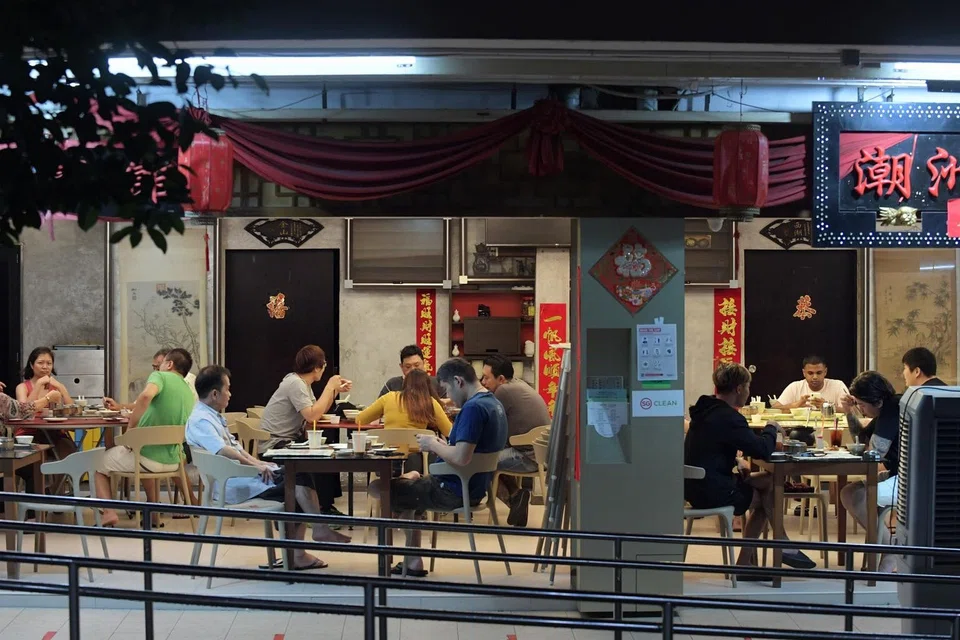
ON Friday, the first day of Phase Two of Singapore's reopening process, I ventured out of my house to a food and beverage outlet that served alcoholic refreshments to meet some friends with whom I frequently communicate via a WhatsApp chat group.
In keeping with the current limits on social gatherings, I was hoping for a turnout of no more than four other people.
Only two turned up.
After becoming comfortable with life in isolation, and being constantly reminded of the risk we pose to one another, it seems that some of us are not that eager to escape the confines of our homes.
Some wags are calling it the "stuck home" syndrome, a play on the term Stockholm syndrome, the phenomenon of hostages developing a psychological affinity to their captors.
Of course, the inclinations of my small and possibly neurotic social circle might not be representative of the rest of Singapore's population. Indeed, it is apparently not easy to get reservations at restaurants that have just reopened their doors.
But that's at least partly because most restaurants are not willing to admit as many diners as they once did, to ensure that their patrons are able to maintain safe distancing while enjoying their meals.
Whatever the case, I doubt that Phase Two of Singapore's reopening will get the local economy humming again. Investors waiting for a sharp recovery in economic activity to support galloping asset prices might have to brace themselves for disappointment.
Phase Two of Singapore's reopening, which took effect on June 19, is arguably the most important segment of the recovery process, as it involves re-starting almost the entire domestic economy.
Shopping malls, restaurants and even health and wellness establishments are now allowed to open, subject to safe management measures being in place. Restrictions on social interactions have also been eased, with social gatherings of up to five people now allowed.
It is a marked shift from Phase One, which only involved the re-opening of businesses such as aircon servicing and hairdressing salons. And, it could lead to the resumption of larger social, cultural, religious and business gatherings under Phase Three.
Changed landscape?
For stock investors, the most obvious play on Phase Two are the retailers and restaurants that will be re-opening their doors as well as the real estate investment trusts (Reits) that own the properties where they operate.
Last week, on news of the Phase Two reopening, DBS Group Research reiterated its "buy" recommendations on a clutch of Reits that own prominent local shopping malls. They included CapitaLand Mall Trust, Frasers Centrepoint Trust and Lendlease Global Commercial REIT.
Besides retail property Reits, CGS-CIMB Research also highlighted restaurant chain Jumbo Group as well as food court and coffee shop operator Koufu Group as potential beneficiaries of the Phase Two re-opening.
Yet, investors should look before they leap on any of these stocks. The big question is not whether shops and restaurants that are now allowed to open will do better than when they were closed, but whether the revenues and profits they generate will be sufficient to support their quickly rebounding stock prices in the long term.
In my view, it is a stretch to expect consumer spending patterns to match the pre-pandemic days. In the first place, safe distancing will make it harder for most restaurants and many shops to generate as much revenue as they did before Covid-19 emerged. Also, many people have become accustomed to shopping online and using food delivery services.
More importantly, Covid-19 is accentuating the trend of de-globalisation, which could put Singapore's economy on the back foot for a long period of time. For many Singaporeans, that could mean reduced job prospects and lower incomes. Surely, mid-tier restaurants and retail property Reits are going to struggle against this backdrop.
Investors might be better off focusing on segments of the retailing sector that serve wealthy consumers, who are likely to have ample disposable income despite Covid-19. For instance, homegrown luxury watcher retailers such as The Hour Glass and Cortina Holdings stand a good chance of generating revenues that quickly exceed their pre-pandemic levels, in my view.
Operations at their stores are unlikely to be affected much by safe distancing. Moreover, they serve a clientele that might be frustrated by the current restrictions on international travel. What better way to spend money earmarked for a cancelled trip to Europe than by picking up another luxury timepiece?
Cortina's shares are down 25 per cent since the beginning of the year, and currently trading 9.4 per cent below book value. Hour Glass is down 18.5 per cent, and currently trading at a 21.4 per cent discount to book value.
Creating more jobs
Will broader consumer spending ever get going? What will it take to restore consumer confidence across the board?
Merely reopening the economy and the leaving it to market forces will probably not be enough. Instead, Singapore needs to create new jobs and employment opportunities, and encourage people to redefine their careers.
Coming up with money for such efforts isn't difficult for a wealthy country like Singapore. Indeed, it is already happening. Last month, Finance Minister Heng Swee Keat unveiled a S$2 billion package that aims to create 40,000 jobs, 25,000 traineeships and 30,000 skills training opportunities.
The real challenge is persuading employers to offer jobs to unlikely candidates, and getting people in need of a career switch to try something new. "This is, and must be, a national effort. And it needs new thinking among employers, to give middle-aged and mature Singaporean workers a fair chance to prove themselves," said Senior Minister Tharman Shanmugaratnam, in a televised speech last week.
"No Singaporean who is willing to learn should be 'too old' to hire. And no one who is willing to adapt should be viewed as 'overqualified'. We will work closely with the business associations to bring all employers into this national effort," Mr Tharman added.
Businesses may ultimately have to bear higher costs as they support the government in achieving this goal. And, employees who are "too old" or "overqualified" may have to accept lower incomes until they demonstrate their value in the new roles that they take on.
Yet, the availability and accessibility of new jobs, and the sense of an extended productive life that they would give many people, could be more important than anything else in boosting broad consumer confidence over the long term.
READ MORE: Breaking through to the next level
TRENDING NOW

Two Singapore-listed palm oil firms named in Greenpeace report on Indonesian plantation fires

Singapore Airlines flight returns to San Francisco after ‘unruly’ passenger incident

Singapore looking into which companies responsible for haze-causing fires: PM Wong
Deluge IPO 3.86 times subscribed ahead of SGX debut

