Will responsible investing create a better world?
The ESG theme is a powerful mobiliser of capital, but governments - not bankers and investors - ought to take the lead in bringing about change

SOME years ago, while discussing the topic of responsible investing, a senior official at a venerable Swiss bank proudly told me that one of the bank's early partners had warned his clients in 1841 to avoid exposure to American businesses that relied on slave labour.
The advice was unquestionably prescient - Abraham Lincoln issued the Emancipation Proclamation in 1863, and the 13th Amendment to the United States constitution was ratified in 1865.
Yet it wasn't clear to me if the underlying point of the anecdote was that business leaders should act on their moral convictions, or that they should be capable of recognising unsustainable business practices.
Whatever the case, steering capital away from the American south did not bring an end to slavery in the US. It took a bloody civil war for that abhorrent practice to be abolished.
One of the biggest trends in the market today is the notion that investors should weigh environmental, social and governance (ESG) factors, alongside financial returns, when deploying their capital.
Companies are increasingly expected to provide information on how their business activities impact the environment and society, and develop strategies to mitigate any negative externalities.
Armed with this information, the expectation is that investors will be able to make decisions that not only address the big issues of our times - such as climate change and inequality - but that also lead to superior risk-adjusted returns.
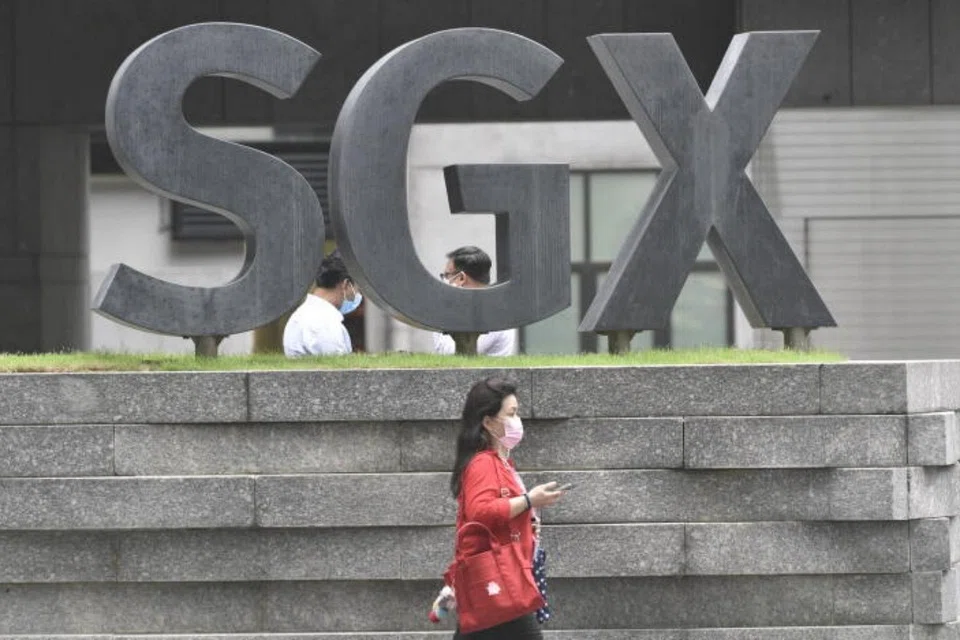
On Aug 26, Singapore Exchange Regulation (SGX RegCo) unveiled plans to make climate-related disclosures mandatory for locally listed companies. It also said it would require locally listed companies to have a board diversity policy, and provide disclosures on targets, plans and timelines.
As part of the effort, SGX RegCo has released a consultation paper on its proposals for climate and diversity disclosures, and a separate consultation paper on a common set of core ESG metrics.
"Globally consistent, comparable and reliable climate-related disclosures will enable market participants to price and manage climate risks more effectively," said Lim Tuang Lee, assistant managing director for capital markets at the Monetary Authority of Singapore.
"This will help enhance trust in sustainable investments and expand SGX-listed issuers' access to the growing pool of global capital directed at sustainability investing," he added.
ESG momentum
The global pool of capital directed at the sustainability theme has been expanding fast, driven by growing market confidence that there is a positive correlation between financial performance and ESG factors.
Morningstar found in a study of nearly 4,900 funds last year that a majority of sustainable funds have outperformed their traditional peers over multiple time horizons.
In particular, over the 10 years through 2019, nearly 59 per cent of surviving sustainable funds across different categories had beaten their average surviving traditional counterparts.
"The odds of picking a winning sustainable fund over the past 10 years were greatest in the US large-blend category. More than seven out of 10 live sustainable US large-cap equity funds delivered higher returns than their average surviving conventional counterpart," Morningstar said in a June 2020 report
For me, the capacity for the ESG theme to mobilise financial capital was driven home over the last couple of years by the diverging performance of up-and-coming clean energy stocks versus the traditional Big Oil stocks.
Since the beginning of 2020, shares in ExxonMobil, Chevron and Royal Dutch Shell have dipped about 21 per cent, 19 per cent and 36 per cent, respectively.
With dividends reinvested, Exxon and Chevron both delivered a total return of about minus 11 per cent. Royal Dutch Shell returned minus 30 per cent.
By contrast, the iShares Global Clean Energy ETF - which includes stocks like Vestas Wind Systems, Orsted and Enphase Energy - has doubled since the beginning of 2020. With dividends reinvested, the ETF delivered a total return of 103 per cent.
The S&P 500 index is up more than 40 per cent since the beginning of 2020. With dividends reinvested, its total return was over 44 per cent.
Shareholder action
What does the underperformance of Big Oil stocks achieve? How will that actually change the world for the better?
Ideally, it ought to prompt the boards of these companies to reposition their businesses. But that does not typically happen until things get really bad. And, the process is often messy and unpredictable.
Earlier this year, a tiny activist hedge fund called Engine No1 surprised everybody by winning three seats on Exxon's board in a shareholder vote.
With hindsight, however, Exxon was ripe for a shareholder revolt. Even with the steady rise of renewable energy, the company had pursued an aggressive capital expenditure programme to expand production. This had led to deteriorating profitability and a weakened balance sheet.
Engine No1 has said it wants Exxon to adopt a coherent returns-focused capital expenditure strategy, and "gradually but purposefully" reposition itself to succeed in a decarbonising world.
The hedge fund also wants executive compensation at Exxon to be better aligned with drivers of shareholder value.
It remains to be seen if Engine No1 will actually succeed in turning Exxon around. But it is already making waves in the market. It was last week reported to have been in talks with other oil and gas companies, including Chevron.
Engine No1 has also launched the Transform 500 ETF. The fund tracks the Morningstar US Large Cap Select Index, and seeks to drive positive social and environmental impact at the companies it owns.
Governments should lead
Yet, it seems unlikely to me that a market-oriented approach to stopping the corporate sector from destroying the planet will achieve results quickly enough. It makes little sense to expect profit-maximising companies to drive the change in business practices that need to be made.
Instead, governments ought to take the lead. And, disruptive as it has been for the market, there is something to be said for China's no-nonsense crackdown on its technology giants.
Interestingly, China's recent move to ban children from playing online games for more than three hours a week echoed an initiative spearheaded three years ago by Charles Penner, one of the key individuals behind Engine No 1.
Back in 2018, while working at investment manager Jana Partners, Mr Penner reportedly rallied investors to pressure Apple into considering the effect its products had on the mental health of young people.
However, in bringing about such changes at companies, governments are far more likely to be able to make a real difference. It is, after all, governments that are supposed to be guardians of the public's interests.
While bankers and investors may be well suited to the role of handicapping the sustainability risks of companies, we shouldn't assume their efforts will quickly and naturally lead to a better world.